You’ve been scrolling through Pinterest for weeks. Every dream kitchen you save has one thing in common: wide open spaces flowing seamlessly from cooking to living areas. No walls boxing you in. No feeling cut off from your family while you’re making dinner.
An open concept kitchen looks incredible in photos. In Minnesota, we face long winters indoors with family. So, deciding to knock down walls needs more thought than just a Pinterest idea.
So let’s talk honestly about whether an open floor plan kitchen makes sense for your life, not just your Instagram feed.
What Is an Open Concept Kitchen, Really?
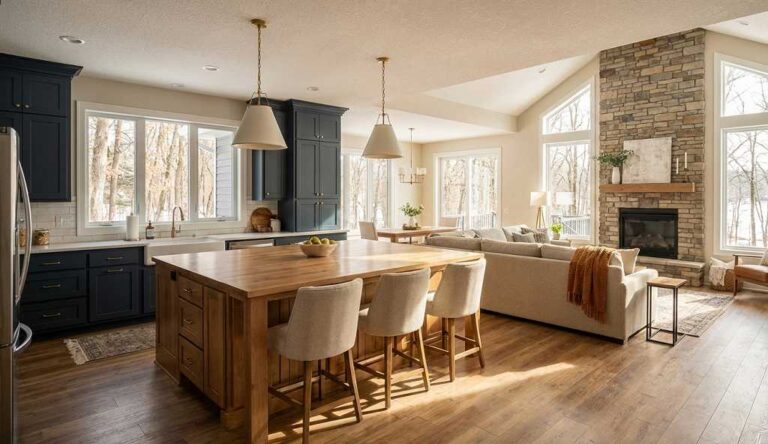
An open concept kitchen takes down the walls that usually separate the cooking area from nearby rooms. This often includes the living room and dining room. Instead of isolated rooms, you get one flowing space where the open kitchen layout connects your home’s main gathering areas.
This isn’t just about aesthetics. It fundamentally changes how your home functions. The cook is no longer banished to a separate room. Kids doing homework at the island can chat with parents in the living room. Entertaining flows naturally instead of guests congregating awkwardly in the kitchen doorway.
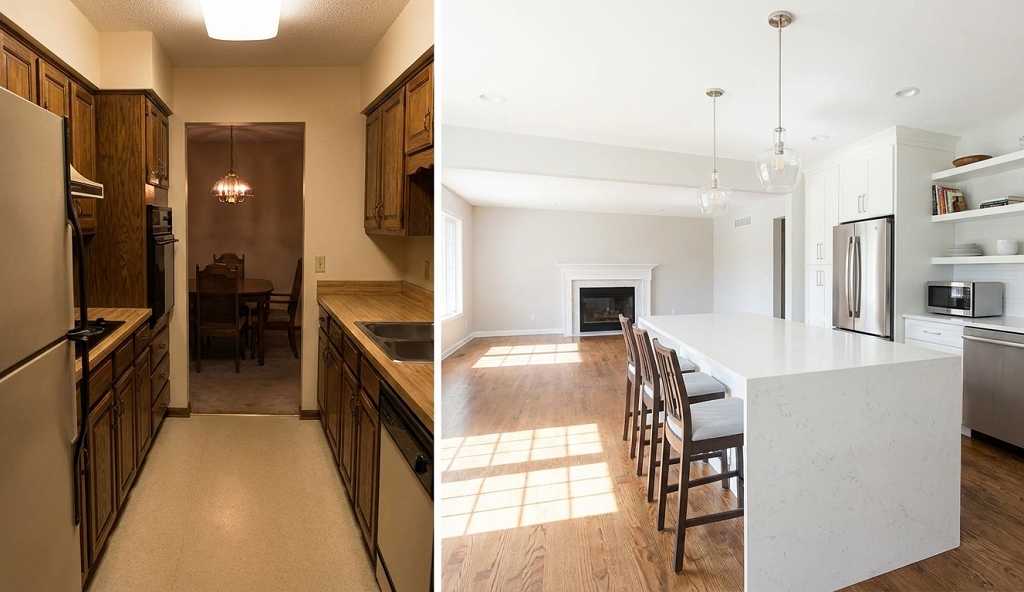
In Minnesota homes, especially split-levels and ramblers from the 1970s to 1990s, the kitchen is often tucked away behind walls. Opening these spaces is now one of our top remodeling requests at College City Design-Build.
Why the Open Concept Kitchen Living Room Layout Took Over
The open concept kitchen living room combination didn’t become popular by accident. It reflects genuine shifts in how modern families live.
We Actually Use Our Kitchens Now
Kitchens used to be purely utilitarian, a place to cook and clean, then leave. Today’s kitchen is command central. It’s where we pay bills, help with homework, and scroll through our phones while pasta boils. It’s also the spot for impromptu gatherings that always seem to end up at the kitchen island.
When the kitchen becomes your home’s hub, hiding it behind walls makes less sense.
Smaller Homes Feel Bigger
Minnesota has many modest homes. Their original floor plans can feel cramped. A small house open concept kitchen and living room conversion can make 1,400 square feet feel like 2,000 without adding a single square foot.
Light travels further. Sightlines extend. The psychological impact of open space is real and measurable in how much you enjoy being home.
It Matches How We Entertain
Gone are the formal dinner parties where guests never saw the kitchen. Modern entertaining is casual and inclusive. The open kitchen and living room keep hosts connected with guests as they prepare meals. No more shouting across doorways. You won’t miss the best stories while plating appetizers.
Open Concept Kitchen Ideas That Actually Work in Minnesota Homes
Not every open concept looks the same. The best open concept kitchen ideas adapt to your home’s existing structure and your family’s specific needs.
The Kitchen-Living Room Flow
The classic open concept kitchen and living room combo fits perfectly in ranch-style homes found in Lakeville and the south metro. Removing the wall between these spaces creates one large great room anchored by a kitchen island.
The island acts as a natural divider. You can feel different zones, even without walls. Consider open concept kitchen living room floor plans that position the island parallel to where the wall used to be.
The Triple Threat: Kitchen, Dining, and Living
For larger spaces, an open concept kitchen dining living room arrangement creates a true great room. This works beautifully in homes where you’re removing walls between all three spaces or building a new addition.
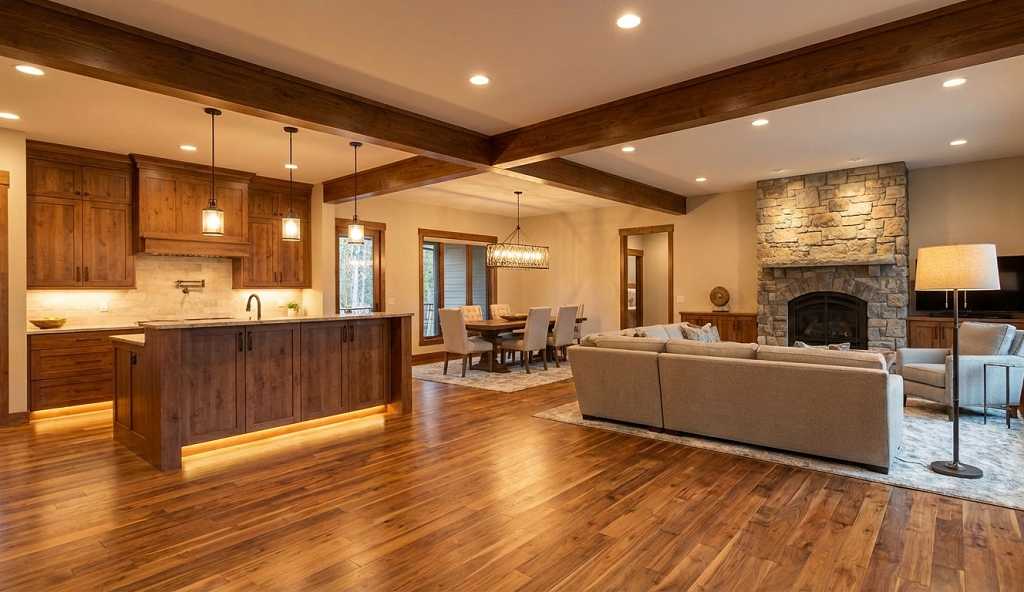
The key is intentional zone definition. Place area rugs under dining tables. Use pendant lighting to anchor the kitchen island. Arrange furniture to define the living area without needing walls.
Small House Open Concept Solutions
A small open concept kitchen requires extra planning to avoid feeling cluttered. In compact Minnesota homes, consider:
- Peninsula instead of island: Saves floor space while still providing seating and workspace
- Open concept small L-shaped kitchen with an island: It uses corner space well and provides a gathering area.
- Ceiling-height cabinets: Draw the eye up and provide storage without cluttering open sightlines
- Consistent flooring: Using the same flooring throughout makes small spaces feel larger
The goal of an open concept small kitchen and living room is to use every square foot wisely. It should feel connected and airy.
Kitchen Wall Removal: What You Need to Know Before Swinging a Hammer
Here’s where dreams meet reality. That wall you want gone? It might be doing more than separating rooms.
Is Your Wall Load-Bearing?
The first question with any kitchen wall removal project: is this wall holding up your house? Load-bearing walls hold up the structure above. If you remove one the wrong way, you could end up with sagging floors, cracked drywall, or even more serious problems.
Signs a wall might be load-bearing:
- Runs perpendicular to floor joists
- Located in the center of the house
- Has another wall directly above it on a second floor
- Supports a beam in the basement below
Never guess. A structural engineer’s assessment costs a few hundred dollars. Fixing a collapsed ceiling costs tens of thousands, plus the terror of your house falling apart.
Removing a Load-Bearing Wall Between Kitchen and Living Room
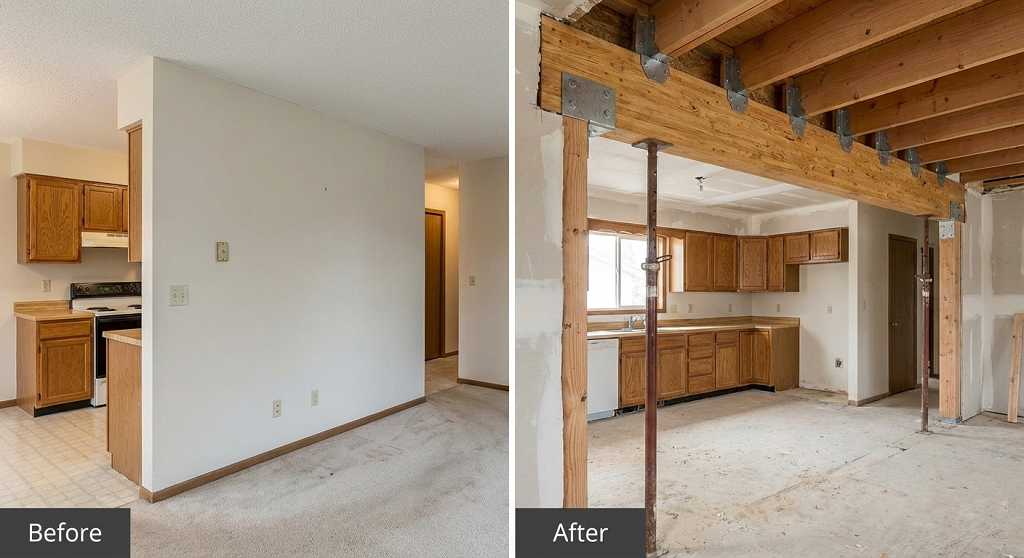
Good news: load bearing wall kitchen removal is absolutely possible. It just requires proper engineering. The wall’s load gets transferred to a new beam that spans the opening, supported by posts at either end.
Here are some common ways to remove a load-bearing wall between a kitchen and living room:
- Flush beam: Recessed into the ceiling for an invisible transition
- Exposed beam: Left visible as an architectural feature, popular in farmhouse and rustic designs
- Steel beam: Spans longer distances than wood, allowing wider openings
A load bearing kitchen wall removal before and after reveals just how dramatically this transformation opens up a home. Work with contractors who know Minnesota building codes and have experience in structural changes.
What’s Hiding in That Wall?
Beyond structure, walls often conceal:
- Electrical wiring: Outlets, switches, and circuits need rerouting
- Plumbing: Especially in walls near sinks or shared with bathrooms
- HVAC ducts: Heat runs and cold air returns may need relocation
- Gas lines: If you have a gas range or nearby appliances
Hidden elements don’t stop wall removal. They add complexity and cost, which should be noted in planning.
How Much Does an Open Concept Kitchen Remodel Cost in Minnesota?
Let’s talk numbers. The cost to remove kitchen wall varies dramatically based on what that wall contains and whether it’s load-bearing.
| Project Type | Estimated Cost Range |
| Non-load-bearing wall removal | $1,500 – $5,000 |
| Load-bearing wall removal with beam | $5,000 – $15,000 |
| Electrical/plumbing rerouting | $1,000 – $4,000 (varies widely) |
| Flooring transition/matching | $2,000 – $8,000 |
| Drywall, paint, and finishing | $1,500 – $4,000 |
| Total Open Concept Conversion | $10,000 – $35,000+ |
These figures cover the cost to remove wall in kitchen and create a finished open space. They don’t cover kitchen cabinet updates, new countertops, or appliance upgrades. Adding those can push a full open concept remodel into the $50,000 to $150,000+ range. This depends on the finishes and scope of the project.
Labor costs for remodeling a kitchen and removing a load-bearing wall usually take up 40-50% of the total project costs. The rest covers materials, permits, and engineering.
Open Concept Kitchen Pros and Cons: The Honest Truth
Every design choice involves trade-offs. Here are the pros and cons of open concept kitchen layouts that we share with every homeowner thinking about this change.
The Advantages
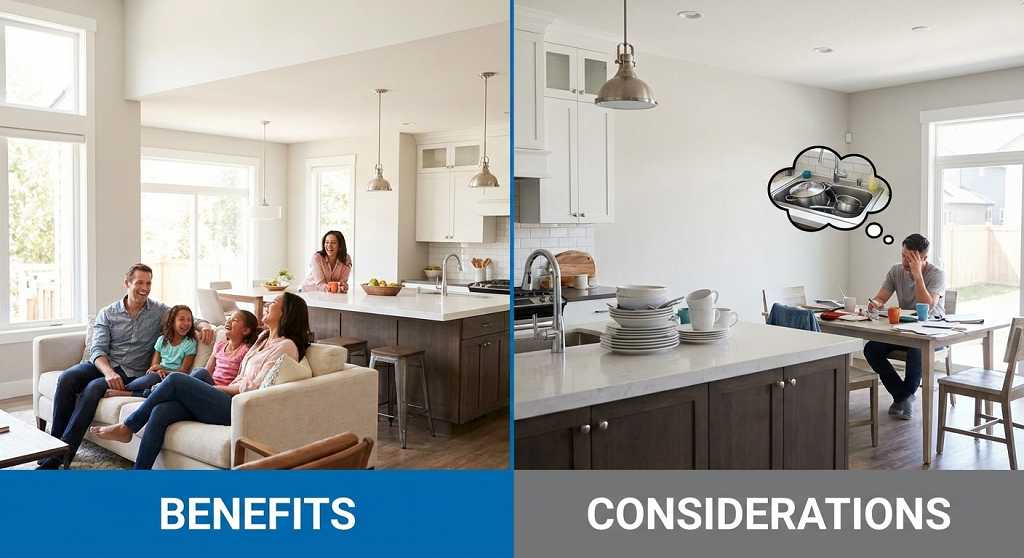
- Better flow for entertaining: Guests interact naturally across spaces instead of clustering in doorways
- Improved supervision: Watch kids in the living room while cooking, huge for young families
- More natural light: Light from multiple windows reaches throughout the combined space
- Increased home value: Open floor plans consistently attract more buyers and higher offers
- Space efficiency: Eliminates redundant traffic areas and unusable corners
- Modern aesthetic: Creates the contemporary look featured in design magazines and shows
The Disadvantages
- Noise travels everywhere: Kitchen clatter, TV audio, and conversations compete without walls to buffer
- Cooking odors spread: That fish you’re frying? The whole house knows about it
- No hiding the mess: Dirty dishes and cluttered counters are on display 24/7
- Less wall space: Fewer surfaces for cabinets, art, or shelving
- Heating and cooling challenges: Large open spaces can be harder to heat evenly, notable in Minnesota winters
- Privacy reduction: Harder to escape noise or carve out quiet zones
Is Open Concept Still Popular in 2025?
You might have heard whispers that open concept is falling out of favor. After the pandemic, many homeowners realized they wanted more privacy and space. This was especially true for those working from home.
The answer: open concept isn’t dying, but it’s evolving. The trend now favors “broken-plan” living. This means open layouts with smart ways to create separation when needed. Think sliding barn doors, half-walls, or pocket doors that let you close off spaces temporarily.
For Minnesota homeowners, this hybrid approach makes particular sense. Open the main living areas for family time and entertaining. Also, design them to be flexible for work calls, homework, or a quiet escape from the chaos.
How to Plan Your Open Concept Kitchen Remodel: Step-by-Step
Ready to move forward? Here’s a practical roadmap for homeowners considering an open concept conversion.
Step 1: Assess Your Current Layout
Walk through your home with fresh eyes. Which walls feel like barriers? Where do family members naturally congregate? Take photos and sketch a rough floor plan noting walls you’d love to remove and spaces you want to connect.
Step 2: Identify Structural Concerns
Before falling in love with a specific layout, understand your home’s bones. Look for signs of load-bearing walls and note where you see plumbing or electrical. This preliminary assessment helps you have more productive conversations with contractors.
Step 3: Define Your Must-Haves
What problems are you solving? More space for entertaining? Ability to watch kids while cooking? A bigger island for homework and gathering? Clear priorities help guide design decisions and prevent scope creep.
Step 4: Set Your Budget Range
Based on the cost ranges we discussed, establish a realistic budget. Add a 15-20% contingency for surprises. This is crucial for wall removal projects, as hidden issues often arise.
Step 5: Consult Design-Build Professionals
A design-build firm like College City offers both design and construction services. This way, your vision comes to life seamlessly. We’ll check the structural needs, improve your layout, and give you precise pricing before we start.
Step 6: Plan for Living Through Construction
Wall removal projects usually last 2 to 4 weeks for the main work. Then, you’ll need extra time for flooring, painting, and finishing. Plan for dust, noise, and temporary kitchen setups. Many families create a makeshift kitchen in their basement or dining room during construction.
Is an Open Concept Kitchen Right for You?
After all this information, how do you actually decide?
An open concept kitchen is probably right for you if:
- You frequently entertain and want guests to flow naturally
- You have young children and want to supervise while cooking
- Your home feels cramped and you crave more spacious living
- You maintain a tidy kitchen naturally
- You plan to sell within 5-10 years and want maximum appeal
You might want to reconsider if:
- You love cooking pungent foods regularly
- Someone in your home works from home and needs quiet
- You prefer visual separation between cooking and relaxing
- Your kitchen is frequently messy (and you’re okay with that!)
- Noise sensitivity is a concern for family members
There’s no universally right answer. The best kitchen is one that works for your family’s actual life, not someone else’s Pinterest board.
Frequently Asked Questions About Open Concept Kitchens
How much does it cost to create an open concept kitchen?
The cost to remove a kitchen wall and create an open concept layout typically ranges from $10,000 to $35,000 in Minnesota, depending on whether the wall is load-bearing and what utilities need rerouting. A complete open concept kitchen remodel with new cabinets, countertops, and finishes can range from $50,000 to $150,000 or more.
Can you remove a load-bearing wall between kitchen and living room?
Yes, load-bearing walls can be removed with proper structural engineering. The wall’s load is transferred to a new beam (wood, laminated veneer lumber, or steel) that spans the opening and is supported by posts. This typically adds $5,000-$15,000 to project costs but is a routine procedure for experienced contractors.
Is open concept still popular in 2025?
Yes, but with evolution. While fully open layouts remain popular, the trend is moving toward “broken-plan” designs that offer openness with options for privacy. Sliding doors, half-walls, and flexible room dividers let homeowners enjoy open living while maintaining the ability to close off spaces when needed.
How long does an open concept kitchen remodel take?
Wall removal and structural work typically takes 2-4 weeks. A complete open concept kitchen remodel, including new cabinets, countertops, flooring, and finishes, generally runs 8-16 weeks depending on scope and material availability. Custom elements may extend timelines.
What are the biggest drawbacks of an open concept kitchen?
The main challenges include noise traveling throughout the space, cooking odors spreading to living areas, visible clutter and dirty dishes, less wall space for cabinets and décor, and potential heating/cooling inefficiencies in Minnesota’s climate. Many of these can be mitigated with good design and ventilation.
How do I know if a wall is load-bearing?
Common indicators include: the wall runs perpendicular to floor joists, it’s located near the center of the house, there’s a wall directly above it on an upper floor, or there’s a beam in the basement directly below it. However, never guess, a structural engineer’s assessment is essential before any wall removal.
Will an open concept kitchen increase my home’s value?
Generally yes. Open floor plans consistently rank among buyers’ most-wanted features, particularly in the Twin Cities market. While ROI varies by project scope and neighborhood, thoughtfully executed open concept remodels typically recoup 50-75% of investment at sale while providing immediate lifestyle benefits.
What’s the best layout for a small open concept kitchen?
For smaller Minnesota homes, consider an L-shaped kitchen with a peninsula instead of a full island, ceiling-height cabinets to maximize storage, consistent flooring throughout to create visual continuity, and light colors to make the space feel larger. A peninsula provides seating and workspace without the floor space requirements of a freestanding island.
Ready to Explore an Open Concept Kitchen for Your Minnesota Home?
At College City Design-Build, we’ve helped many families in Lakeville and the Twin Cities. We create open concept kitchen designs that transform homes. Our design-build approach handles everything in one place. We assess if the wall is load-bearing and install the final light fixture.
We’d love to see your space and discuss what’s possible. Our initial consultations are complimentary, and there’s never any pressure.
Schedule your free consultation by calling (952) 469-6900 or contact us online.
About the Author
This article was written by the design and construction team at College City Design-Build, an award-winning remodeling company based in Lakeville, Minnesota. With decades of combined experience transforming Twin Cities homes, our team specializes in kitchen remodeling, whole-house renovations, additions, and custom new home construction. We’re members of NARI (National Association of the Remodeling Industry), BATC (Builders Association of the Twin Cities), and maintain an A+ rating with the BBB.