
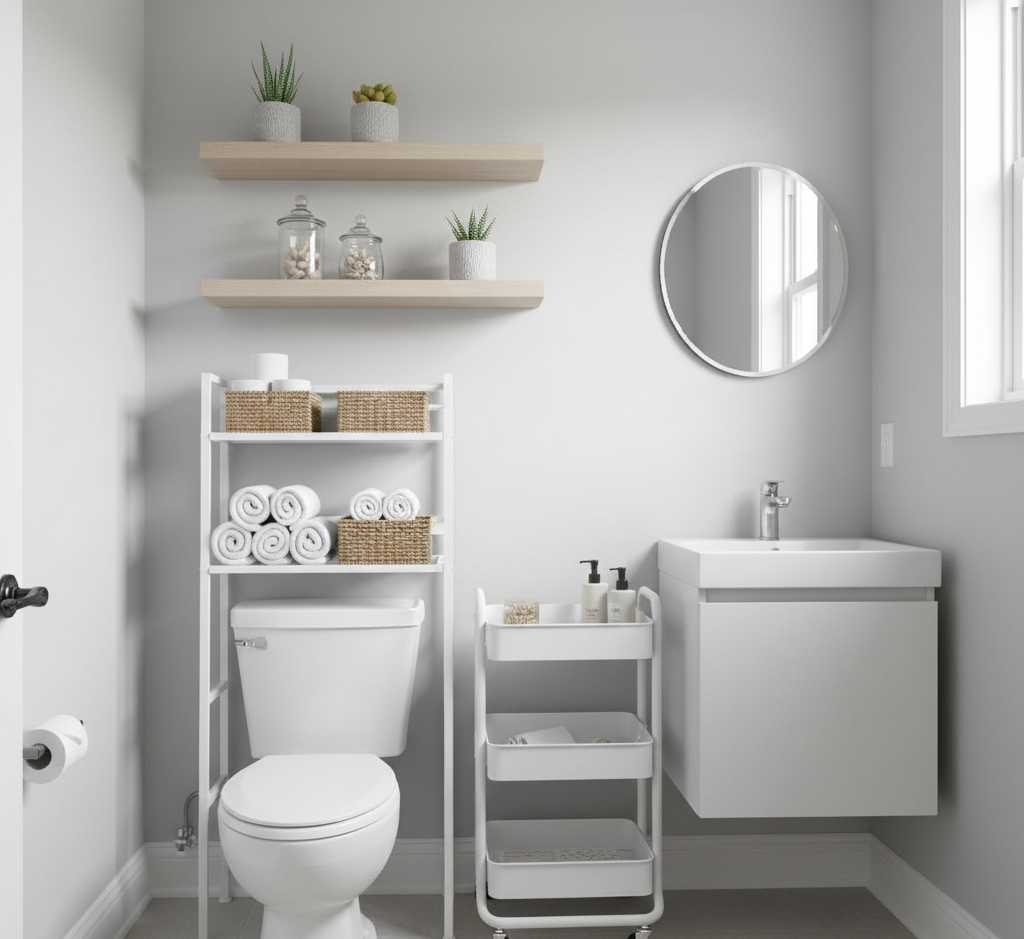
If you’re struggling with bathroom clutter in a compact space, you’re not alone. Most Minnesota homes, especially those built in the mid-20th century around Lakeville and the Twin Cities, feature bathrooms that prioritize efficiency over storage. The average small bathroom is only 5×8 feet. This size makes homeowners think about where to store towels, toiletries, and cleaning supplies.
Smart storage isn’t about having more space. It’s about using your current space wisely. After helping many homeowners turn cramped bathrooms into organized retreats, I’ve learned this lesson well. In this guide, I’ll share 15 effective bathroom storage solutions. These tips work well in tight spaces, and you can use them this weekend.
Why Small Bathroom Storage Matters
Before diving into solutions, let’s address why proper bathroom storage is crucial. A cluttered bathroom isn’t just unsightly, it affects your daily routine, home value, and mental well-being. Research from the National Association of Home Builders shows that bathroom organization is a top factor for buyers when looking at homes.
Organized bathroom storage does more than boost resale value. It stops water damage from items on countertops. It also cuts cleaning time by up to 40%. Plus, it eases the morning stress of searching for essentials. For families sharing a single bathroom, effective storage becomes even more critical.
Understanding Your Bathroom’s Storage Potential
Every bathroom, no matter how small, has untapped storage potential. The key is identifying “dead space”, areas you’re not currently utilizing. These typically include:
- Vertical wall space above the toilet
- The narrow gap between your vanity and wall
- Behind-the-door space
- Under-sink cavities
- Corners that create awkward angles
From my experience with small bathrooms, many homeowners miss out on vertical storage options. Walls can provide great options for shelving, cabinets, and organizers, even with limited floor space.
15 Smart Bathroom Storage Solutions for Small Spaces
1. Over-the-Toilet Storage Units
The most underutilized space in any bathroom sits directly above your toilet. Over-the-toilet storage units, or bathroom etageres, offer three to four shelves. They save floor space while maximizing storage. These freestanding units typically measure 24-27 inches wide and extend 60-70 inches high.
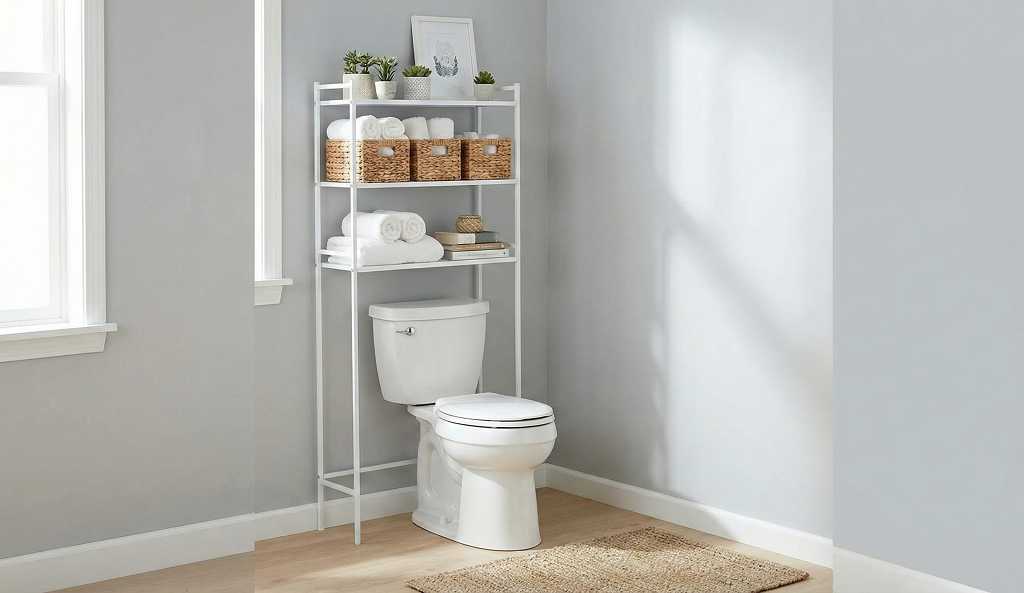
How to choose: Look for units with adjustable shelves to accommodate various item heights. Metal or wood frames offer durability, while open shelving keeps small bathrooms from feeling cramped. If you have young children, opt for models with the bottom shelf at least 36 inches high to prevent climbing hazards.
Pro tip: Place decorative baskets on open shelves to conceal toiletries while maintaining easy access. This adds visual appeal and prevents the “cluttered shelf” look that can make small bathrooms feel chaotic.
2. Floating Shelves for Vertical Storage
Floating bathroom shelves create storage without the visual bulk of traditional cabinets. These wall-mounted shelves are great for narrow bathrooms. They let you save space since furniture won’t get in the way.
Installation considerations: Mount floating shelves 16-18 inches apart for standard towel storage, or 10-12 inches apart for smaller items like toiletries. Always find wall studs for secure mounting. This is important, especially when storing heavy items like glass containers or several towels.
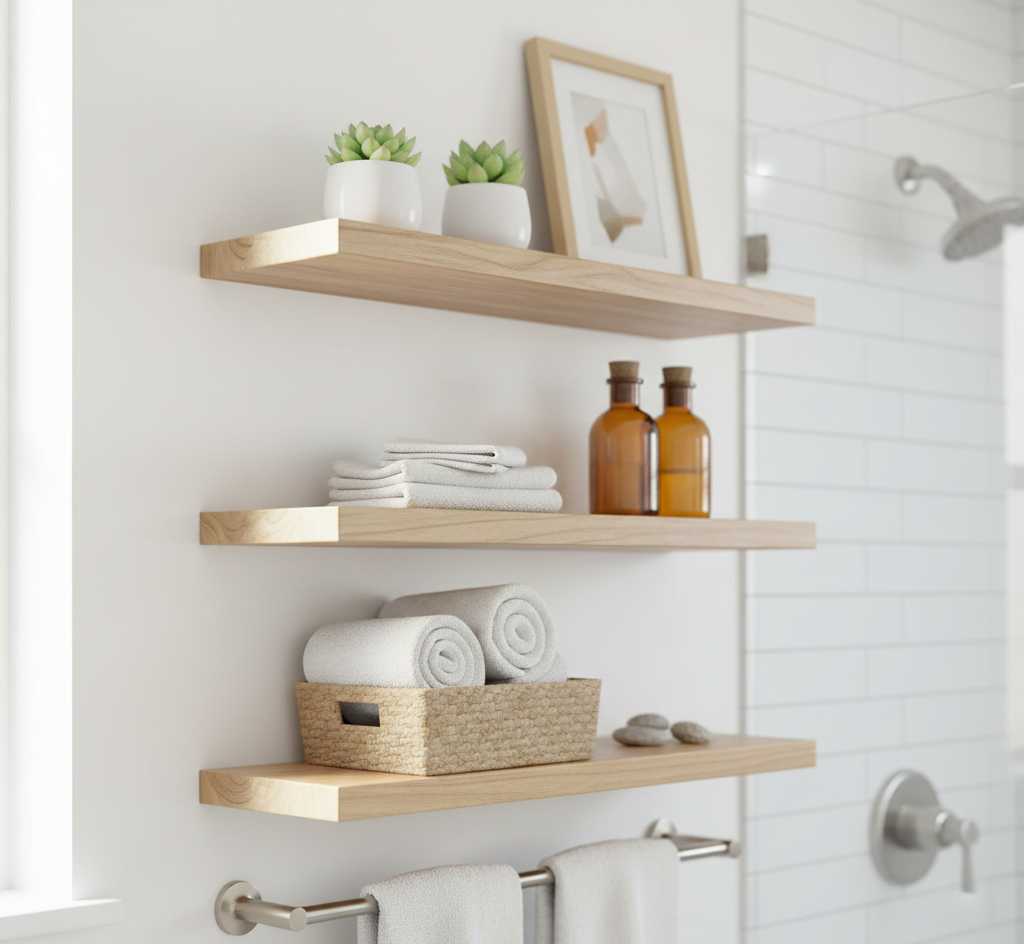
Design idea: Install a series of three floating shelves above your towel bar to create a spa-like display.
- Use the top shelf for decorations.
- The middle shelf is for rolled hand towels.
- Keep daily essentials on the bottom shelf.
3. Narrow Bathroom Cabinets and Storage Towers
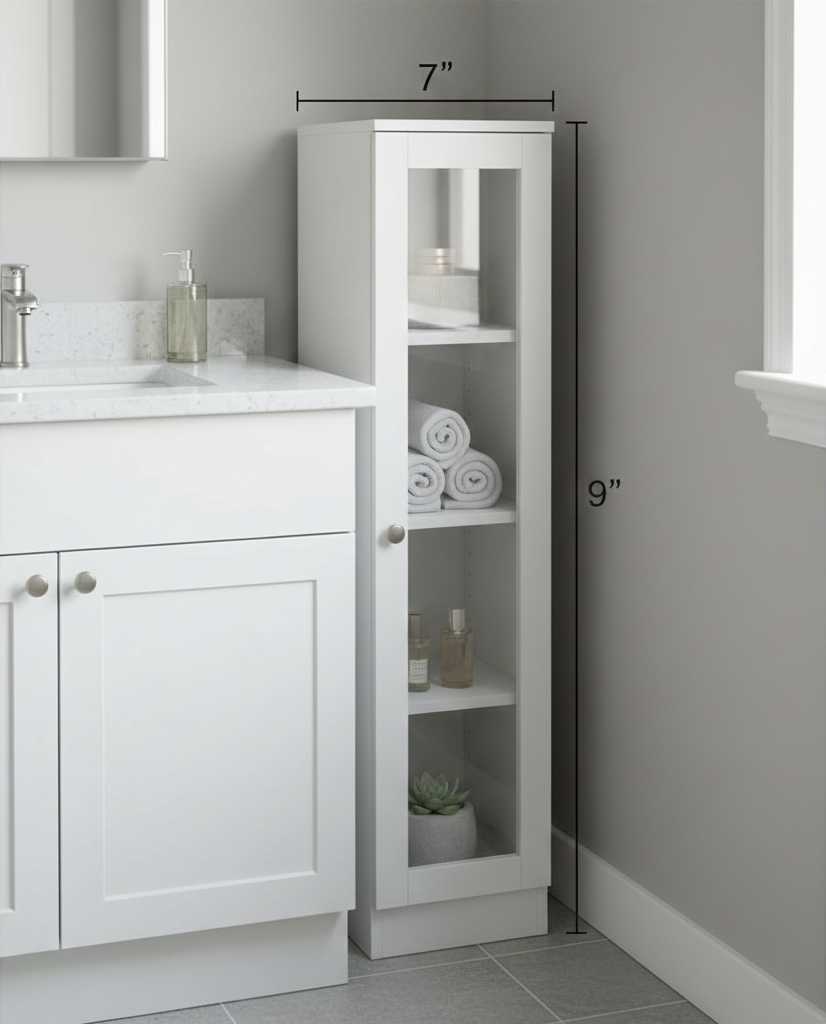
For bathrooms with an awkward gap between the vanity and wall, narrow storage cabinets (6-12 inches wide) provide surprising capacity. These slim-profile cabinets, often called “bathroom storage towers,” fit into spaces too small for standard furniture.
Functionality: A typical 9-inch-wide tower cabinet offers 4-5 shelves of storage, enough space for 20-30 rolled towels or several weeks’ worth of toiletries. Pull-out models maximize accessibility, allowing you to retrieve items from the back without removing everything in front.
Where to find: Look for narrow bathroom storage at home improvement stores or search for “slim bathroom cabinet” online. Many manufacturers now offer customizable widths to fit specific gaps.
4. Under-Sink Organization Systems
The cabinet beneath your bathroom sink often becomes a black hole of cleaning supplies and forgotten products. Transform this space using drawer organizers, stackable bins, or adjustable shelves made for under-sink storage.
Best practices: Install a two-tier sliding organizer to double your usable space. Keep daily essentials in the front tier and backup supplies in the back. Use small bins to group similar items, one for hair products, another for skincare, and a third for first aid supplies.
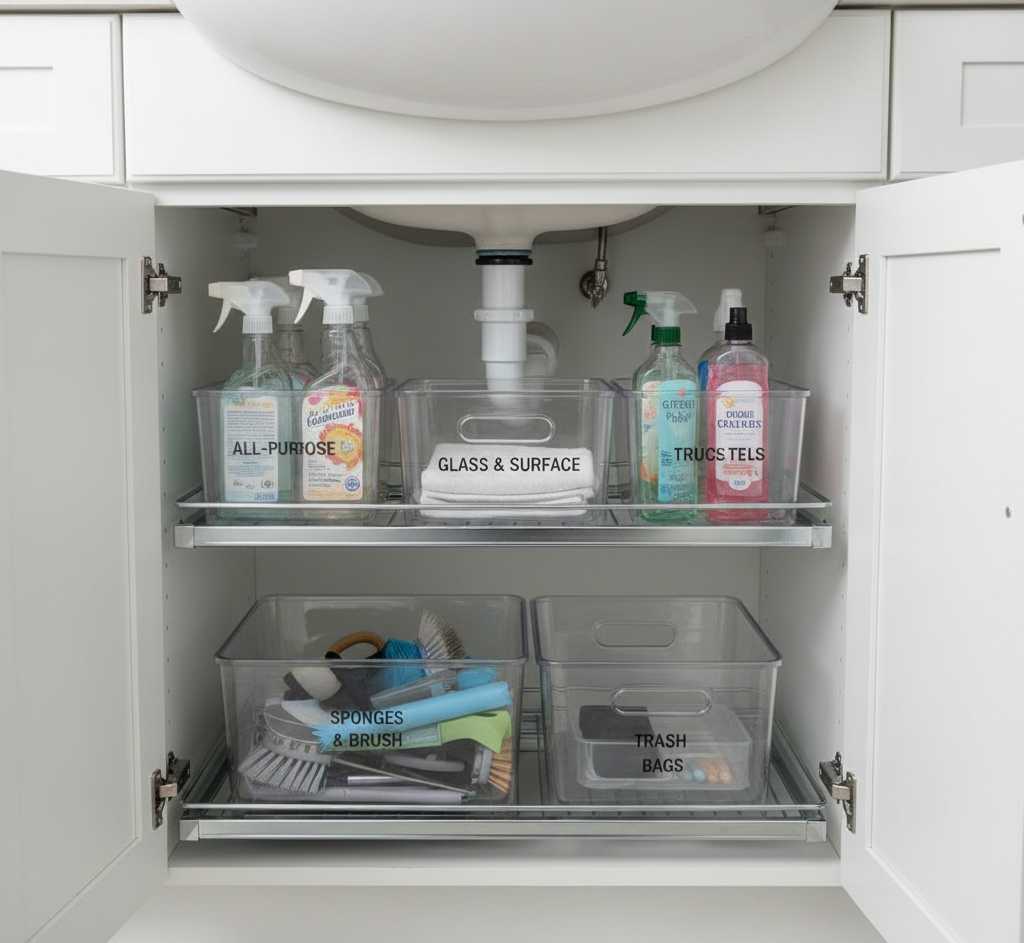
Plumbing workaround: Work around pipes by choosing U-shaped organizers or adjustable systems that can be configured around existing plumbing.
5. Bathroom Counter Organizers and Vanity Trays
A disorganized bathroom counter makes even spacious bathrooms feel cluttered. Counter organizers and vanity trays corral daily essentials while keeping surfaces clean and accessible.
Selection tips: Choose tiered organizers to maximize vertical space on compact counters. Choose moisture-resistant materials. Bamboo, stainless steel, and acrylic work great in humid bathrooms.
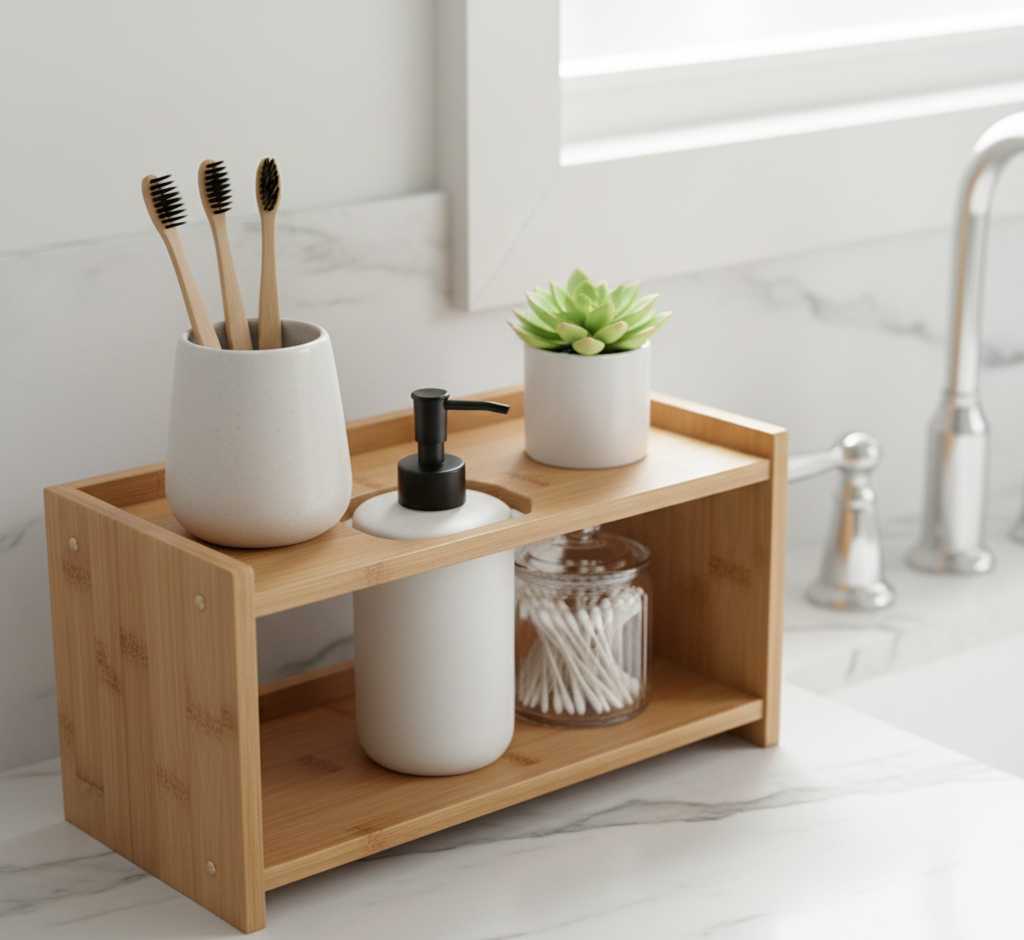
What to store: Limit counter items to daily essentials only. A typical counter organizer should hold toothbrushes, hand soap, and 2-3 frequently used products. Everything else belongs in closed storage.
6. Medicine Cabinets with Deep Storage
Standard medicine cabinets offer minimal storage, typically 3-4 inches deep. Upgrading to a deep-profile medicine cabinet (5-7 inches) dramatically increases capacity without requiring additional wall space.
Recessed vs. surface-mounted: Recessed cabinets sit flush with the wall, ideal for extremely tight spaces. Surface-mounted cabinets protrude but install easier and work in bathrooms where wall cavities can’t be modified.
Organization strategy: Use small bins or magnetic containers inside medicine cabinets to prevent items from tipping when opening doors. Store medications on upper shelves away from steam and children.
7. Towel Storage Solutions Beyond Traditional Bars
Towel bars hold the towel you’re using well. But small bathrooms need clever ways to store extra towels.
Option A: Wall-mounted towel ladder – It leans at a 75-degree angle. It holds 4-5 towels in a decorative way and takes up only 8-10 inches of floor space.
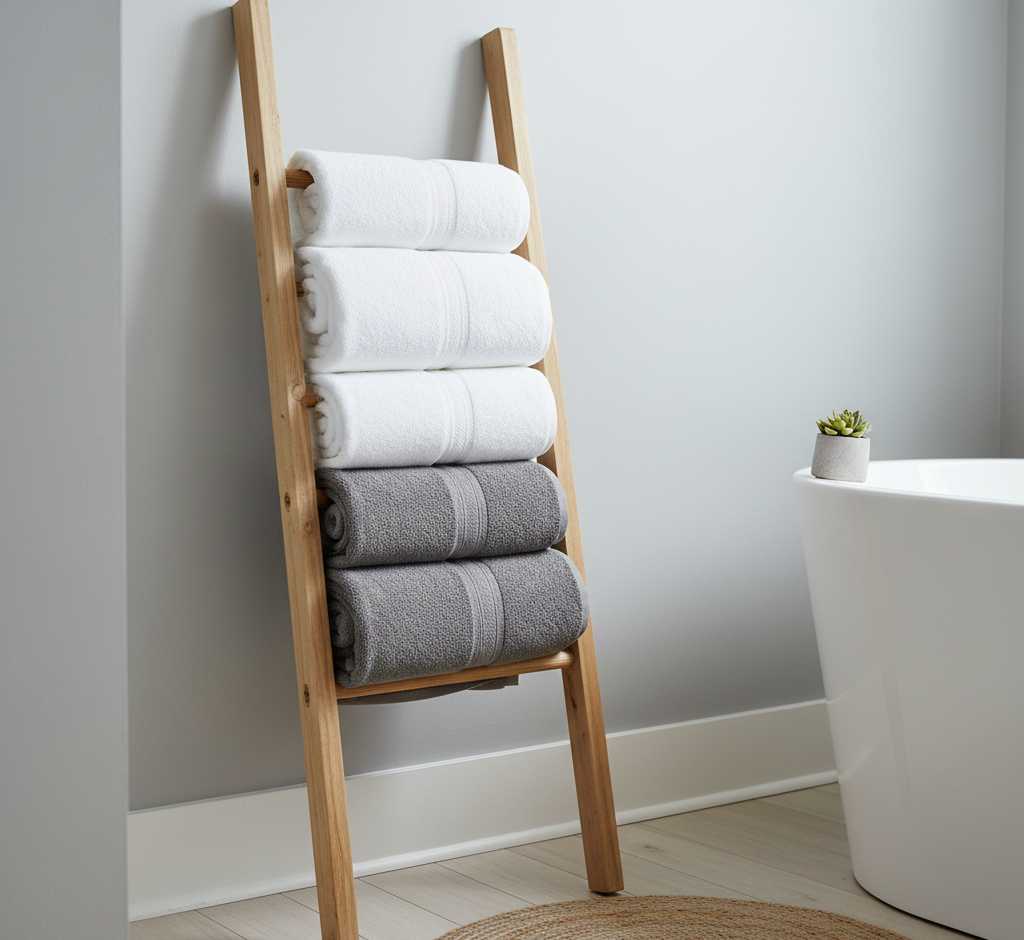
Option B: Over-door towel racks – Hang over the bathroom door to hold 3-4 towels. Choose slim-profile racks (1-2 inches thick) that don’t prevent doors from closing fully.
Option C: Rolled towel storage – Store rolled towels in decorative baskets on shelves or in cabinets. Rolled towels occupy 30% less space than folded ones and look more spa-like.
8. Corner Shelving Units
Bathroom corners are often empty, but corner shelving units change that. They turn these awkward spaces into useful storage. Corner shelves come in many materials and sizes. They are great for square bathrooms with lots of corners.
Types available:
- Freestanding corner shelves (no installation required)
- Mounted triangular shelves (permanent but sturdy)
- Tension-pole corner caddies (ideal for renters)
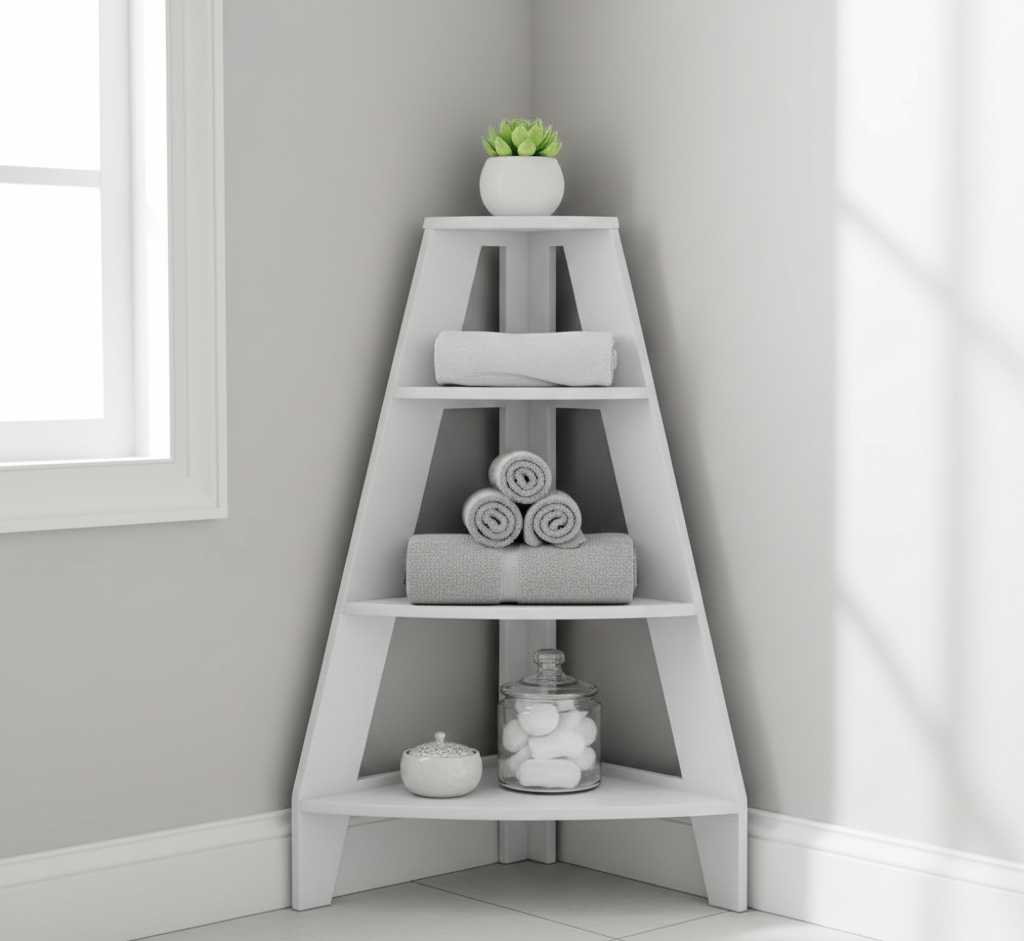
Best use: Place corner shelves in the shower for toiletries, or in dry corners for decorative storage of extra towels and plants.
9. Behind-the-Door Storage
The back of your bathroom door offers 12-16 square feet of unused storage potential. Over-door organizers with pockets, hooks, or shelves transform this space without any installation.
What to store: Hang cleaning supplies, hair styling tools, extra toilet paper, or small towels. Choose clear organizers so you can quickly identify contents, or fabric pockets for a softer aesthetic.
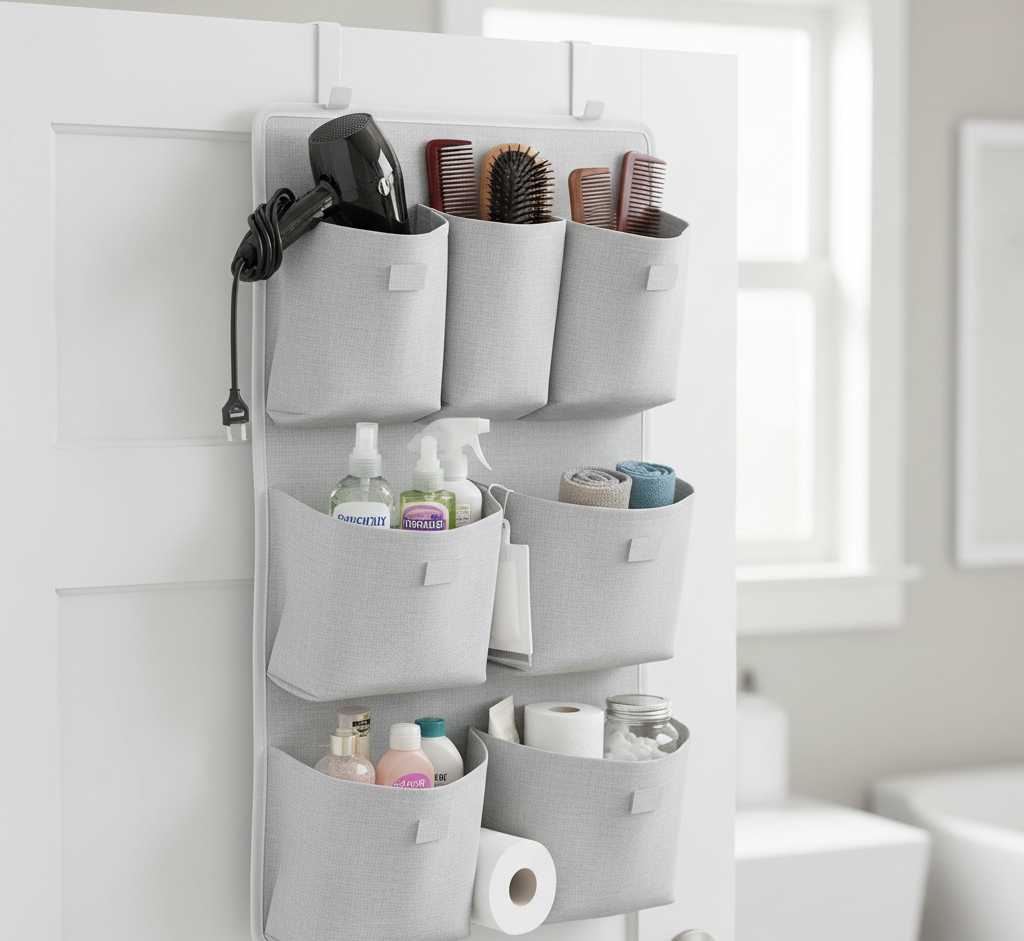
Weight considerations: Standard over-door hooks support 10-15 pounds. For heavier items, like multiple towels, use sturdy organizers made for extra weight.
10. Drawer Organizers and Dividers
Use organizers in your vanity drawers. This keeps them tidy and avoids that “junk drawer” problem. Adjustable dividers create designated spaces for small items that otherwise scatter and tangle.
Sizing guidance: Measure drawer dimensions before purchasing organizers. Most bathroom drawers measure 12-18 inches wide and 2-4 inches deep, though depth varies by vanity style.
What to organize: Use small compartments for makeup, cotton swabs, and hair accessories. Reserve larger sections for hair dryers, brushes, and skincare products.
11. Shower Caddies and Niches
In-shower storage keeps toiletries handy while you bathe. It saves space on the floor and counter. Built-in niches offer the most seamless look, while various caddy options work for existing showers.
Shower caddy types:
- Tension pole caddies (floor-to-ceiling, no installation)
- Corner caddies with suction cups (temporary, easy to move)
- Hanging shower organizers (hooks over showerhead)
- Built-in niches (best during remodels)
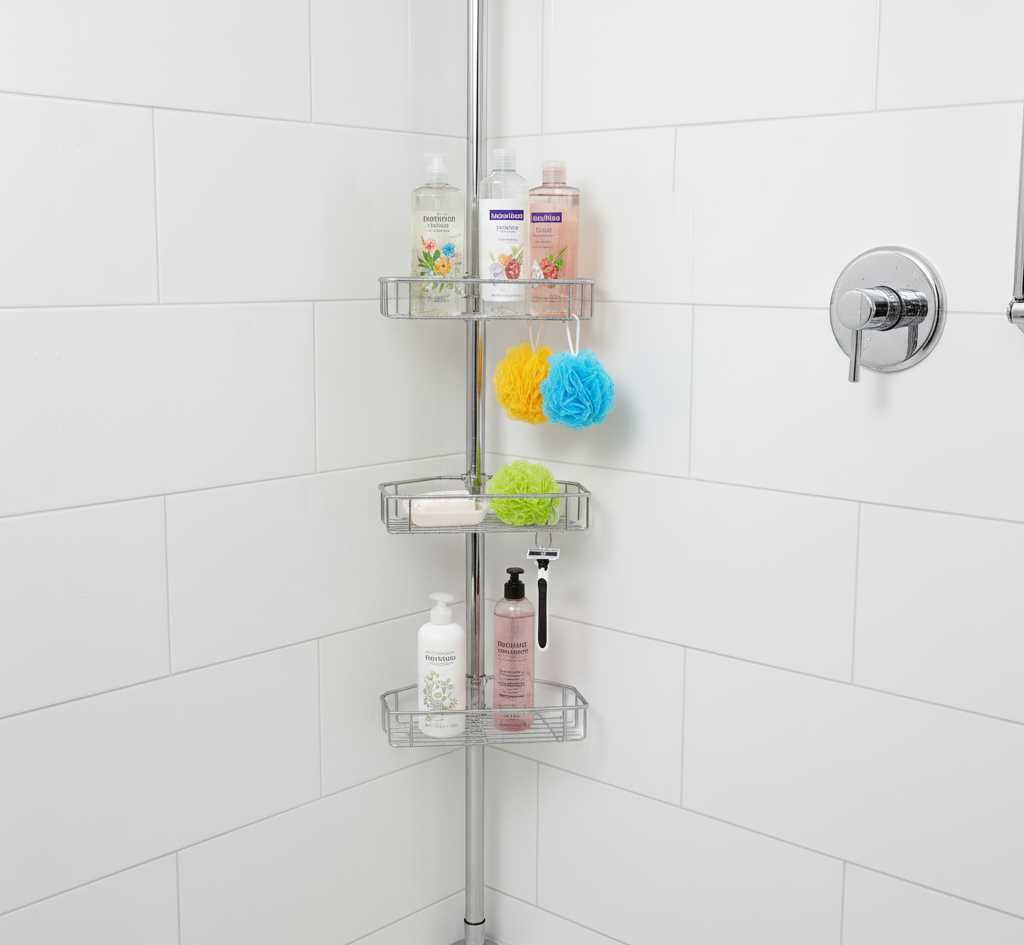
Pro tip: Choose rust-resistant materials like stainless steel or plastic. Wire caddies with open slats prevent soap buildup and allow water drainage.
12. Rolling Storage Carts
For bathrooms with 10-12 inches of space, slim rolling carts offer handy storage. They fit easily beside the toilet or vanity. These work exceptionally well in shared bathrooms where different users need different products.
Functionality: Roll the cart out when needed, then slide it back into its slim profile. Most carts offer 3-4 tiers and measure 6-10 inches wide.
Best for: Guest bathrooms where storage needs vary, or primary bathrooms where morning routines require temporary access to numerous products.
13. Magnetic Storage Solutions
Magnetic strips and containers utilize often-overlooked metal surfaces in your bathroom. Medicine cabinet doors, the side of metal vanities, or installed magnetic boards can hold bobby pins, tweezers, nail clippers, and other small metal items.
DIY option: Install a magnetic knife strip inside your medicine cabinet door or on an empty wall section. This works remarkably well for makeup items with magnetic packaging.
14. Built-In Recessed Shelving
During bathroom remodels, you can add recessed shelving between wall studs. This gives you extra storage without losing any square footage. These built-in niches are usually 14.5 inches wide. That’s the space between standard 16-inch studs. They can be any height.
Where to add: Between studs flanking the toilet, beside the vanity, or in shower walls. Each recessed shelf adds approximately 2-3 cubic feet of storage.
Design note: Finish recessed shelves with tile, paint, or trim to match your bathroom aesthetic. This built-in approach looks custom and increases home value more than freestanding storage.
15. Vanity with Maximized Internal Storage
If you’re replacing your bathroom vanity, prioritize models with smart internal storage. Drawer-based vanities usually provide 30-40% more usable space than door-based cabinets. This is because drawers make better use of vertical space.
Features to seek:
- Soft-close drawers (durability)
- Full-extension drawer slides (access back items easily)
- Built-in drawer dividers (organization)
- Toe-kick drawers (bonus storage in the base)
How to Choose the Right Storage Solution for Your Bathroom
Not every storage solution works in every bathroom. Here’s how to evaluate which options fit your space:
Step 1: Measure your available space – Before purchasing anything, measure height, width, and depth of potential storage areas. Include door swing radius and walking paths.
Step 2: Assess your storage needs – List what you need to store and categorize by frequency of use. Daily items need prime accessible space, while backup supplies can occupy harder-to-reach areas.
Step 3: Consider your bathroom’s style – Choose storage that complements your existing design. Modern bathrooms fit sleek metal and glass organizers. Traditional spaces look better with wood or wicker options.
Step 4: Factor in moisture resistance – Bathrooms are humid environments. Select materials rated for bathroom use to prevent warping, rust, or mildew.
Step 5: Think about installation – Renters should prioritize damage-free solutions like tension poles and over-door organizers. Homeowners can invest in mounted shelving and built-in options.
Storage Solutions for Specific Bathroom Challenges
For Bathrooms with No Linen Closet
Without a dedicated linen closet, storing towels and washcloths challenges most small bathrooms.
Use a mix of solutions:
- Place an over-toilet shelving unit for guest towels.
- Hang towels in use on behind-door hooks.
- Use rolling carts for extra supplies.
If you have a hallway closet, use two shelves for bathroom linens. This keeps them handy without taking up space in the bathroom.
For Shared Bathrooms
When multiple people share a bathroom, personal storage prevents territorial disputes. Assign each person a specific shelf, drawer, or basket. Color-coded bins help younger children identify their items. Install hooks at different heights. This way, everyone can hang their towel easily, without reaching or straining.
For Rental Bathrooms
Renters need storage solutions that don’t damage walls or require extensive installation. Focus on freestanding units, tension poles, suction-based organizers, and over-door storage. Adhesive hooks rated for bathroom use provide additional hanging space without leaving marks.
Maintenance Tips for Organized Bathroom Storage
Creating organized storage means nothing if you can’t maintain it. Here are practical maintenance strategies:
Weekly: Wipe down shelves and organizers to prevent moisture buildup. Return items to designated spots after use.
Monthly: Check expiration dates on medications and cosmetics. Dispose of old products and restock necessities.
Seasonally: Rotate items based on the season. Move summer sunscreen to prime spots in June, switch to hand lotion in October. This keeps frequently used items accessible without permanent reorganization.
Annual deep clean: Once yearly, empty all storage areas completely. Clean shelves, reassess what you’re storing, and donate unused items. This prevents gradual accumulation of products you no longer need.
Common Bathroom Storage Mistakes to Avoid
Even with the best intentions, certain mistakes undermine your storage efforts:
Mistake #1: Storing items you never use – That bath salt set from three Christmases ago? If you haven’t used it yet, you won’t. Keep only what you actively use or genuinely love.
Mistake #2: Prioritizing aesthetics over function – Nice storage that doesn’t match your routine just adds clutter. Choose functional solutions first, then add aesthetic elements.
Mistake #3: Blocking access to plumbing – Never permanently block access to shut-off valves, drain pipes, or toilet components. You’ll need to reach them eventually.
Mistake #4: Overloading shelves – Bathroom shelves can’t hold as much weight as kitchen shelves. Moisture weakens the mounting brackets. Follow manufacturer weight limits.
Mistake #5: Ignoring vertical space – When floor space runs out, look up. Vertical storage is your best friend in compact bathrooms.
Cost Considerations for Bathroom Storage Solutions
Budget worries can hold up bathroom organization projects. However, you can achieve good storage without spending much.
Budget-friendly options ($0–$50):
- Repurpose baskets and bins from other rooms.
- DIY floating shelves using reclaimed wood.
- Over-door organizers ($15–$30)
- Basic tension pole shower caddies ($20–$40)
Mid-range solutions ($50–$200):
- Quality over-toilet storage units ($60-$150)
- Bathroom storage carts ($40–$80).
- Mounted shelving systems ($50–$120).
- Under-sink organizers ($30–$70).
Premium investments ($200+):
- Custom built-in shelving ($300-800)
- High-end vanity replacement with optimized storage ($500-2,000)
- Recessed medicine cabinets with lighting ($250-600)
Most homeowners achieve significant improvement spending $100-300 on a combination of mid-range solutions. Prioritize items you’ll use daily for the best return on investment.
Working with a Professional for Built-In Storage
Many storage solutions are DIY projects. But built-in storage usually needs professional help. Consider hiring a contractor when:
- Adding recessed shelving (requires cutting into the walls)
- Replacing vanities (involves plumbing modifications).
- Installing wall-mounted cabinets on tile (specialized drilling is needed)
- Creating custom storage during a bathroom remodel.
Professional installation usually costs:
- $150–$400 for shelf installation.
- $300–$800 for vanity replacement.
- $1,000–3,000 for built-in storage in a remodel.
These investments increase home value and last decades when properly installed.
FAQ: Bathroom Storage for Tight Spaces
What is the best storage solution for a very small bathroom?
Over-the-toilet storage units offer great storage without taking up floor space. This makes them perfect for tiny bathrooms. Pair this with floating shelves and a narrow rolling cart. It gives you a complete solution without wasting your limited space.
How do you maximize storage in a narrow bathroom?
Focus on vertical storage solutions like wall-mounted shelves, tall narrow cabinets (6-12 inches wide), and over-door organizers. Use the space above your toilet and behind your door. These spots won’t block the narrow walkway. Avoid bulky floor-standing storage that makes narrow spaces feel cramped.
Where should I store towels in a small bathroom?
Store towels using these methods:
– Roll towels in baskets on over-toilet shelves.
– Hang one towel on a traditional bar for easy access.
– Keep backup towels on a wall-mounted ladder or behind-door hooks.
If you have a vanity with drawers, dedicate one drawer to hand towels and washcloths.
How can I organize bathroom counter clutter?
Use tiered bathroom counter organizers. They help group daily essentials like toothbrushes, soap, and 2-3 frequently used products. Everything else should go in drawers, medicine cabinets, or under-sink storage. The “one in, one out” rule helps maintain clear counters, when you buy a new product, remove an old one.
What should I store under my bathroom sink?
Store cleaning supplies, extra toiletries, toilet paper, and backup products under your bathroom sink. Use stackable bins or drawer-style organizers to maximize vertical space and create categories. Keep daily-use items elsewhere since accessing under-sink storage means crouching down repeatedly.
How do I add storage to a rental bathroom?
Choose damage-free options like:
– Freestanding over-toilet units
– Tension pole shower caddies
– Over-door organizers
– Adhesive hooks meant for bathrooms
– These offer plenty of storage. You won’t need to drill holes or make permanent changes.
This helps protect your security deposit.
What’s the best way to organize a bathroom with no drawers?
Use drawer-like organizers inside cabinets to create the functionality of drawers. Stackable storage bins, under-sink sliding organizers, and medicine cabinet systems act like drawer storage. Add wall-mounted shelves or a rolling cart for additional accessible storage.
How much does bathroom storage renovation cost?
Basic storage upgrades using freestanding units and organizers cost $100-300. Mid-range improvements including wall-mounted shelving and new vanities run $500-1,500. Built-in storage for a bathroom remodel costs between $2,000 and $5,000. The price varies based on how much you customize it and the size of your bathroom.
Transform Your Tight Bathroom Into an Organized Retreat
Small bathroom storage doesn’t have to mean compromise. Using just three or four of these solutions can cut clutter. This will simplify your morning routine and make your bathroom feel more spacious, even if it’s small.
Start by assessing your needs and available space. Then, choose storage solutions that fit your bathroom’s layout. Proper storage can change any bathroom. You can choose simple over-door organizers or go for custom built-ins during a remodel. Both options make even the smallest spaces functional and peaceful.
Ready to maximize your bathroom storage? At College City Design Build, we create beautiful and functional bathrooms for Lakeville families. Our team can help you identify storage solutions during a remodel or provide guidance on optimizing your existing space. Contact us today to discuss your bathroom storage needs.
About the Author: Jeremy Hussey has over 30 years in the remodeling industry, Jeremy Hussey knows that working in someone’s home is about more than just construction, it’s about creating an exceptional customer experience. He believes every client should feel like the only client, with clear communication, respect, and attention to detail guiding every step of the process.
Jeremy has also been active in the National Association of the Remodeling Industry, serving as Chair of the Member Retention Committee, demonstrating his commitment to both his craft and the remodeling community.


