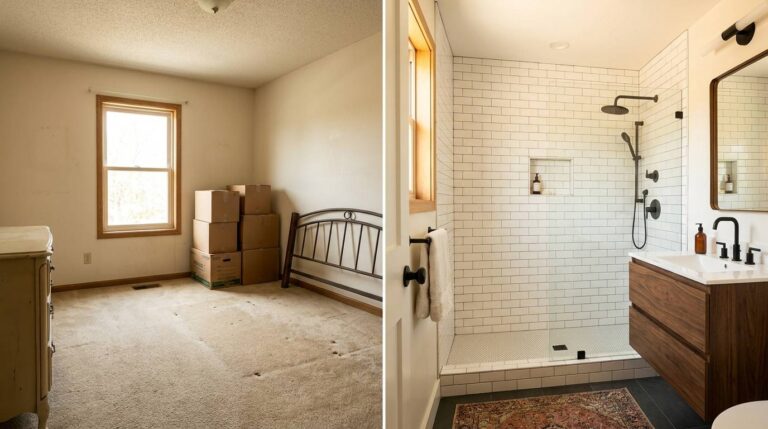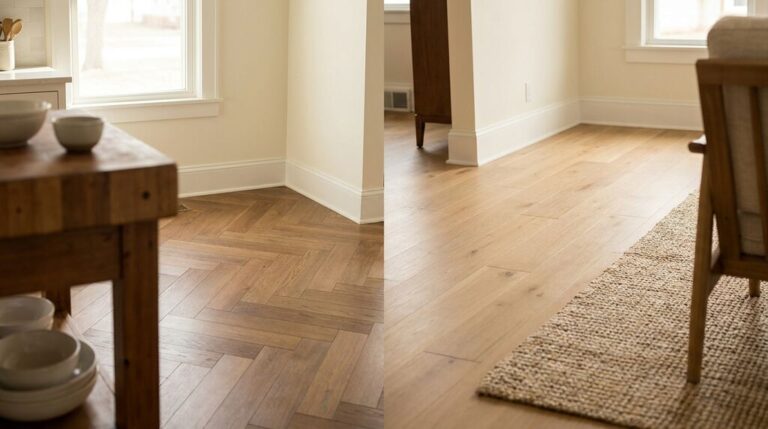
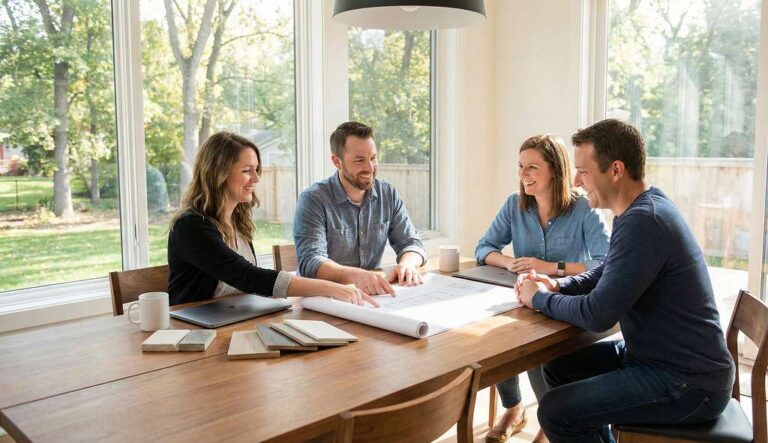
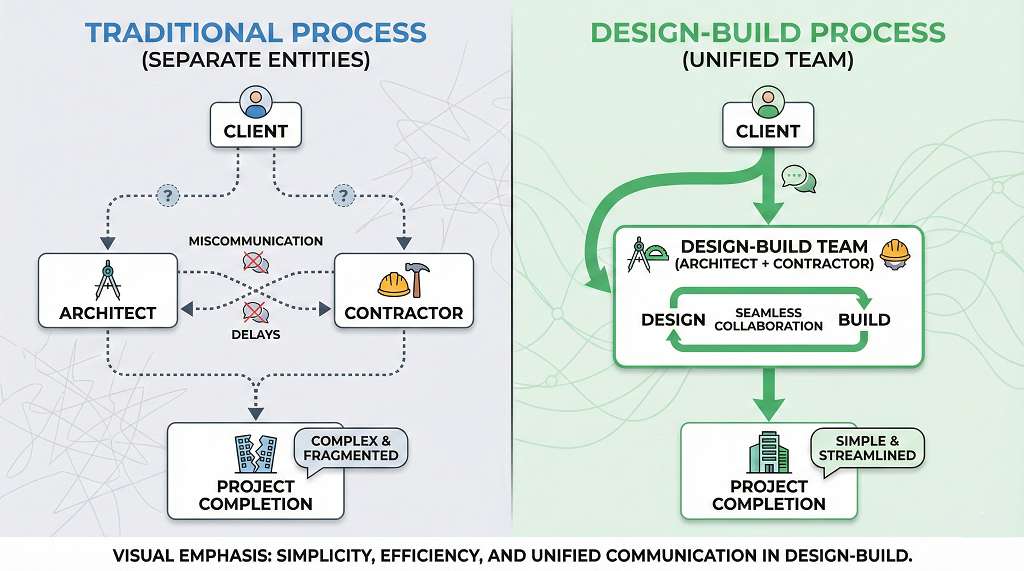
Design-build is a remodeling method where one company handles both the design and construction of your project. Instead of hiring an architect, then finding a contractor, then hoping they communicate well, you work with a single team from start to finish.
If you’ve ever heard horror stories about remodeling projects going over budget or dragging on for months, there’s a good chance those projects used the traditional approach. The homeowner hired a designer. Got plans drawn up. Then sent those plans out for bids from contractors who’d never seen the project before.
The design-build process eliminates that disconnect. And for most homeowners tackling significant renovations, it’s the smarter path forward.
What Is Design-Build? A Simple Definition
Design-build is a way to deliver projects. In this method, one firm handles both the design and construction. They do this all under one contract. The same company that draws your floor plans also swings the hammers.
This matters because traditional remodeling splits these responsibilities. You hire an architect or designer first. They create plans based on your vision (and their assumptions about what things cost). Then you take those plans to contractors for bids. If the bids come back too high, which happens constantly; you’re back to the drawing board, literally.
With a design-build firm, the people designing your project are the same people who will build it. They know exactly what materials cost. They know how long things take. And they’re accountable for the entire outcome.
How the Design-Build Process Works
The design-build process typically follows these phases:
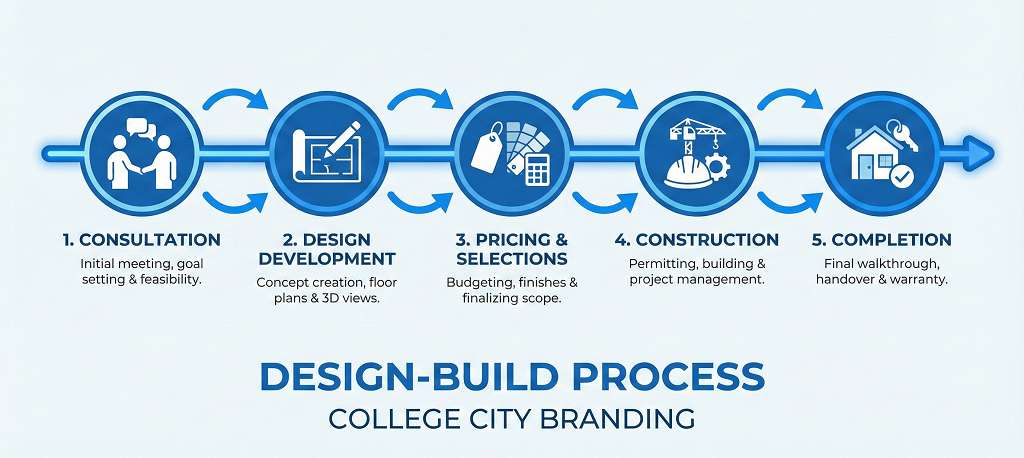
The design-build process combines design and construction under one team, typically completing projects 30% faster than traditional methods. Here’s how it works from first meeting to final walkthrough.
Step 1: Initial Consultation
You meet with the design-build team to discuss your goals, budget range, and timeline. Most design-build firms offer free or low-cost initial consultations. This is different from traditional methods, where you pay thousands for design work before knowing if you can afford to build it.
Step 2: Design Development
The design team creates plans while consulting with the construction team on feasibility and costs. This collaboration happens in real-time, not after the plans are finished. If a design element would blow the budget, you know immediately.
Step 3: Pricing and Selections
You receive a detailed, fixed-price proposal based on actual costs, not estimates or allowances. Choose materials early in the design process. This way, you won’t be shocked later by a tile that costs three times your budget.
Step 4: Construction
The same team that designed your project builds it. Communication stays seamless. If questions arise during construction, your designer is just down the hall, not at a separate firm pointing fingers.
Step 5: Completion and Walkthrough
Your design-build firm handles final inspections, punch list items, and warranty documentation. One company, one point of contact, one party responsible for making things right.
Design-Build Cost Structure
Here’s what to expect when budgeting for a design-build project in Minnesota:
| Cost Component | Typical Range |
| Design fees (included) | 8% – 15% of project cost |
| Construction management fee | 15% – 20% of construction |
| Labor and materials | Direct cost (pass-through) |
| Typical savings vs. traditional | 6% – 20% |
Who Should Use Design-Build?
Design-build works best for homeowners who:
- Want one point of contact: No more juggling calls with your architect, contractor, and various subcontractors.
- Need budget certainty: Fixed-price contracts mean you know the cost before construction starts.
- Are tackling complex projects: Kitchen remodels, additions, whole-house renovations, projects where design and construction decisions are deeply intertwined.
- Value their time: Design-build projects are usually 30% faster than traditional methods. This speed comes from overlapping design and construction phases.
When traditional methods might work better.
Design-build isn’t right for every situation. Traditional methods may work better if:
- You’re doing a simple, cosmetic update that doesn’t require design services
- Your insurance requires multiple contractor bids
- You already have complete architectural plans you’re happy with
- You want to manage the project yourself and enjoy coordinating multiple contractors
How to Choose a Design-Build Firm
Not all design-build firms are created equal. Here’s what to look for:
Step 1: Verify In-House Design Capabilities
Some contractors call themselves “design-build” but outsource all design work. True design-build firms have designers or architects on staff. They work closely with the construction team every day.
Step 2: Review Their Portfolio
Look for completed projects similar to yours in scope and style. A firm that specializes in new construction may not be the best fit for a historic home renovation.
Step 3: Check Credentials
Join professional groups such as NARI (National Association of the Remodeling Industry) or BATC (Builders Association of the Twin Cities). These indicate commitment to industry standards and continuing education.
Step 4: Understand Their Contract
Ask whether they offer fixed-price contracts or time-and-materials billing. Fixed-price contracts protect you from cost overruns; time-and-materials puts that risk on you.
Step 5: Talk to Past Clients
Ask for references from projects completed in the last two years. Questions to ask: Did the project stay on budget? On schedule? Would you hire them again?
Ready to Learn More About Design-Build?
At College City Design-Build, we’ve used this approach for over 25 years in Lakeville and throughout the Twin Cities. Our design team works with our construction crews daily. This keeps your project on budget, on schedule, and just as you imagined.
Call us at (952) 469-6900 or schedule a free consultation to discuss your project.
Frequently Asked Questions
What is design-build in simple terms?
Design-build is when one company handles both the design and construction of your remodeling project. Instead of hiring an architect and contractor separately, you work with a single team from concept through completion.
Is design-build more expensive than traditional remodeling?
No. Design-build typically costs 6% to 20% less than traditional design-bid-build methods. Design-build projects often start with similar proposals. However, they lead to fewer change orders and cost surprises. This means lower final costs.
How long does a design-build project take?
Design-build projects are typically 30% faster than traditional methods. A kitchen remodel might take 3-4 months total; a whole-house renovation 6-12 months. The integrated approach allows design and construction phases to overlap.
What’s the difference between design-build and a general contractor?
A general contractor focuses only on construction, they build from plans someone else created. A design-build firm makes plans in-house. This way, the designers know how your project will be built and what it will cost.
Do I still get design choices with design-build?
Absolutely. You’re involved in every design decision, layouts, materials, finishes, fixtures. Your design choices are guided by actual construction costs from the start. This way, you won’t create something beautiful only to find it’s too expensive to build.
What types of projects work best with design-build?
Design-build works best for complex projects where design and construction mix. This includes:
– Kitchen remodels ($75,000 to $200,000+)
– Bathroom renovations ($30,000 to $100,000)
– Home additions ($100,000 to $300,000+)
– Whole-house remodels ($200,000 to $500,000+)
About the Author
This article was written by the team at College City Design-Build, a design-build remodeling firm based in Lakeville, Minnesota. With 25 years of experience and many projects in the Twin Cities, we guide homeowners through remodeling. From the first sketch to the final walkthrough, we’re here to help. We’re proud members of NARI, BATC, and maintain an A+ rating with the BBB.