What you need to know now about basement bar ideas:
- The right basement bar setup depends entirely on whether you want to pay the $3,000 to $8,000 premium required to run new plumbing for a wet bar.
- A functional bar requires a minimum of six linear feet for the counter, plus at least 36 inches of clearance behind the stools so guests can actually walk past.
- Budget expectations vary wildly: a simple DIY dry bar setup will cost a few thousand dollars in materials, while a custom-built sports pub with draft taps easily exceeds $30,000.
- Cutting corners on basement electrical and moisture control will destroy your investment faster than anything else.
Keep reading to see exactly how to allocate your budget and which layout makes the most sense for your square footage.
Basement Bar Ideas at a Glance
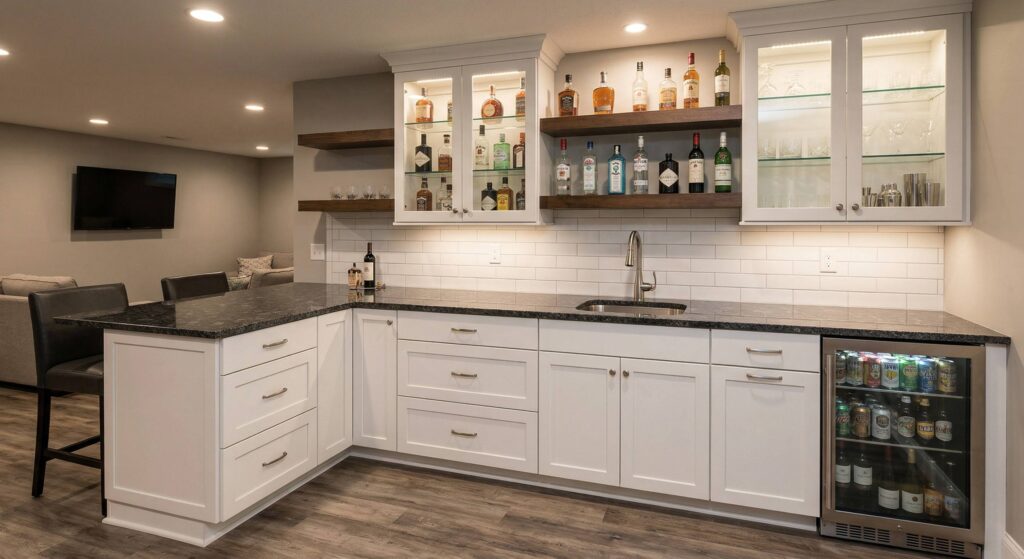
The best basement bar ideas for your home are the ones that directly match your entertaining style and plumbing access. If your basement sits below the sewer line, you will need to factor in an ejector pump system before you even look at cabinetry. Review the breakdown below to see exactly where your budget fits into the remodeling landscape.
| Bar Type | Cost Range | Best For |
|---|---|---|
| Bar cart or cabinet | $200 to $1,500 | Renters, minimal commitment |
| Dry bar (no plumbing) | $3,000 to $10,000 | Budget builds, DIY projects |
| Wet bar with sink | $7,000 to $25,000 | Full functionality, resale value |
| Custom built-in bar | $15,000 to $30,000+ | Entertainment-focused homes |
| Full bar room with seating | $25,000 to $50,000+ | Dedicated entertainment spaces |
Should You Build a Wet Bar or a Dry Bar?
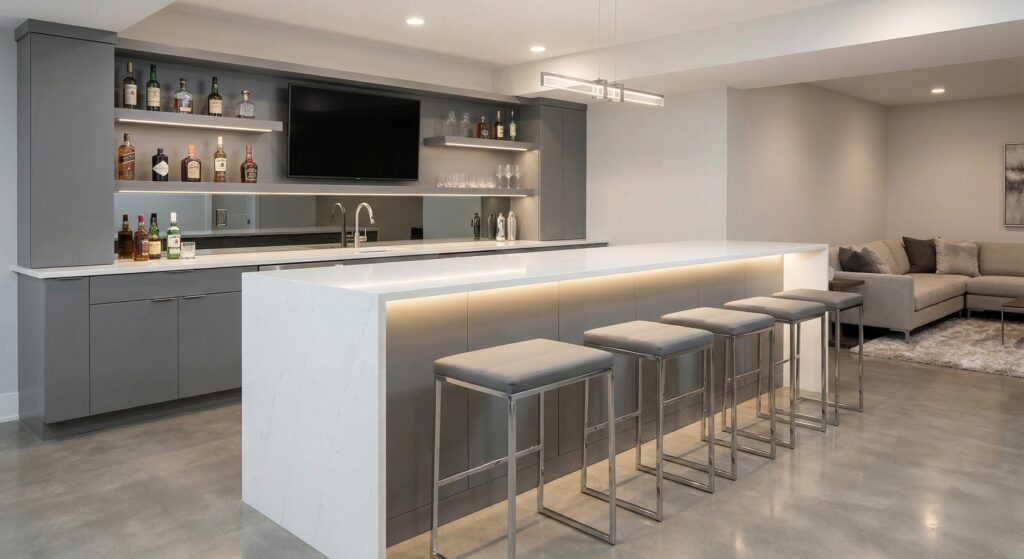
A dry bar has no plumbing. A wet bar includes a sink and running water. The difference affects your budget by $3,000 to $8,000 or more.
Dry bars work well when your basement is close to the main floor kitchen. Guests can rinse glasses upstairs without much hassle. A dry bar includes cabinetry, a countertop, a beverage refrigerator, and storage for bottles and glassware. No permits required in most cases.
Wet bars make sense when you want full functionality in the basement. A sink lets you rinse glasses, fill ice buckets, and prep garnishes without trips upstairs. If your basement sits below the sewer line, you’ll need an ejector pump, which adds $1,000 to $4,000 to the project.
For most homeowners we work with, the convenience of a wet bar justifies the extra cost. Once you’ve hosted a few parties, running upstairs every ten minutes to rinse a shaker gets old fast.
Thinking about tackling the rest of your lower level at the same time? A bar is just one piece of the puzzle. Read our Basement Finishing Guide to see what else you should plan for before the drywall goes up.
15 Basement Bar Ideas by Style and Budget
1. The Corner Bar
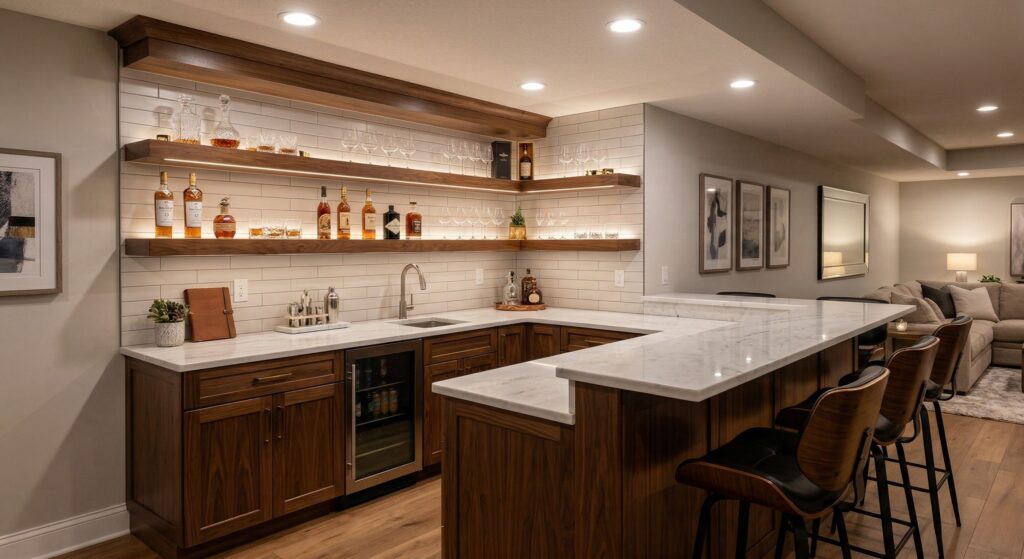
A corner bar tucks into unused space and works in basements of any size. L-shaped designs maximize countertop space without dominating the room. Budget: $4,000 to $12,000 depending on materials.
This layout works especially well in finished lower levels where the main entertaining area needs to stay open. You get bar functionality without sacrificing floor space for seating or games.
2. The Straight Bar
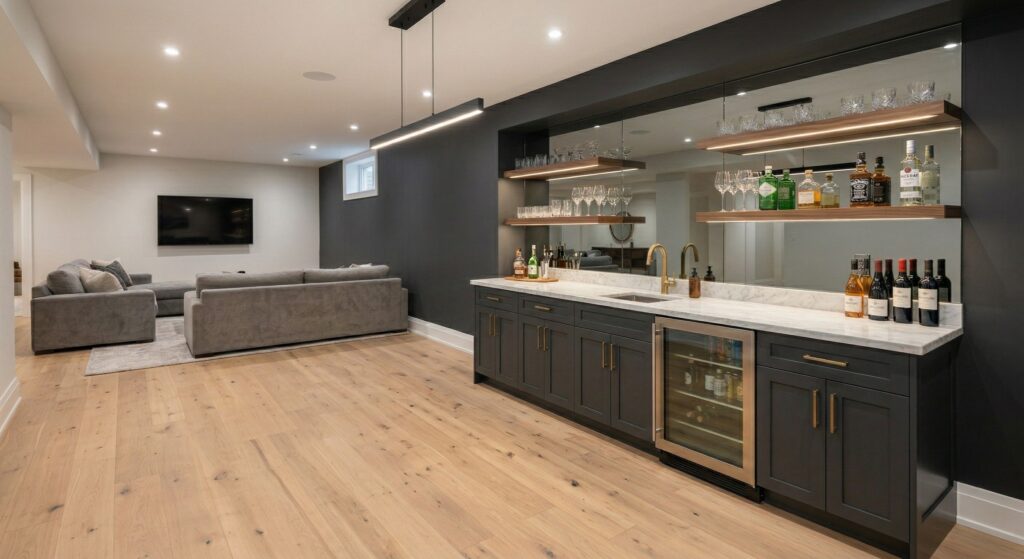
A linear bar against one wall is the classic layout. It’s efficient, straightforward to build, and leaves the rest of the basement open. Budget: $3,000 to $15,000.
Typical dimensions run 6 to 10 feet long and 24 inches deep. Add 18 to 24 inches of overhang for bar stool seating. A 10-foot bar comfortably seats four to five people.
3. The Sports Bar
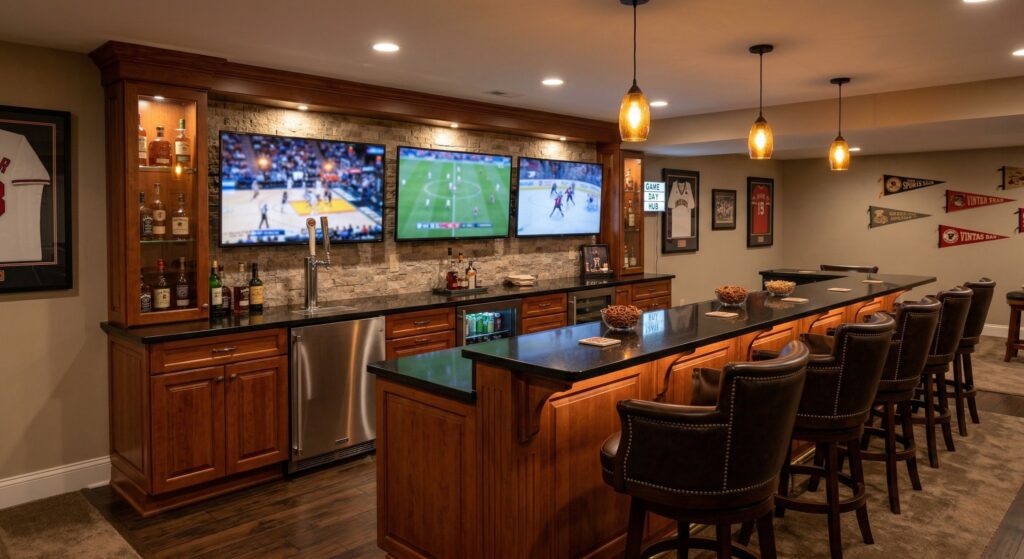
Multiple TVs, comfortable seating, and easy sight lines from the bar to the screen. This design prioritizes viewing angles over everything else. Budget: $15,000 to $35,000.
Mount the main TV where it’s visible from both bar seating and lounge furniture. Consider a secondary screen behind the bar for the bartender. Run electrical and low-voltage wiring during construction, not after.
4. The Speakeasy
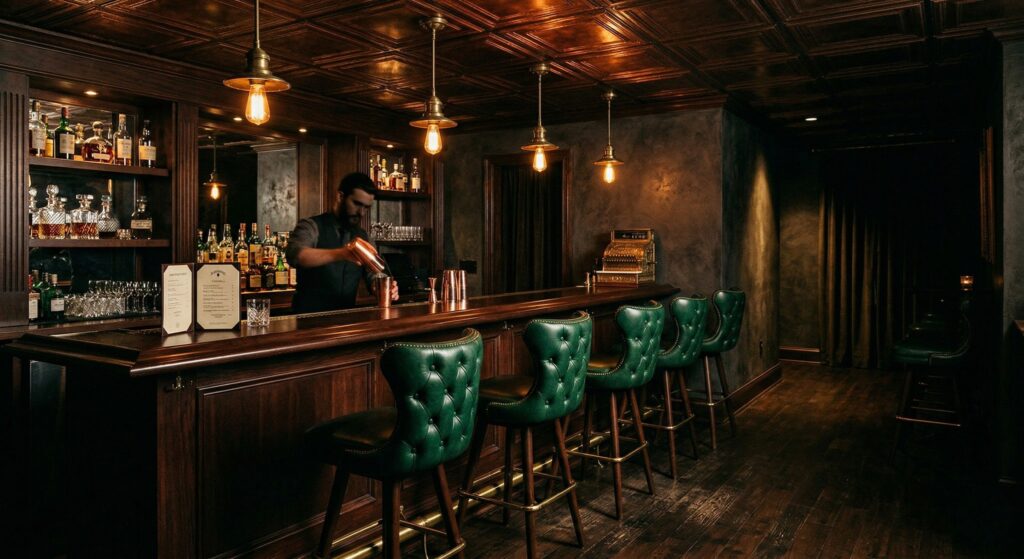
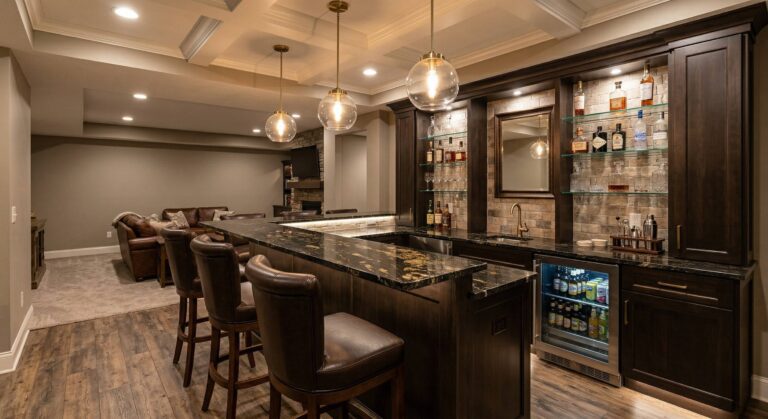
A hidden or semi-hidden bar with vintage character. Think dark wood, brass fixtures, leather seating, and moody lighting. Budget: $12,000 to $30,000.
The key to a speakeasy vibe is attention to detail. Tin ceiling tiles, vintage-style pendant lights, and reclaimed wood accents sell the look. This style pairs well with homes that have character already.
5. The Modern Lounge Bar
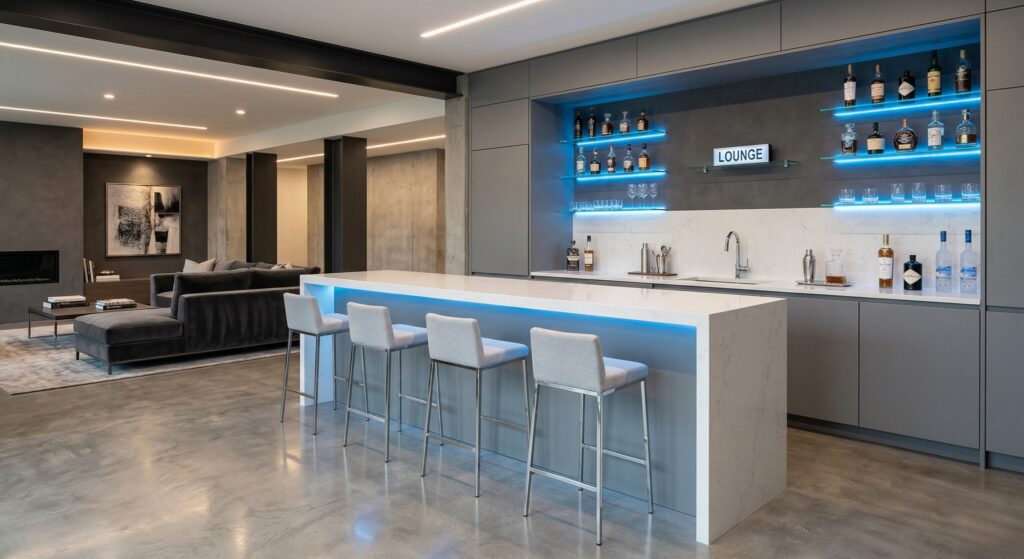
Clean lines, minimal ornamentation, and high-end materials. Quartz counters, flat-panel cabinetry, LED accent lighting. Budget: $15,000 to $35,000.
This style works best in basements with good ceiling height and contemporary finishes. Waterfall countertop edges and floating shelves reinforce the sleek aesthetic.
The EPA explicitly warns that improper ventilation during a remodel, especially in moisture-heavy areas like a new wet bar, can trap indoor pollutants and encourage mold. Always ensure your design-build team includes proper mechanical exhaust ventilation in the blueprints
6. The Rustic Pub Bar
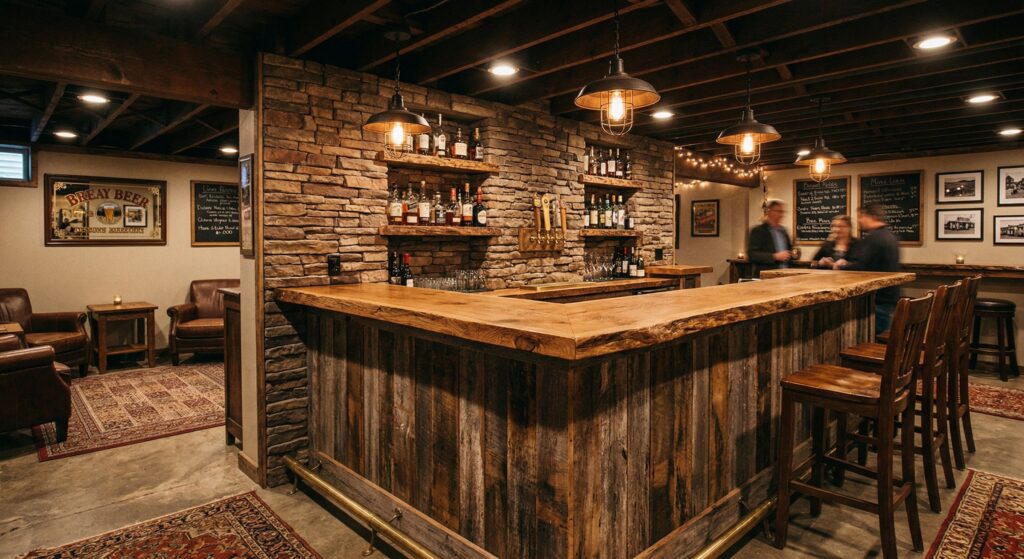
Reclaimed wood, exposed brick or stone veneer, iron hardware, and warm tones. This style feels like a neighborhood tavern. Budget: $10,000 to $25,000.
Authentic reclaimed materials cost more than new materials finished to look old. Both approaches work. What matters is consistency. Mix in genuine antiques or vintage signs if you have them.
7. The Wine Bar
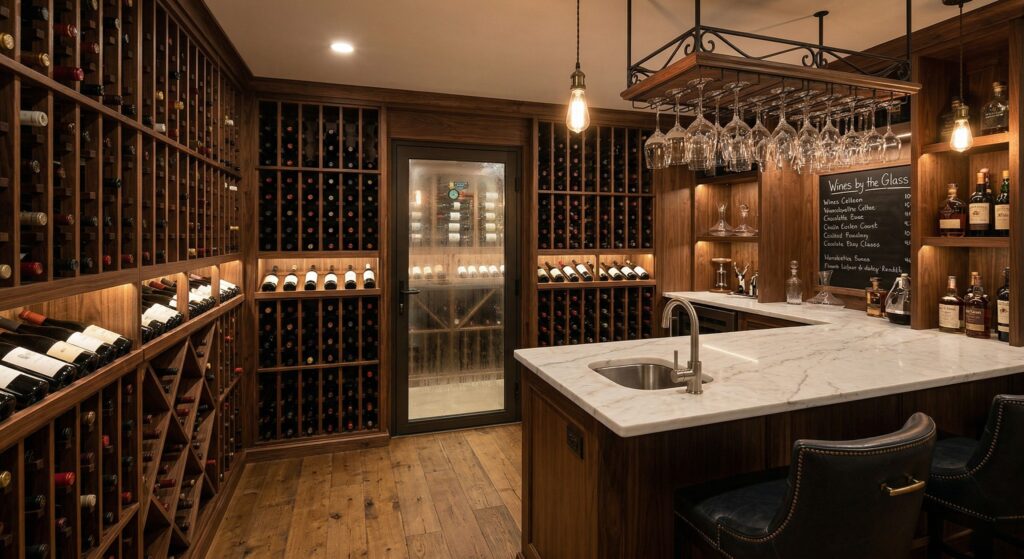
Focused on wine storage and serving rather than cocktails. Built-in wine racks, temperature-controlled storage, and stemware display. Budget: $8,000 to $25,000.
If you’re serious about wine, consider a dedicated climate zone. A small wine cooling unit runs $500 to $2,000. A full wine cellar setup costs $300 to $500 per square foot according to HomeGuide data.
8. The Tiki Bar
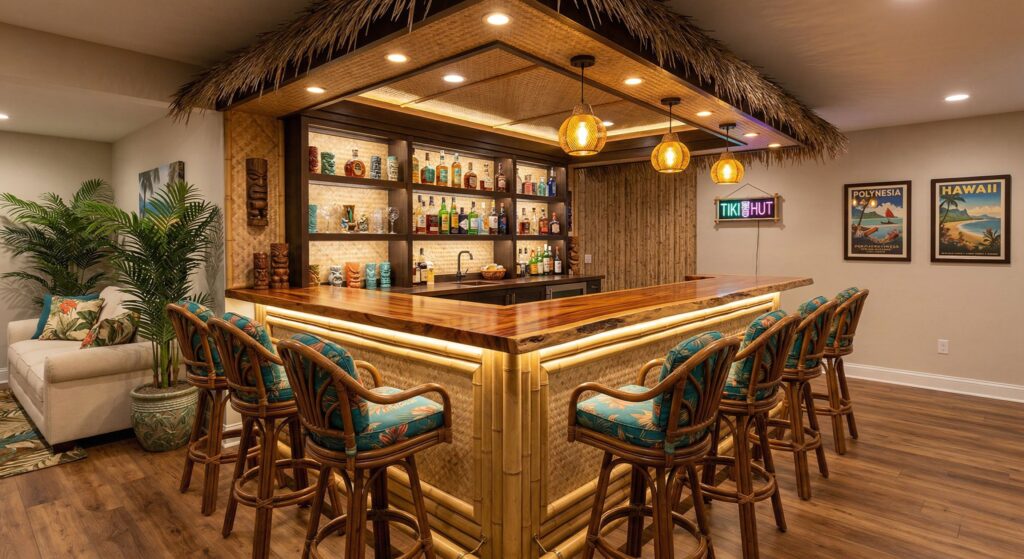
Bamboo, thatch, tropical colors, and island vibes. A fun, themed approach that works best as a dedicated space. Budget: $6,000 to $18,000.
Tiki bars are conversation starters. They’re not for everyone, but homeowners who commit to the theme love the result. Consider how it will photograph for listings if you plan to sell within a few years.
9. The Peninsula Bar
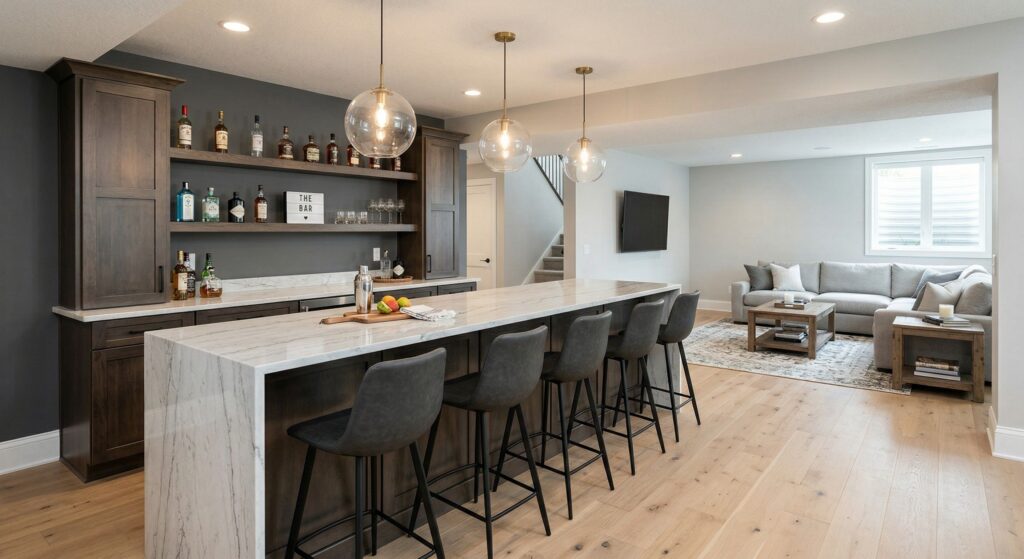
The bar extends into the room like a kitchen island, with seating on multiple sides. Good for larger basements where the bar is a central gathering point. Budget: $12,000 to $28,000.
This layout needs more floor space but creates a natural focal point. Great for Super Bowl parties where people cluster around the bar from all sides.
10. The U-Shaped Bar
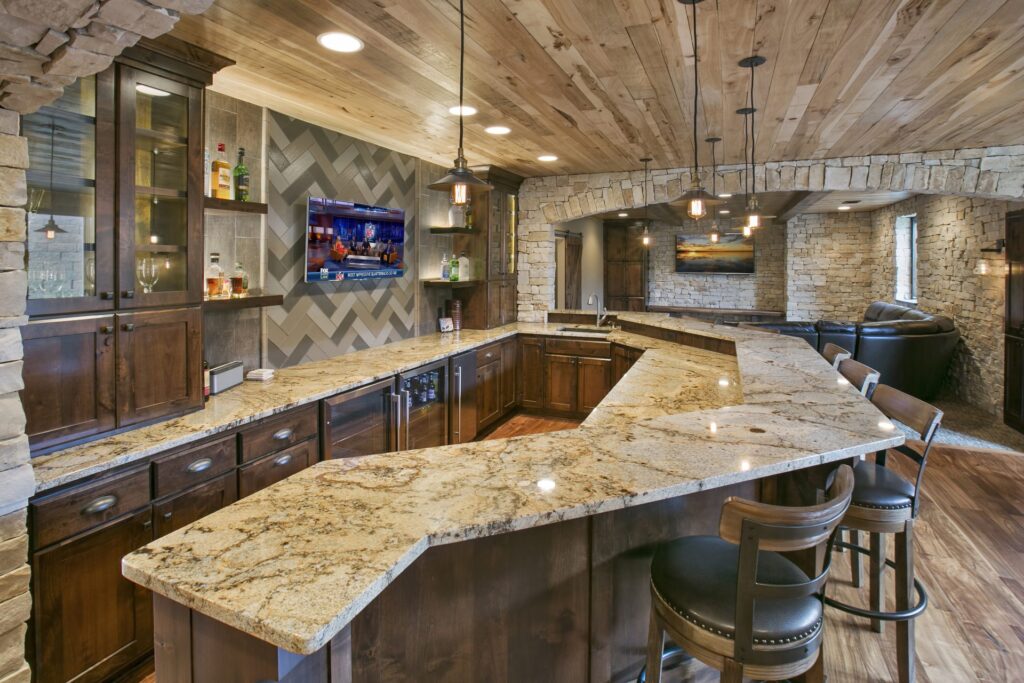
Maximum counter space and storage, with the bartender in the center. This is the full pub experience. Budget: $18,000 to $40,000.
U-shaped bars require significant floor space. Plan for at least 150 square feet dedicated to the bar area alone. The payoff is serious capacity for entertaining.
You don’t have to guess what a high-end custom pub looks like in a Lakeville home. See exactly how we transformed this Northfield Lower Level into an entertainment space that rivals any commercial sports bar.
11. The Small Basement Bar
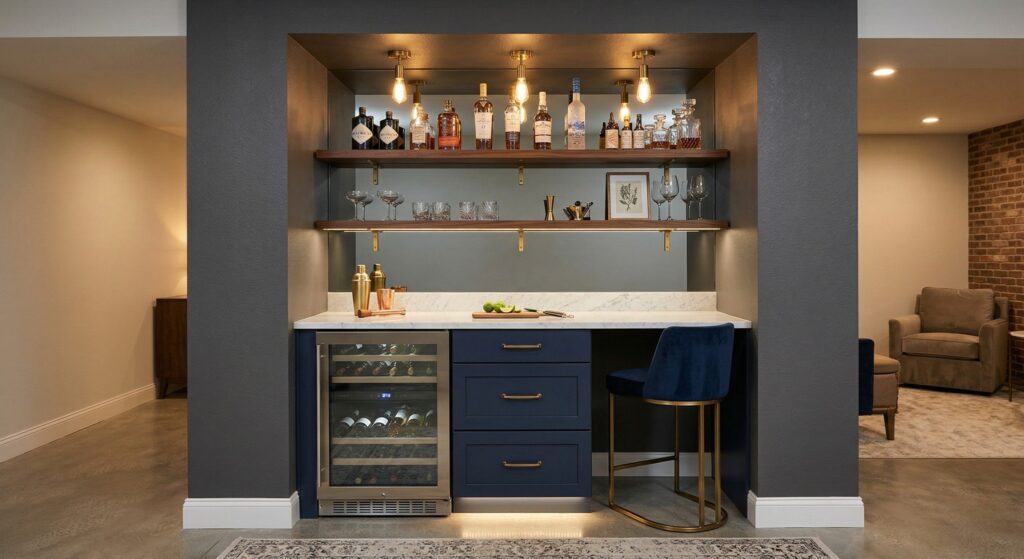
When space is tight, a compact bar can still deliver. A 4-foot run with base cabinets, countertop, and undercounter fridge fits in a closet-sized space. Budget: $3,000 to $8,000.
Focus on efficiency. Every inch matters. Wall-mounted bottle racks, fold-down surfaces, and compact appliances help small bars punch above their weight.
12. The DIY Basement Bar
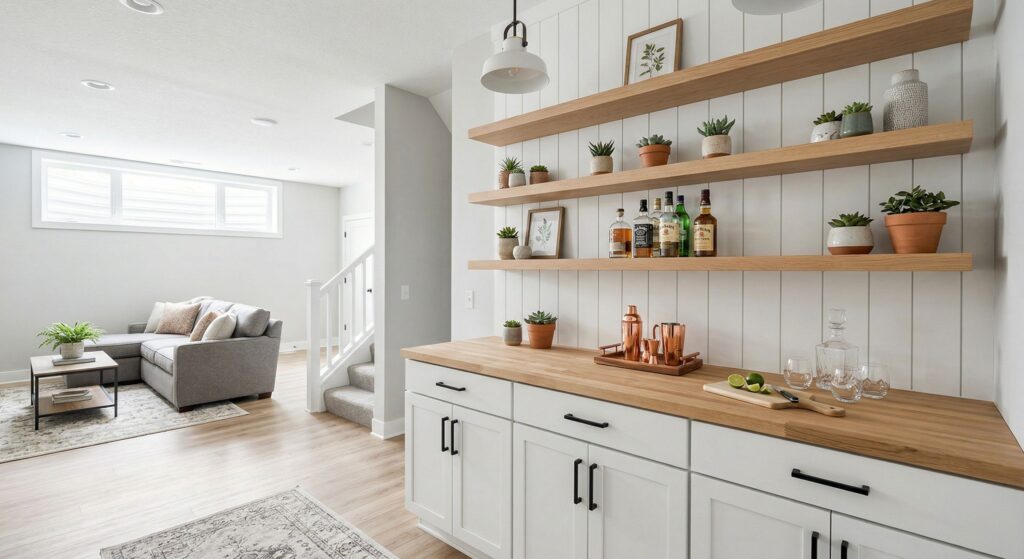
For handy homeowners, building your own bar saves thousands. Prefab bar fronts, butcher block counters, and basic cabinetry keep materials under $2,000. Budget: $1,500 to $7,000.
DIY makes sense for dry bars. Once plumbing and electrical enter the picture, hire professionals. Mistakes with water in a basement cause expensive problems.
13. The Home Theater Bar
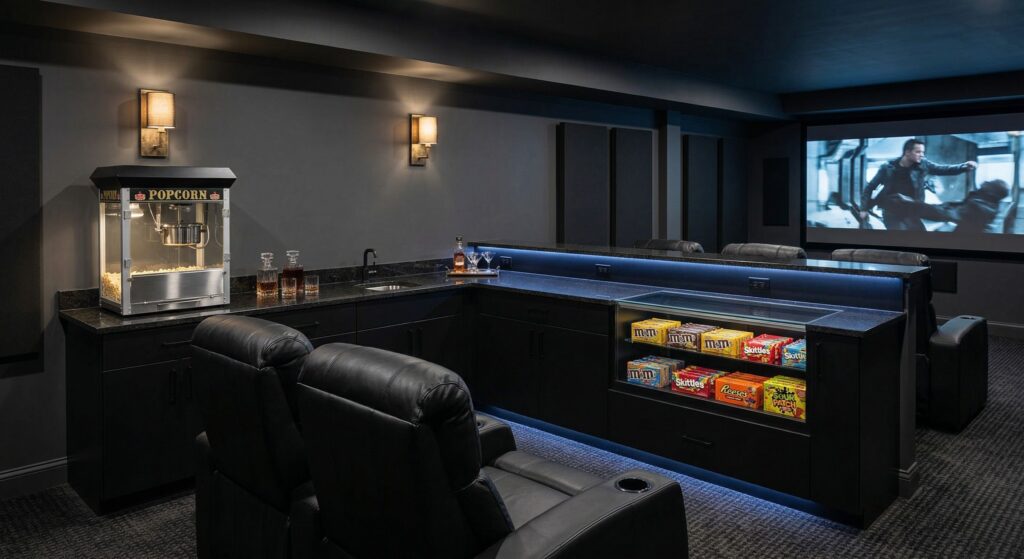
Integrated with a media room, this design positions the bar for concession-stand convenience during movie nights. Budget: $12,000 to $30,000.
Soundproofing matters here. If the bar includes a dishwasher or icemaker, position it away from the seating area to minimize noise during quiet scenes.
14. The Game Room Bar
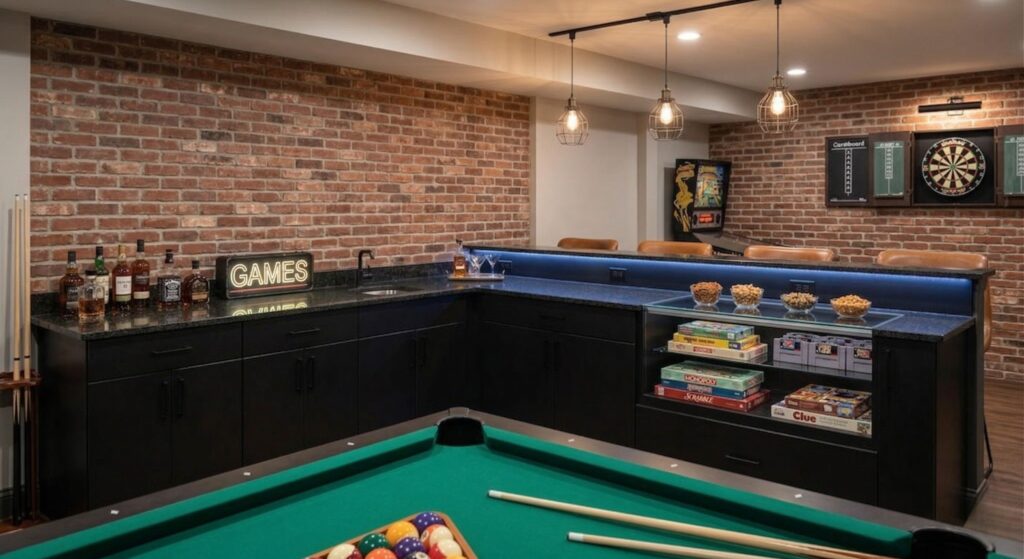
Combined with a pool table, darts, or arcade games, this bar supports active entertaining. Budget: $15,000 to $35,000 for the bar plus game features.
Allow proper clearance for game play. A pool table needs 5 feet of clearance on all sides for cue strokes. Design the bar to observe play, not obstruct it.
15. The Full Basement Pub
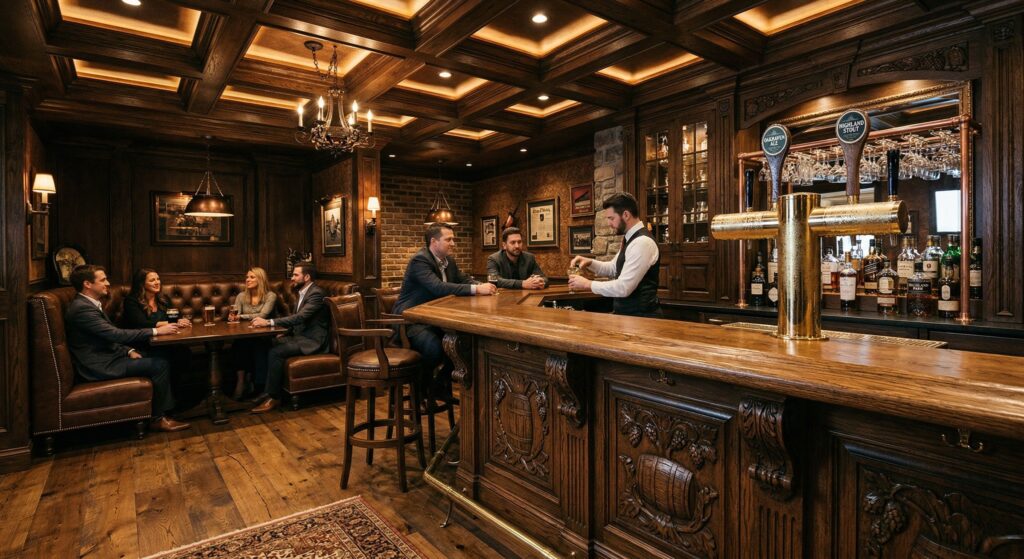
The complete package: custom bar, draft system, commercial refrigeration, dedicated seating area, entertainment systems. Budget: $35,000 to $60,000+.
This is a serious investment. A two-tap glycol-cooled draft system alone runs $2,500 to $5,000 installed. Add commercial-grade equipment and custom millwork and costs escalate quickly.
How to Plan Your Basement Bar
Follow these steps to design a basement bar that works for your space and budget.

Assess Your Space
Measure your basement and identify potential bar locations. Look for areas near existing plumbing (makes wet bars cheaper), away from main traffic paths, and with adequate ceiling height. Standard bar height is 42 inches. You need at least 7.5 feet of ceiling clearance for comfort.
Define Your Must-Haves
Decide between wet and dry. List the appliances you need: beverage fridge, icemaker, dishwasher, kegerator. Determine your seating capacity. These decisions drive your layout and budget.
Choose Your Style
Pick a design direction that fits your home and your entertaining style. Rustic, modern, traditional, themed. Consistency matters more than expense. A cohesive $10,000 bar looks better than a scattered $20,000 one.
Set a Realistic Budget
Basement bars average around $8,000 nationally according to Angi data. Add 15% to 20% contingency for unexpected issues, especially in older homes. If your basement isn’t finished, factor in $30 to $75 per square foot for finishing costs first.
Decide DIY vs. Professional
DIY works for simple dry bars if you have carpentry skills. Hire professionals for wet bars, electrical work, and any structural modifications. A design-build approach keeps design and construction coordinated, which prevents costly changes mid-project.
Where Does Your Basement Bar Budget Actually Go?
Understanding cost factors helps you prioritize spending.
Plumbing
Running water and drain lines adds $1,500 to $4,000 for a basic sink. If your basement floor sits below the sewer line, an ejector pump system costs another $1,000 to $4,000 installed.
Electrical
Dedicated circuits for refrigeration, icemakers, and lighting run $200 to $500 each. A full entertainment system with multiple outlets, USB charging, and under-cabinet lighting adds $1,000 to $3,000.
Countertops
Material matters. Laminate runs $20 to $50 per square foot installed. Granite or quartz costs $75 to $150. For a 20 square foot bar top, that’s a difference of $1,000 to $2,000.
Cabinetry
Stock cabinets cost $100 to $300 per linear foot. Semi-custom runs $200 to $500. Full custom millwork can exceed $1,000 per linear foot for high-end finishes.
Appliances
Undercounter beverage fridges start around $300 for basic models and run to $2,000+ for quality units. Icemakers add $500 to $2,500. A two-tap kegerator system costs $2,500 to $5,000 including glycol cooling.
Does a Basement Bar Add Home Value?
A well-designed basement bar can increase home value, but it’s not guaranteed. A bar that’s part of a well-finished lower level adds to that appeal.
Wet bars add more value than dry bars because they offer functionality buyers appreciate. A quirky themed bar (tiki, speakeasy) may appeal to fewer buyers than a neutral design that any new owner can personalize.
Build the bar you’ll enjoy. Resale value matters, but so does getting use from the space while you live there.
What Are the Most Expensive Basement Bar Mistakes?
We’ve seen homeowners make the same errors for years. Here’s what to avoid.
- Skimping on refrigeration. A dorm fridge under the counter looks cheap and struggles to keep up with a party. Invest in a proper beverage center.
- Ignoring lighting. Bars need layered lighting: task lighting for the work surface, accent lighting for bottles, and ambient lighting for atmosphere. Overhead cans alone won’t cut it.
- Forgetting storage. You’ll accumulate glassware, mixers, napkins, and tools. Plan for cabinet and shelf space beyond what you think you need.
- Blocking traffic flow. Bar stools that bump into walking paths frustrate everyone. Allow 36 inches minimum behind seated guests.
- No dedicated electrical. Running refrigeration and a blender off one outlet trips breakers. Plan circuits before drywall goes up.
Frequently Asked Questions about Basement Bar Ideas
Do I need a building permit to install a basement bar in the Lakeville?
Yes, any project that involves adding new electrical circuits, extending plumbing lines, or moving walls requires a permit and a professional inspection. You might be tempted to skip this step to save a few hundred dollars, but unpermitted work is a massive red flag during a home inspection when you eventually try to sell. We always handle the permitting process for our clients to ensure the bar is up to code and fully legal.
What is the best flooring for a basement bar area?
Luxury Vinyl Plank (LVP) is the best choice for basement bars because it is 100% waterproof and stands up to the heavy traffic of bar stools. Real hardwood is a terrible idea for a basement bar because a single leak from a dishwasher or a spilled drink can cause the wood to warp and buckle. If you want a more traditional pub look, commercial-grade tile is a bulletproof alternative that won’t scratch when guests move their chairs.
How do I handle low ceilings or ductwork in my bar design?
Don’t try to hide low soffits or bulkheads; instead, use them to define the bar’s footprint. We often wrap these structural elements in wood or add recessed lighting to make them look like a deliberate architectural feature of the bar. If your ceiling is especially low, stay away from hanging pendant lights and stick to flush-mount “wafer” LEDs so the space doesn’t feel like a cave.
Where is the best place to put the refrigerator in a basement bar?
You should always place under-counter fridges or wine coolers at the very end of the bar run. This positioning allows guests to grab a fresh drink without walking behind the counter or getting in the way of the person mixing drinks. It creates a much better flow for parties and keeps the “work zone” of the bar clear for the host.
Do I need a dedicated exhaust fan for my basement bar?
If you plan on having a microwave, a pizza oven, or a cigar lounge, you absolutely need a dedicated exhaust fan that vents directly to the outside. Standard basement HVAC systems just recirculate air, which means your whole house will smell like stale popcorn or tobacco for days. A proper mechanical vent is the only way to keep the air fresh and the rest of your home smelling clean.
Ready to Build Your Basement Bar?
Every basement is different. Ceiling height, existing plumbing, structural columns, and window placement all affect what’s possible. The best way to understand your options is to talk with someone who’s built bars in basements like yours.
At College City Design-Build, we’ve designed and built basement bars throughout the Twin Cities for over two decades. We handle design and construction together, so you get accurate pricing before construction starts and no surprises along the way.
Call us at (952) 469-6900 or schedule a free consultation to discuss your basement bar project.