What you need to know now about custom cabinetry cost:
- Custom cabinetry in Minnesota typically runs $500 to $1,200 per linear foot, with most full kitchen projects landing between $12,000 and $30,000.
- Cabinet tier matters more than almost anything else: stock, semi-custom, and custom cabinets can differ in price by four to five times for the same kitchen.
- Wood species drives the second-biggest swing in price, from MDF at the low end to walnut and exotic woods well past $700 a linear foot.
- Custom cabinets typically last 25 years or longer, roughly double a stock box, which changes the math on cost per year of use.
Here’s what actually shapes that number for a Minnesota kitchen.
Costs shown here are general estimates, not a quote. Pricing varies by project scope, material, labor rates, and site conditions. Use these numbers to frame your budget, then get a real number from a cabinetry professional who has measured your kitchen.
What Counts as Custom Cabinetry?
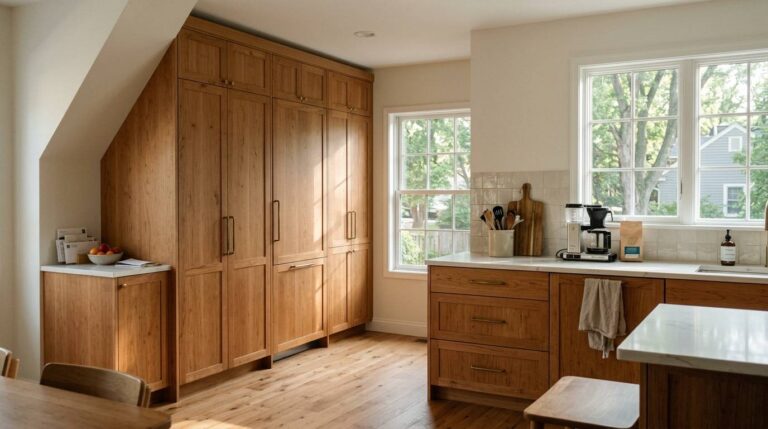
Custom cabinetry means every box, door, and drawer is built to your exact kitchen’s dimensions, rather than selected from a pre-set range of sizes. Nothing gets trimmed or filled to fit.
That distinction matters because it changes what you’re paying for. A stock cabinet is built to standard sizes in bulk, then adjusted to your kitchen with filler panels. Custom cabinetry is designed around your kitchen from the first measurement.
Our kitchen remodeling team treats cabinetry as the backbone of a kitchen project, not an afterthought picked from a catalog once the layout is set.
Wood has overtaken white as the top cabinet choice for the first time in recent years, selected by 29% of renovating homeowners in 2026, a six-point jump from the year before, according to NAR’s reporting on the 2026 Houzz Kitchen Trends Study. That shift toward real wood tones is part of why custom cabinetry costs have climbed in step.
How Much Does Custom Cabinetry Cost in Minnesota?
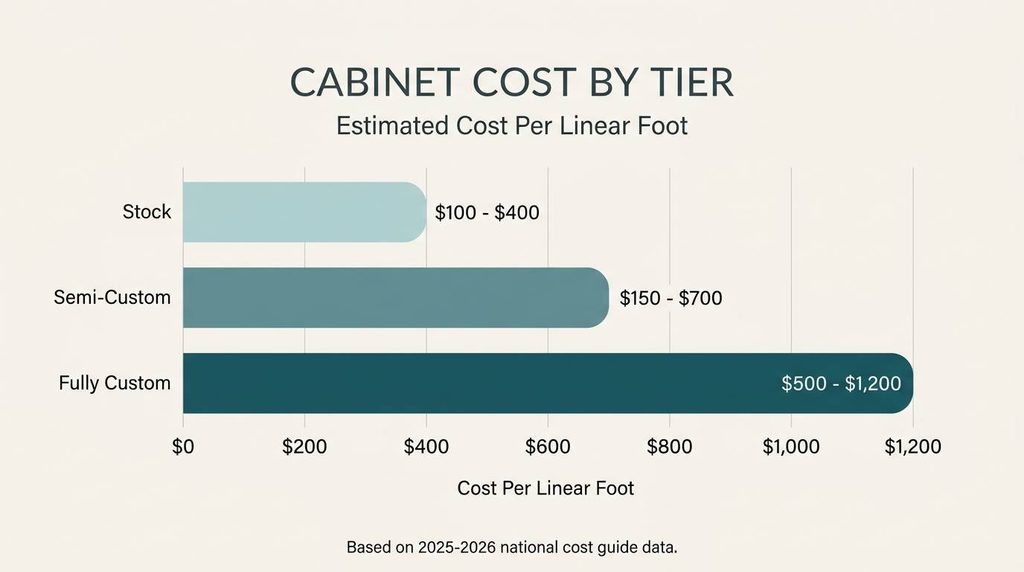
Custom cabinetry in Minnesota generally runs $500 to $1,200 per linear foot, with most full kitchens landing between $12,000 and $30,000 once materials, hardware, and labor are all in. Cabinet tier and wood species are the two biggest swing factors.
Cost by Cabinet Tier
- Stock: $100 to $400 per linear foot. Pre-built in standard sizes, adjusted to fit with filler panels.
- Semi-Custom: $150 to $700 per linear foot. Built from a wider range of pre-set sizes and finishes, with some room to modify.
- Fully Custom: $500 to $1,200 per linear foot. Designed and built around your exact kitchen dimensions, with no size constraints.
Cost by Wood Species
- MDF, Maple, or Birch: $300 to $400 per linear foot
- White Oak: $400 to $600 per linear foot
- Cherry: $500 to $700 per linear foot
- Walnut and Exotic Woods: $700 and up per linear foot
What Actually Drives Your Final Price
- Linear footage. More cabinetry means more material and labor hours, regardless of tier.
- Labor. Cabinet makers typically charge $70 to $175 per hour, making up roughly 25% to 50% of your total project cost.
- Demolition. Removing old cabinets alone runs $300 to $500. A full kitchen demolition runs $800 to $3,000.
- Ceiling height. Cabinets that run to the ceiling typically add about 10% over standard-height cabinets.
In our projects across Lakeville, Prior Lake, Eagan, Apple Valley, and Burnsville, the kitchens that land at the higher end of the range are almost always the ones where a homeowner upgrades from a standard wood species to white oak, cherry, or walnut partway through the design process.
| Project Size | Linear Footage | Typical Cost Range |
|---|---|---|
| Vanity or small wet bar | 2 linear ft | $600 – $1,400 |
| Average kitchen | 20 linear ft | $6,000 – $14,000 |
| Large kitchen | 40 linear ft | $12,000 – $28,000 |
Size-to-cost data from Angi’s custom cabinets cost guide.
Once you know roughly where your kitchen falls, the next useful number is an estimate built around your actual layout. Our pricing tool factors in your linear footage and material preference to get you closer to a real figure. Price your kitchen project →
Which Finish Should You Choose for a Minnesota Kitchen?
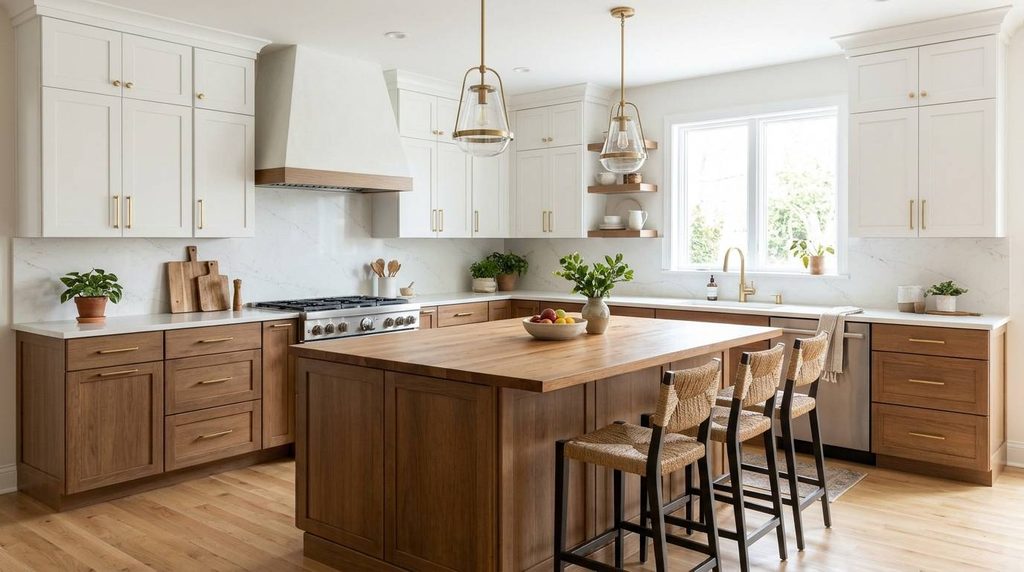
Wood tones now outrank white in kitchens nationally, and the shift shows up most in how homeowners pair their upper and lower cabinets rather than picking one color for the whole room.
Close to a quarter of renovating homeowners now choose contrasting upper and lower cabinets, a look known as a tuxedo kitchen. White still leads on upper cabinets, but wood dominates the lower run.
Popular Finish Pairings in 2026 Kitchens
- Medium wood tones lead the wood category at 15% of renovations, followed by light wood at 11% and dark wood at 3%.
- White remains the top upper-cabinet choice in two-tone kitchens at 40%, with off-white second at 19% and wood third at 17%.
- Wood is the top lower-cabinet choice in two-tone kitchens at 37%, followed by blue at 19% and green at 14%.
- Wood countertops on kitchen islands jumped 12 points year over year to 39%, now the top choice for a contrasting island surface.
These figures come from the same 2026 Houzz Kitchen Trends Study data cited above.
What to Add to Your Budget Beyond the Boxes
| Feature | Typical Cost |
|---|---|
| Pull-out spice rack | $200 – $500+ |
| Lazy Susan | $200 – $600+ |
| Interior cabinet lighting | $160 – $1,000 per fixture |
| Pull-out trash and recycling bins | $200 – $450+ |
| Drawer organizers | $100 – $300 |
| Wine rack | $100 – $400 |
Is Custom Cabinetry Worth the Investment Over Stock or Semi-Custom?
Custom cabinetry costs two to five times more than stock cabinetry, but it also lasts roughly twice as long and tends to recoup more than 70% of its cost at resale. The math narrows considerably once you price it out per year of use rather than as a single upfront number.
Stock cabinets are built to standard sizes, which means filler panels and gaps in any kitchen with an unusual layout, angled wall, or custom island. Custom cabinetry eliminates that entirely, since every inch is designed around your actual space.
Signs Custom Cabinetry Is the Right Call for Your Kitchen
- Your kitchen has an irregular layout, angled wall, or non-standard ceiling height
- You want floor-to-ceiling storage rather than a gap above standard-height cabinets
- You’re planning to stay in the home long enough for the 25-year lifespan to matter
- You want a specific wood species or finish that stock and semi-custom lines don’t offer
If none of those apply and your kitchen is a standard size and shape, semi-custom cabinetry can deliver a similar look for less. A good cabinetry partner will tell you that directly rather than upselling a tier you don’t need.
What Should You Look for in a Custom Cabinetry Partner?
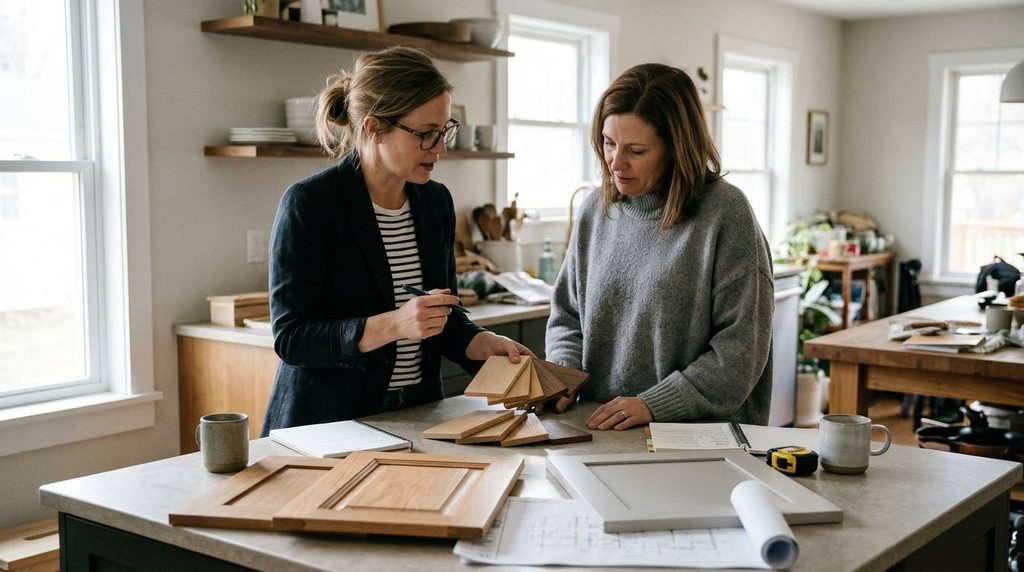
Material quality only matters if the joinery and installation behind it hold up. Ask how a cabinet maker handles box construction, drawer glides, and door alignment, since these details separate cabinetry that lasts decades from cabinetry that loosens within a few years.
Ask to see a finished kitchen in person rather than renderings alone. Seams, drawer action, and finish consistency are easier to judge standing in the room.
Our Prior Lake kitchen project gallery shows a few recent custom cabinetry builds in finished south metro kitchens, which is a useful way to see how a wood species or finish actually reads once it’s installed.
Ready to Get an Exact Number for Your Kitchen?
The ranges above give you a starting point. An exact number needs your kitchen’s actual linear footage, your wood species preference, and a look at your current layout.
Our pricing tool takes those details and gets you a real estimate in a few minutes, no obligation attached. If you’d rather talk it through first, that’s what our team is for.
If you’re still weighing custom cabinetry against a broader kitchen project, our breakdown of kitchen remodel cost in Minnesota puts cabinetry in context against the rest of the budget.
Cabinetry Shows Up Everywhere, Not Just the Kitchen
Custom cabinetry isn’t limited to kitchens. Built-in bar cabinetry, mudroom storage, and bathroom vanities all draw on the same tiers and material choices covered here, just at a smaller linear footage.
Our basement bar ideas breakdown shows custom cabinetry applied to a very different room, if you’re weighing where else in the home it might make sense.
Frequently Asked Questions about Custom Cabinetry Cost
How long does a custom cabinetry project take from order to installation?
Custom cabinetry typically takes six to twelve weeks from final design approval to delivery, depending on wood species and how many kitchens are ahead of yours in the shop’s queue. Installation itself usually takes three to five days once cabinets arrive, similar to other kitchen cabinetry work.
Can I mix cabinet tiers in the same kitchen to manage cost?
Yes, and many homeowners do. A common approach is custom cabinetry for the visible, high-use areas like the island or a focal wall, paired with semi-custom cabinetry for a pantry or less visible run. This keeps the design-defining pieces fully custom while managing the total budget.
Does custom cabinetry require a permit in Minnesota?
Cabinetry installation on its own typically doesn’t require a permit, since no structural, plumbing, or electrical work is involved. That changes if your project includes moving a wall, relocating plumbing for a new island sink, or adding new electrical circuits for lighting or appliances.
How much does ceiling-height cabinetry add to the cost?
Cabinets that run to the ceiling typically add about 10% over standard-height cabinetry, since the extra vertical footage adds both material and installation time. The tradeoff is usable storage all the way up, rather than a dust-collecting gap above standard cabinets.
What’s the difference between custom cabinetry and cabinet refacing?
Custom cabinetry replaces the entire cabinet box, door, and drawer system, built from scratch to your kitchen’s dimensions. Refacing keeps the existing boxes in place and replaces only the doors, drawer fronts, and exposed surfaces. Refacing costs less but is limited by whatever layout and box condition you already have.
Cabinetry Built Around Your Kitchen, Not the Other Way Around
The biggest cost driver in this guide isn’t a material or a finish. It’s whether your kitchen’s layout gets designed around off-the-shelf sizes or around the actual room.
College City has built custom cabinetry into kitchens across Lakeville, Prior Lake, Eagan, Apple Valley, and Burnsville long enough to know which layouts genuinely need a fully custom approach and which ones don’t. That judgment is worth more than any single wood species or price point in this guide.
Ready to see what custom cabinetry would look like in your kitchen? Let’s talk about your layout, your wood species, and a real number. Contact Us →