
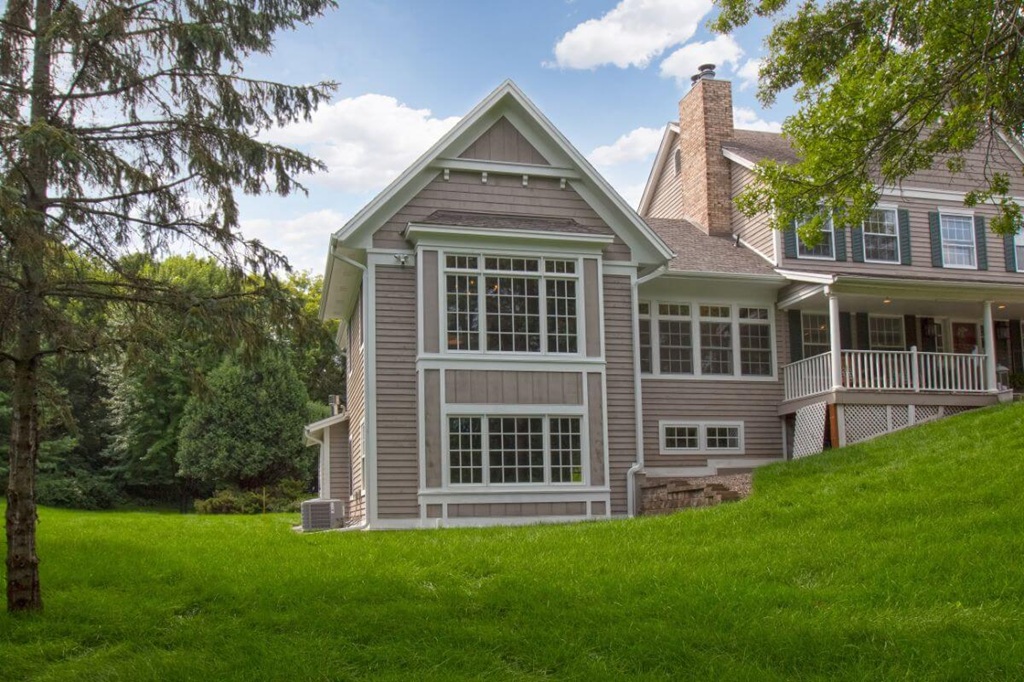
Home Additions in Apple Valley, MN
Home additions Apple Valley, MN homeowners choose usually start with the same math. The neighborhood works. The lot works. The schools work. The house is one room short. Price a move against building and building often wins.
Census figures put the median construction year in Apple Valley at about 1990, and the city grew from roughly 8,500 residents in 1970 to over 45,000 by 2000. Houses from that stretch came with real lot size and solid framing, paired with floor plans built around a smaller household and no home office. Lots here are generally generous enough to build on, which is what makes an addition realistic in this city rather than theoretical.
College City Design-Build has designed and built additions since 1969, and we handle design and construction under one contract, so the drawings and the build come from the same team. See our additions and porches service for full scope, how our design-build process runs, or the Apple Valley home remodeling hub for everything else we do in the city. If you have not hired this way before, our guide to what design-build means explains the difference.
Deciding What to Build
If you know you need more space but have not settled on what, start with our 12 home addition ideas guide. It walks through the options Minnesota homeowners actually pick and roughly what each one runs, which is a faster way to narrow things than looking at photos.
Three decisions tend to drive everything else. Whether the addition needs a full foundation or can sit on a slab or existing deck structure, because that is the largest single cost difference between a porch and a room. Whether it ties into the existing roofline or stands apart, because matching a roof costs more and looks considerably better. And whether it needs plumbing, because running supply and drain to a new corner of the house changes the number.
For households where the real problem is the layout rather than missing square footage, a whole house remodel is sometimes the better answer than adding on. We will tell you if that is the case.
Additions and Porches We Build in Apple Valley
Room Additions
Anywhere between a modest bump-out and a full second story. What Apple Valley homeowners ask for most:
- Primary bedroom suites, especially in ramblers and split-levels where the primary bedroom is the same size as every other bedroom
- Family room and living room expansions for households that outgrew the original footprint
- In-law suites and guest quarters with a private entrance, a request that keeps growing as families bring aging parents or adult children home
- Home office additions that are a real separate room with a door
- Mudroom and entry additions, which matter more in Minnesota than almost anywhere else
Second-Story Additions
Where the lot is tight or you want to keep the yard, building up rather than out. These are the longest and most involved projects we do, because the existing structure has to carry the new load and the house is substantially opened during construction.
Garage Additions
Plenty of Apple Valley homes from the city’s main growth decades came with two stalls, which runs tight against a modern household’s vehicles and gear. We build attached garage additions, third-stall additions, and above-garage bonus rooms.
Screened Porches, Three-Season Porches and Sunrooms
The most requested outdoor project we build in this city, and there is more than one way to do it:
- Screened porches, usable May through October without the bugs
- Three-season porches, insulated for spring and fall but not built for a Minnesota January
- Four-season sunrooms, fully heated and cooled for year-round use
- Deck additions built alongside a porch structure
Minnesota gives roughly five months of comfortable outdoor weather, and an unscreened deck loses most of June through August to mosquitoes. A screened porch is the cheapest way to put the backyard back into regular use.
Every addition is designed to match your home’s existing roofline, siding, and trim. An addition that reads as tacked on undercuts the whole investment, so matching the original structure is standard in our design process rather than an upgrade line item. Browse completed additions and porches to see finished work.
Why Apple Valley Homeowners Choose College City
Building additions since 1969. We have been designing and building in the south metro for over fifty years, and additions have been part of that the whole time.
One team, one contract. The designer drawing your addition and the crew framing it work under the same roof. Additions are where this matters most, because a plan drawn by someone who has never framed a wall gets re-engineered in the first week by whoever has to build it. See our process.
We know how these houses are put together. Ramblers and split-levels from Apple Valley’s growth decades have predictable load-bearing positions, grade transitions, and mechanical runs. We plan around them during design rather than discovering them during demo.
Foundation and grade planned first. Tying new foundation into existing grade is the biggest cost variable on an addition in this city, and it gets resolved in design, not on site.
We handle City of Apple Valley permits. Additions require building permits here, with plumbing, electrical, and mechanical pulled separately. We handle the applications and schedule every inspection.
Established trade relationships. Excavation, framing, roofing, and mechanical subs all working under our contract, not yours. See our trade partners.
Licensed and insured in Minnesota. Read client reviews from the south metro.
We are 15 minutes away. Our office is at 7910 Lakeville Blvd in Lakeville, straight up Cedar Avenue.
How Our Apple Valley Addition Process Works
- Free consultation. We visit your home, walk the lot, and talk through what you are picturing. No obligation. Start here.
- Site and feasibility review. Setbacks, grade, drainage, and where the addition can actually go before design gets detailed.
- Design. Full plans with 3D renderings, matched to your existing roofline and exterior materials.
- Permitting. Building, plumbing, electrical, and mechanical permits pulled through the City of Apple Valley, with every inspection scheduled.
- Detailed estimate. Line-item pricing against approved drawings, with foundation work broken out.
- Build. One project manager, all trades under our contract, and regular updates.
- Final walkthrough. We review the finished addition against the agreed scope before closing the project.
How Much Does a Home Addition Cost in Apple Valley, MN?
Cost is driven mainly by foundation work, square footage, roofline tie-in, and whether plumbing is involved. Typical ranges:
| Project | Typical Range |
|---|---|
| Home addition (general) | $80,000 – $250,000+ |
| Four-season sunroom (200-400 sq ft) | $50,000 – $120,000 |
| Screened porch | $20,000 – $50,000 |
| Mudroom addition | $20,000 – $50,000 |
Screened porches and mudroom additions sit at the affordable end because most avoid a full basement-depth foundation and build in a shorter window. Foundation type, roofline tie-in, and square footage are the three variables that move a project from one end of that range to the other.
Run your own numbers with our pricing tool, then we will price your actual house and lot at the consultation.
Frequently Asked Questions About Home Additions in Apple Valley, MN
Do I need a permit to build an addition in Apple Valley?
Yes. The City of Apple Valley requires permits for most work where something is built, replaced, or remodeled, and it lists additions explicitly, with plumbing, electrical, and HVAC or mechanical permits pulled separately. Building Inspections can confirm scope at (952) 953-2588, and details are on the city’s Building Inspections FAQ. We handle the applications and schedule the inspections.
How long does a home addition take in Apple Valley?
Most home additions run 3 to 6 months once ground is broken. Simpler projects like screened porches often finish in 6 to 8 weeks. Second-story additions can run 6 to 9 months. Add roughly 4 to 8 weeks for design and permitting before construction starts.
What is the cheapest type of home addition?
Screened porches and mudroom additions, generally in the $20,000 to $50,000 range. Both typically avoid a full basement-depth foundation, which is the single largest cost driver on an addition.
Can you match the exterior of my existing Apple Valley home?
Yes, and it is standard on every addition we build. Apple Valley’s housing stock spans several building eras, so we identify your existing siding, trim profile, and roofing early and either match them directly or specify the closest current equivalent where the original product has been discontinued.
What is the difference between a three-season porch and a four-season sunroom?
A three-season porch is built for spring through fall and is not insulated or heated for a Minnesota winter. A four-season sunroom is fully insulated, connected to your HVAC, and works year-round. The cost difference is substantial, and most Apple Valley homeowners choose three-season unless they specifically want the room usable in January.