What you need to know now about laundry room remodel cost:
- A standard laundry room remodel cost in Minnesota typically runs between $6,000 and $22,000, while basic cosmetic updates start around $3,500 and high-end structural overhauls routinely reach $35,000 or more.
- Relocating appliances from a dark basement corner to the main floor is the single largest budget driver, demanding an investment of $18,000 to $35,000 due to complex framework modifications, pipe routing, and new 240-volt electrical lines.
- Regional structural challenges like sub-grade groundwater pressure, winter exterior construction pauses, and forced-air heating duct modifications dictate your overall project timeline and material choices.
A laundry room remodel in Minnesota costs between $6,000 and $22,000 for most projects, with the typical homeowner spending around $12,500. Budget cosmetic updates start at $3,500, while luxury renovations with relocated plumbing and custom cabinetry can reach $35,000 or more.
Minnesota’s older housing stock drives much of this remodeling demand. Most homes built before 1980 have basement or back-porch laundry setups that no longer work for modern families.
We see this in every Twin Cities suburb. The 1970s rambler in Lakeville with laundry in the basement. The 1960s split-level in Eagan where the washer sits in an unfinished corner. Homeowners want their laundry on the main floor, near bedrooms, with actual storage space.
How Much Does a Laundry Room Remodel Cost in Minnesota?
Laundry room remodeling costs in Minnesota average $12,500 for a mid-range update that includes new flooring, cabinetry, a utility sink, and fresh paint. Budget-friendly cosmetic updates start around $3,500, while high-end remodels with relocated plumbing, custom built-ins, and premium finishes run $20,000 to $35,000.
The cost depends entirely on what you’re changing.
Painting walls and swapping out light fixtures? That’s the low end.
Moving the washer and dryer to a different floor? You’re looking at plumbing relocation, electrical work, new ventilation, and potentially structural changes. That pushes you toward the high end fast.
| Remodel Scope | Minnesota Cost Range | What’s Included |
|---|---|---|
| Basic Refresh | $3,500 – $6,000 | Paint, lighting, open shelving, hardware updates |
| Standard Remodel | $8,000 – $15,000 | New flooring, stock cabinets, utility sink, appliance hookups |
| Mid-Range Upgrade | $12,000 – $22,000 | Semi-custom cabinets, tile backsplash, upgraded lighting, countertops |
| High-End Renovation | $20,000 – $35,000+ | Plumbing relocation, custom cabinetry, premium materials, room addition |
Minnesota-specific factors affect these ranges. Basement laundry rooms need moisture-resistant materials because of ground water issues. Main-floor relocations often require modifying HVAC ductwork since our homes are built for forced-air heating. And winter construction means indoor-only work from November through March, which can affect contractor availability.
In our Lakeville and Eagan projects, we typically see homeowners spending between $10,000 and $18,000 for a complete laundry room transformation. That usually includes moving the laundry from the basement to the main floor, adding a mudroom entry, and creating storage that actually works for Minnesota winters.
Already planning a kitchen or bathroom update? Bundling projects saves on contractor mobilization and material ordering. Read: Kitchen Remodel Cost in Minnesota →
What Drives Laundry Room Remodeling Costs?
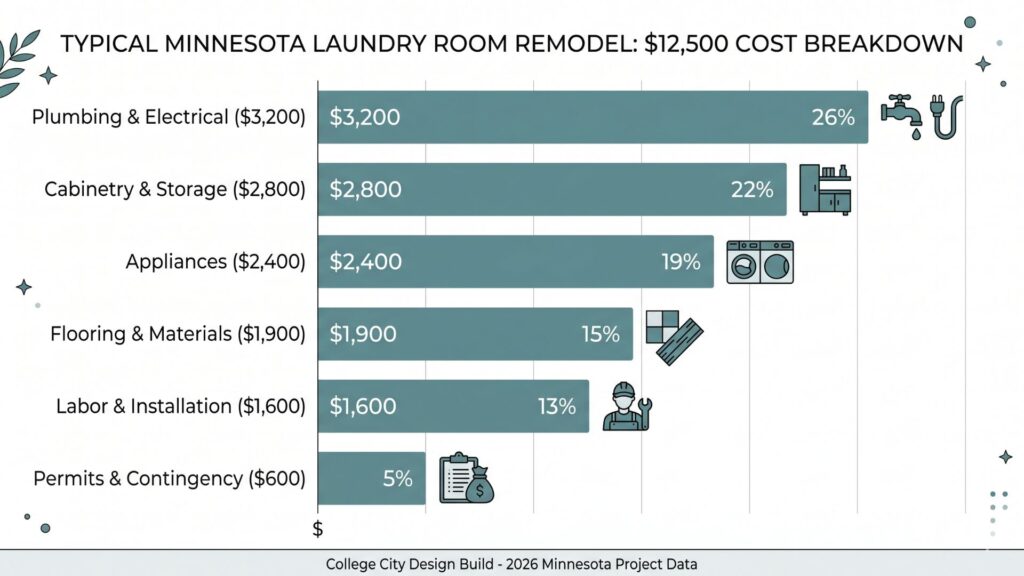
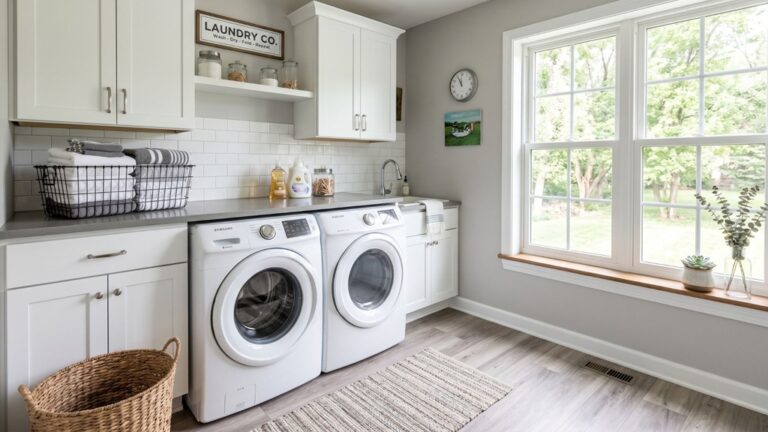
Several factors determine your final laundry room remodeling cost. Plumbing and electrical work account for the biggest variables, followed by appliance costs, cabinetry choices, and flooring materials. Understanding each component helps you budget accurately and avoid surprise expenses.
Plumbing and Electrical Work
Moving water lines and drain pipes costs $1,800 to $4,500 in Minnesota. That includes running new supply lines, installing a drain, and properly venting the system.
Electrical work adds another $1,200 to $3,000 if you’re relocating the dryer. Gas dryers need a gas line extension. Electric dryers need a dedicated 240-volt circuit. Both require proper permitting.
We consistently see homeowners underestimate these costs. The washer hookup looks simple until you realize the drain needs proper slope and venting. The dryer seems straightforward until the electrician explains why your existing circuit can’t handle it.
In Apple Valley and Prior Lake, most homes have the main electrical panel in the basement. Moving laundry upstairs means running new circuits through finished spaces. That’s where costs climb.
Appliances and Machines
New washer and dryer sets range from $1,200 to $4,500 for mid-range models. Front-loading pairs with pedestals run $2,000 to $3,500. High-efficiency stackable units start at $2,200.
Don’t forget delivery and installation. Budget another $200 to $400 for professionals to haul away old machines, level new ones, and connect everything properly.
Smart appliances with WiFi cost more upfront but use less water and energy. We’ve seen Minnesota homeowners save $150-$200 annually on utilities after upgrading to high-efficiency models.
Cabinetry and Storage
Stock cabinets from big-box stores cost $150 to $300 per linear foot installed. Semi-custom options run $250 to $500 per linear foot. Fully custom built-ins start at $500 per linear foot and go up from there.
Most laundry rooms need 6 to 10 linear feet of cabinetry for adequate storage. That’s $1,500 to $5,000 for materials and installation combined.
Upper cabinets, base cabinets with countertops, and specialized storage solutions all add up differently. A simple upper cabinet above the washer costs $400 installed. A full wall of floor-to-ceiling storage with pull-out hampers and folding stations runs $3,500 to $6,000.
Thinking bigger than just laundry? A mudroom addition creates the perfect entry-laundry combo space. Explore: Home Addition Ideas for Your Family →
Flooring Materials
Water-resistant flooring is non-negotiable in laundry rooms. Luxury vinyl plank costs $4 to $8 per square foot installed. Ceramic or porcelain tile runs $8 to $15 per square foot. Both options handle Minnesota’s humidity and temperature swings well.
Most laundry rooms measure 35 to 70 square feet. Figure $300 to $900 for vinyl flooring or $600 to $1,800 for tile in a typical space.
We always recommend tile in basement laundry rooms. The concrete subfloor stays cold year-round, and tile handles moisture better than any other option. Main-floor laundry rooms work fine with luxury vinyl because the subfloor stays warm and dry.
Countertops and Sinks
Laminate countertops cost $25 to $40 per square foot installed. Quartz runs $60 to $100 per square foot. Most laundry rooms need 8 to 15 square feet of counter space for folding.
Utility sinks add $400 to $1,200 installed. The sink itself costs $150 to $400. Faucet and installation add another $250 to $800 depending on plumbing complexity.
Acrylic drop-in sinks work fine and cost less. Stainless steel undermount sinks look cleaner but require solid-surface countertops. Cast-iron sinks last forever but need reinforced cabinets because they’re heavy.
Lighting and Ventilation
Proper lighting costs $300 to $800 for a standard laundry room. That includes recessed can lights, under-cabinet task lighting, or a combination of both.
Dryer venting runs $150 to $500 depending on the route to the outside. Shorter, straighter vents cost less. Longer vents with multiple turns require booster fans and cost more.
Minnesota building code requires rigid metal ducting for dryer vents. Flexible foil or plastic ducts fail inspection. That rigid pipe costs more initially but lasts decades and prevents house fires.
Minnesota-Specific Cost Factors
Minnesota’s climate and older housing stock create unique remodeling considerations. Basement moisture, winter construction limitations, and main-floor conversions all affect your project cost and timeline in ways that don’t apply in warmer or newer-construction markets.
Basement Moisture Issues
Minnesota basements deal with groundwater pressure and seasonal flooding. Your laundry room remodel needs proper moisture barriers and drainage solutions.
Waterproofing costs $1,200 to $3,500 for a typical basement laundry space. That includes vapor barriers, sealed concrete, and potentially a sump pump if one isn’t already installed.
We’ve renovated dozens of basement laundry rooms in Lakeville and Burnsville. The homes built in the 1970s and 1980s rarely have adequate moisture protection. Spring snowmelt and summer storms cause ongoing dampness that ruins cabinets and flooring within a few years if not properly addressed.
Main-Floor Relocation Costs
Moving laundry from the basement to the main floor is the single most expensive upgrade Minnesota homeowners request.
Expect to spend $5,000 to $12,000 just for the relocation work itself. That covers cutting into existing floor joists, running new plumbing through framing, extending electrical circuits, and creating proper drainage.
The total project cost for a basement-to-main-floor conversion typically ranges from $18,000 to $35,000, including all new materials and finishes.
According to the National Association of Home Builders, 91% of home buyers want a laundry room included in their home, more than any other feature. First-floor laundry ranks even higher, with 70% of new single-family homes including laundry connections on the first floor as of 2024. That relocation cost often returns 70-85% of its value when you sell.
Winter Construction Timing
Minnesota’s construction season affects scheduling and sometimes costs. Exterior work stops between November and March for most remodelers.
If your project requires adding a window, extending an exterior vent, or any outside work, plan for completion before winter. Otherwise, you’ll wait until spring or pay premium rates for winter work.
Interior-only laundry remodels can happen year-round. Basement projects actually work better in winter because the space stays dry and the contractor isn’t juggling outdoor projects.
Finishing your basement too? Laundry rooms pair perfectly with rec room or bathroom additions. See: Basement Finishing Guide →
Laundry Room Remodel Cost by Project Type
Different remodeling approaches carry vastly different price tags. Cosmetic updates cost a fraction of full relocations or room additions. Understanding project types helps you set realistic expectations and choose the right scope for your budget and goals.
Cosmetic Updates Only
Cosmetic refreshes transform appearance without touching plumbing or electrical. You’re working with the existing layout and just making it look better.
Budget $3,500 to $6,000 for paint, new lighting, open shelving, upgraded hardware, and fresh backsplash. This works when your laundry location and functionality already work fine.
These updates take 3 to 5 days to complete. One crew can handle everything. Minimal disruption. Maximum visual impact.
Same-Location Full Remodel
Staying in the same spot but replacing everything runs $8,000 to $18,000. New flooring, cabinets, countertops, sink, lighting, and potentially new appliances.
This is the most common project type we see in the Twin Cities. The basement laundry is functional but feels dark and cramped. Homeowners want it to feel like an actual room, not just a concrete corner with a washer.
Timeline runs 2 to 3 weeks. Multiple trades involved. Electrician, plumber, cabinet installer, flooring contractor. Coordination matters.
Average project cost in Apple Valley and Prior Lake for this scope: $12,500 to $15,000 including all labor and materials.
Laundry Room Relocation
Moving laundry to a different location is where costs escalate quickly. You’re paying for demolition, framing, plumbing relocation, electrical work, HVAC modifications, and then all the finish work.
Basement to main floor: $18,000 to $28,000
Main floor to different main-floor location: $12,000 to $22,000
Adding square footage during the move: $25,000 to $40,000+
Plumbing alone consumes $3,000 to $7,000 of the budget. Running supply lines, creating proper drainage, venting the system correctly. It’s not simple.
A Prior Lake homeowner moved their laundry from the basement to a main-floor closet near the bedrooms last year. Total project cost: $21,400. That included all plumbing, electrical, new stackable machines, custom cabinets, and premium finishes. Timeline was 5 weeks start to finish.
Mudroom-Laundry Combination
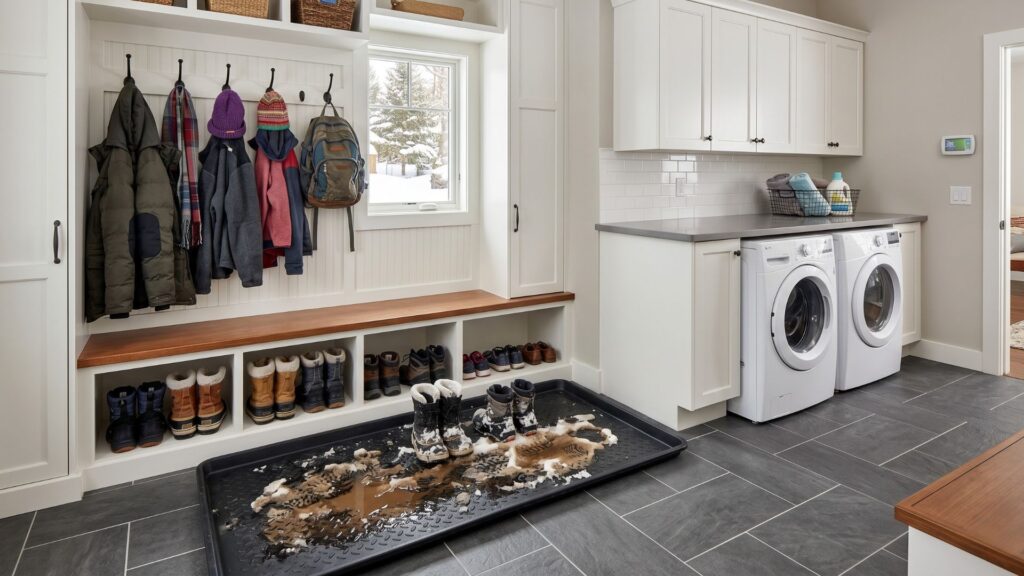
Combining mudroom and laundry makes perfect sense in Minnesota. Boots, coats, and dirty clothes all come in the same door.
Budget $15,000 to $30,000 for a mudroom-laundry combo space. The range depends on whether you’re converting existing space or adding square footage.
Converting a garage entry or existing room: $15,000 to $22,000.
Building a new addition: $25,000 to $45,000.
These projects deliver the highest satisfaction scores we see. Everything enters through one space. Mudroom storage for winter gear. Laundry sorted immediately. Nothing tracks through the rest of the house.
What Should a Minnesota Laundry Room Include?
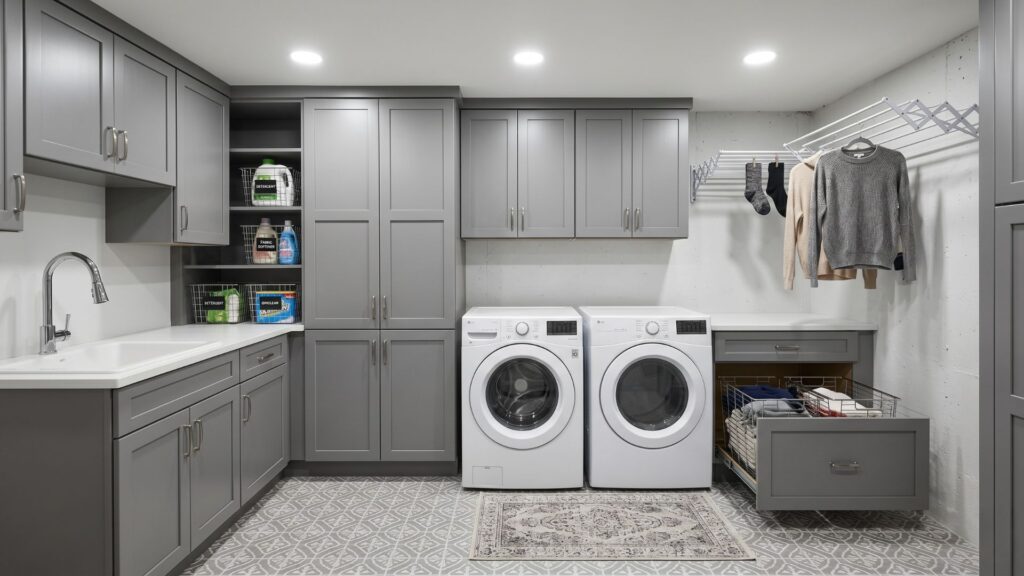
Modern laundry rooms need more than just hookups. Folding space, sorting areas, storage for detergents and supplies, and a utility sink make the room actually functional. Minnesota-specific additions include boot storage, coat hooks, and extra capacity for winter gear.
Essential Storage Elements
Every functional laundry room needs upper cabinets for detergents and supplies. Figure 3 to 6 linear feet of upper cabinets minimum.
Base cabinets provide sorting space and counter area for folding. Most homeowners want 4 to 8 linear feet of base cabinets.
Pull-out hampers separate lights, darks, and delicates before wash day. These custom inserts cost $200 to $400 each but make daily laundry sorting effortless.
Hanging rods for air-drying delicates cost $50 to $150 installed. Wall-mounted folding racks add another $80 to $200. Both features prevent dryer damage to nice clothes.
Utility Sink Addition
A utility sink handles everything a kitchen sink can’t. Soaking stained clothes. Rinsing muddy boots. Washing pet bowls. Filling mop buckets.
Expect to spend $400 to $1,200 total for sink, faucet, and installation. The plumber needs proper drainage and supply lines. The cabinet needs reinforcement if you choose a heavy cast-iron sink.
We install utility sinks in 80% of our Minnesota laundry remodels. Homeowners consistently call them the most-used feature in the room.
Proper Ventilation
Dryer venting requires a direct path to the outside with minimal turns. Each 90-degree elbow reduces efficiency and increases fire risk.
Plan for $150 to $500 for proper venting work. Straight runs through exterior walls cost less. Runs through interior spaces or up to the roof cost more.
Minnesota building code mandates rigid metal ducting. The inspector will fail plastic or foil flex duct every time. Budget for the right materials from the start.
Counter Space for Folding
Counter depth matters for comfortable folding. Standard 24-inch-deep counters work fine. Some homeowners prefer 30-inch depth for extra space.
Plan for 4 to 8 linear feet of counter area. That’s enough room to fold a full load without stacking. Quartz or laminate both work well. Skip the granite; it’s overkill for a laundry room.
Height should match kitchen counters at 36 inches. This feels natural and prevents back strain during extended folding sessions.
Minnesota Winter Additions
Boot trays and floor mats catch snow and salt before they spread. Built-in boot storage keeps wet footwear contained.
Coat hooks and jacket storage prevent winter gear from piling up. We typically install 4 to 6 hooks plus a rod for hanging winter coats.
Extra ventilation helps dry boots and gloves faster. A small fan or dehumidifier prevents musty smells in Minnesota’s humid summers.
| Feature | Cost Range | Value for Minnesota Homes |
|---|---|---|
| Boot tray built-ins | $150 – $400 | High – daily use 6 months/year |
| Wall-mounted drying rack | $80 – $200 | Medium – occasional use |
| Utility sink with spray faucet | $400 – $1,200 | High – constant use year-round |
| Pull-out hamper system | $200 – $400 each | Medium – convenience feature |
| Motion-sensor LED lighting | $150 – $350 | High – safety and energy savings |
| Heated tile floor | $800 – $1,500 | Medium – luxury but appreciated in winter |
How to Budget for Your Laundry Room Remodel
Start with your must-haves and price those first. Add nice-to-haves only after covering essentials. Set aside 15-20% contingency for unexpected issues like hidden water damage or outdated wiring. Most Minnesota remodels encounter at least one surprise behind the walls.
Get Multiple Detailed Quotes
Request itemized quotes from at least three local contractors. Make sure each quote breaks down labor, materials, and specific scope of work.
Generic “remodel package” quotes make comparison impossible. You need to see exactly what you’re paying for in each line item.
Watch for contractors who bid suspiciously low. They’re either cutting corners or will hit you with change orders later. Fair pricing falls within 10-15% across multiple reputable contractors.
Plan for Permit Costs
Minnesota building permits for laundry remodels cost $150 to $400 depending on scope and your city. Electrical permits run separately at $75 to $150. Plumbing permits add another $100 to $200.
Some contractors include permits in their quote. Others bill separately. Clarify this before signing any contract.
Unpermitted work creates problems when you sell. The buyer’s home inspector will flag it. You’ll pay to bring everything up to code right when you’re trying to close. Not worth the risk.
Consider Financing Options
Home equity loans and HELOCs work for larger projects over $15,000. Rates in 2026 range from 7.5% to 9.5% depending on your credit.
Personal loans cost more but don’t require home equity. Expect rates between 9% and 14% for unsecured home improvement loans.
Some remodelers offer financing through preferred lenders. Compare these rates against your own bank before accepting. They’re not always the best deal.
ROI and Resale Value
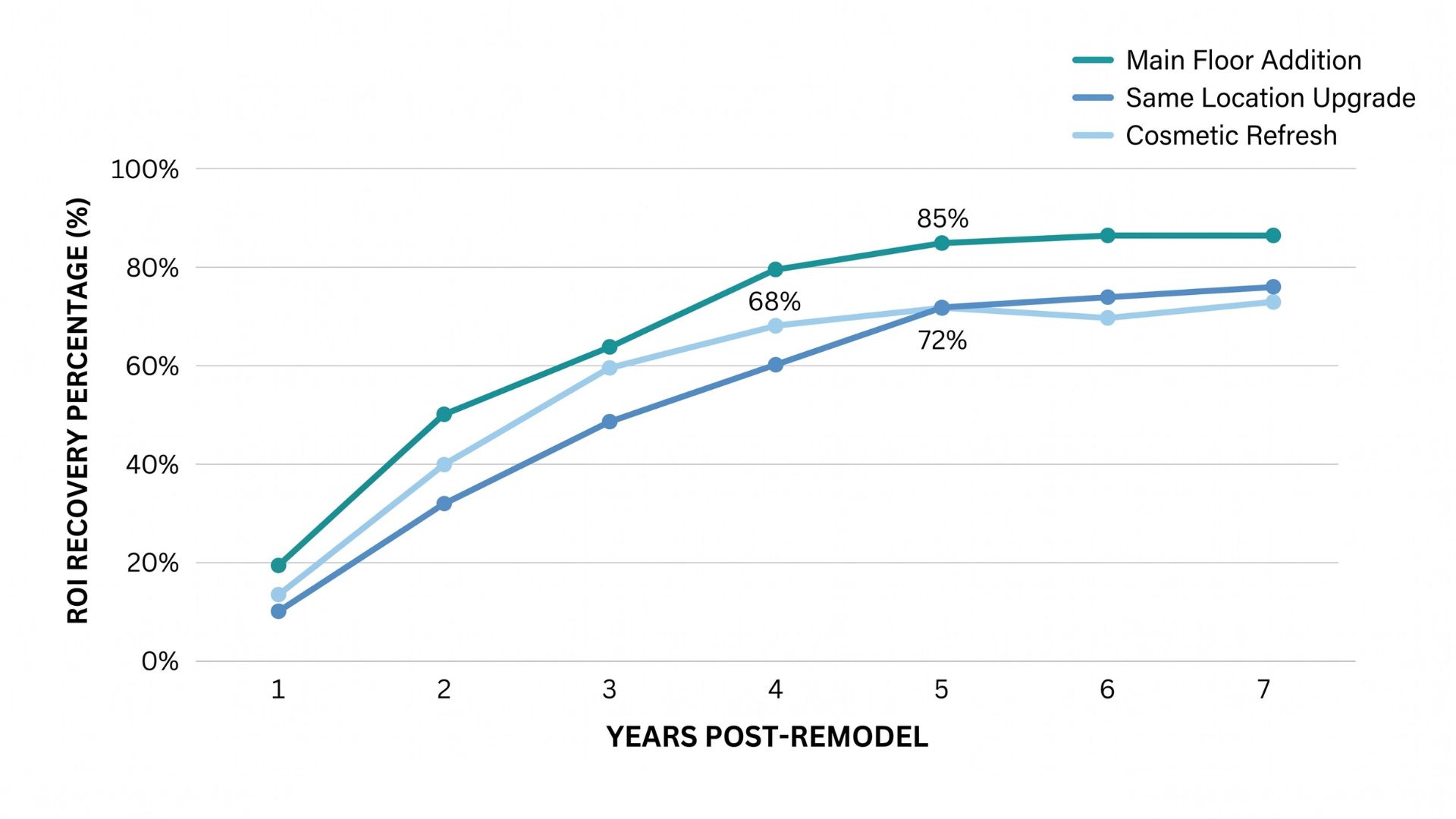
Laundry room remodels recoup between 67% and 91% of their cost at resale. First-floor laundry locations return more value than basement upgrades.
The real value isn’t financial. It’s daily convenience. Not carrying laundry baskets up and down stairs. Having actual storage instead of detergent bottles on top of the dryer. A sink that handles tough stains without clogging your kitchen.
Most homeowners tell us they should have remodeled the laundry room years earlier. The daily improvement in quality of life far exceeds the financial investment.
Get accurate pricing for your specific project. Our free calculator provides Minnesota-specific estimates based on your zip code and project scope. Free Pricing Calculator →
DIY vs. Hiring a Contractor
Some laundry room tasks work for DIY. Painting, installing shelving, swapping light fixtures. These save money without major risk.
Other work requires professionals. Plumbing, electrical, gas line work. These tasks need permits, licensing, and insurance. DIY mistakes cost more to fix than hiring correctly the first time.
What You Can DIY
Paint and wall prep cost $200 to $400 in materials if you do it yourself. Professional painters charge $800 to $1,500 for the same work.
Installing wire shelving or simple wall-mounted storage saves $300 to $600 in labor. The materials cost $150 to $400 at any hardware store.
New light fixtures can be swapped on existing electrical boxes if you’re comfortable working with wiring. This saves $200 to $400 per fixture in electrician fees.
Luxury vinyl plank flooring installs fairly easily over concrete or existing floors. DIY saves $3 to $5 per square foot in installation costs. Materials run $4 to $8 per square foot.
What Requires a Pro
Plumbing work needs proper licensing in Minnesota. Moving supply lines, installing drains, adding vents. Mistakes cause water damage that costs thousands to repair.
Electrical work requires permits and inspections. Running new circuits, installing 240-volt dryer outlets, upgrading panels. Not DIY territory unless you’re a licensed electrician.
Gas line work is illegal for homeowners to perform themselves in most Minnesota cities. Licensed plumbers handle gas connections and test for leaks properly.
Structural changes like removing walls or cutting floor joists require engineering review and permits. This isn’t exploratory DIY.
We see DIY disasters regularly. The homeowner saved $800 on plumbing by doing it themselves. Then spent $3,500 fixing the water damage when pipes leaked behind finished walls. Professional work costs more upfront but prevents expensive failures.
Frequently Asked Questions
How long does a laundry room remodel take in Minnesota?
Most laundry room remodels take 2 to 4 weeks from start to finish. Cosmetic updates might complete in 5-7 days. Full relocations with plumbing and electrical work can extend to 5-6 weeks. Winter weather and permit delays sometimes push timelines longer. Your contractor should provide a detailed schedule before work begins.
Do I need permits for a laundry room remodel in Minnesota?
Yes, if you’re doing any plumbing, electrical, or structural work. Painting and installing shelves don’t require permits. Moving appliances, adding outlets, or relocating plumbing all need permits. Costs range from $150 to $600 total depending on your city and project scope. Unpermitted work creates problems during home sales and insurance claims.
Can I move my laundry room to the second floor?
Yes, but it requires careful planning. Second-floor laundry needs proper drainage, leak protection, and floor reinforcement. Costs typically run $20,000 to $35,000 for a basement-to-second-floor relocation. The plumbing complexity and potential water damage risk make this the most expensive laundry relocation option. Most Minnesota homeowners choose main-floor locations instead.
What’s the best flooring for a Minnesota laundry room?
Luxury vinyl plank or ceramic tile. Both handle moisture and Minnesota’s temperature swings well. Vinyl costs less at $4-$8 per square foot installed. Tile costs more at $8-$15 per square foot but lasts longer. Avoid carpet, hardwood, or laminate in laundry rooms. They’re not water-resistant enough for inevitable spills.
Should I include a laundry room in my basement finishing project?
Yes, if your basement layout allows it. Combining basement finishing with laundry updates costs less than doing projects separately. You’re already paying for contractor mobilization, drywall, electrical, and permits. Adding laundry to the scope increases cost by 15-25% instead of 100% if done standalone. Most basement finishing projects include laundry updates by default.
Your Next Steps for a Successful Laundry Room Remodel
Start by measuring your existing space and identifying your must-have features. Get quotes from three local contractors who specialize in residential remodeling. Compare their itemized proposals carefully.
Schedule consultations before winter if your project involves any exterior work. Interior-only remodels can happen year-round.
Most importantly, plan for your budget honestly. Include permits, unexpected issues, and a reasonable contingency. Projects that start with realistic expectations finish successfully.
The laundry room you’ve been picturing is achievable. The daily convenience of a well-designed space pays back every dollar within the first year.
Ready to transform your laundry room? We help Twin Cities homeowners create functional, beautiful spaces that work for real life. Free consultation and transparent pricing. Contact College City Design Build →