What you need to know about mudroom addition cost
- A mudroom addition in Minnesota runs $8,000 to $35,000 depending on project type, with ground-up bump-outs costing $20,000 to $35,000 and porch or garage conversions landing between $10,000 and $22,000
- Built-in storage, custom cabinetry, and tile floors are the biggest interior cost drivers, often representing 40% or more of total project spend
- Most Minneapolis and south metro cities require a building permit for any structural addition, which adds $500 to $2,000 to your budget before a single board is cut
- The 4-month Minnesota mud season makes a functional mudroom one of the most practical investments in a Twin Cities home
Ready to understand exactly what drives these numbers? Keep reading for a full breakdown.
Costs shown are general estimates based on College City Design-Build project data and current 2026 labor and material pricing in the Twin Cities metro. These are not quotes. Project cost varies by scope, site conditions, materials, and finishes. Request a consultation for a project-specific estimate.
What Does a Mudroom Addition Cost in 2026?
A mudroom addition costs between $8,000 and $35,000 for most Minnesota homeowners in 2026.
The wide range comes down to one factor above all others: are you converting an existing space, or are you building new square footage onto your house? A closet conversion is a fundamentally different project than a ground-up bump-out with a new foundation.
Here is where most homeowners land:
- Closet or hallway conversion: $5,000 to $9,000
- Porch or side-entry conversion: $10,000 to $22,000
- Bump-out addition (new footprint): $20,000 to $35,000
- Full mudroom with plumbing and custom cabinetry: $25,000 to $45,000+
Those ranges differ from national aggregator figures for a reason. Labor costs in the Twin Cities metro sit higher than national averages. According to the National Association of Home Builders’ 2024 Cost of Construction Survey, construction costs now account for 64.4% of a typical new home’s sale price, a record high, driven largely by labor shortages that have pushed wages up across the Midwest.
National cost guides use generic square-foot math. They don’t account for Minnesota’s frost line requirements, how your existing home is framed, what Dakota County permits actually cost, or the price difference between subcontractors in Lakeville versus Phoenix. Those details move the number more than any finish selection.
What Type of Mudroom Addition Costs the Most?
The project type determines your price range more than any other single variable. A bump-out addition that adds new foundation, framing, and roofline to your house costs two to four times more than converting existing square footage. The structure is a completely different scope of work.
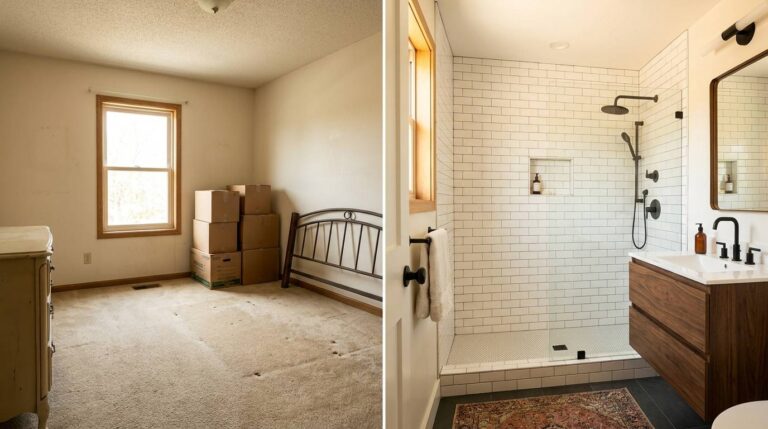
Closet or Hallway Conversion
This is the most affordable path. You are reorganizing existing space, not creating new square footage. No new foundation, no new roof, no structural additions.
Typical trade costs:
- Demo and prep: $500 to $1,500
- Flooring (tile or LVP): $1,200 to $3,000
- Built-in bench and hooks: $1,500 to $4,000
- Lighting and electrical: $400 to $900
- Paint and trim: $500 to $1,200
This scope works well for Lakeville and Apple Valley homes with a side entry off the garage. Many 1990s-era ramblers and two-stories already have a landing area that just needs proper organization and finishes. The permit question is simple here too: cosmetic work inside existing square footage typically doesn’t require one.
Porch or Garage Entry Conversion
Converting a three-season porch or an open garage bay into a conditioned mudroom is mid-range work. The shell exists; the work involves insulation, HVAC extension, window upgrades, and full interior buildout.
Typical costs:
- Insulation and air sealing: $1,500 to $4,000
- HVAC extension: $1,500 to $3,500
- Windows (if upgrading): $800 to $2,500 per window
- Interior buildout (flooring, walls, trim): $4,000 to $8,000
- Cabinetry and storage: $3,000 to $6,000
In Minnesota, this is often the sweet spot project. You gain real conditioned space without the cost and complexity of a ground-up addition.
One variable that catches homeowners off guard: if the existing furnace doesn’t have capacity to heat the new zone, the HVAC line item can jump well beyond the base estimate. That’s a question to ask before design starts, not after the permit is pulled.
Bump-Out Addition
This is new construction added to your home’s footprint. It requires excavation, a new foundation or frost footings, framing, roofing, siding, windows, and full interior buildout. Every trade is involved.
Typical costs:
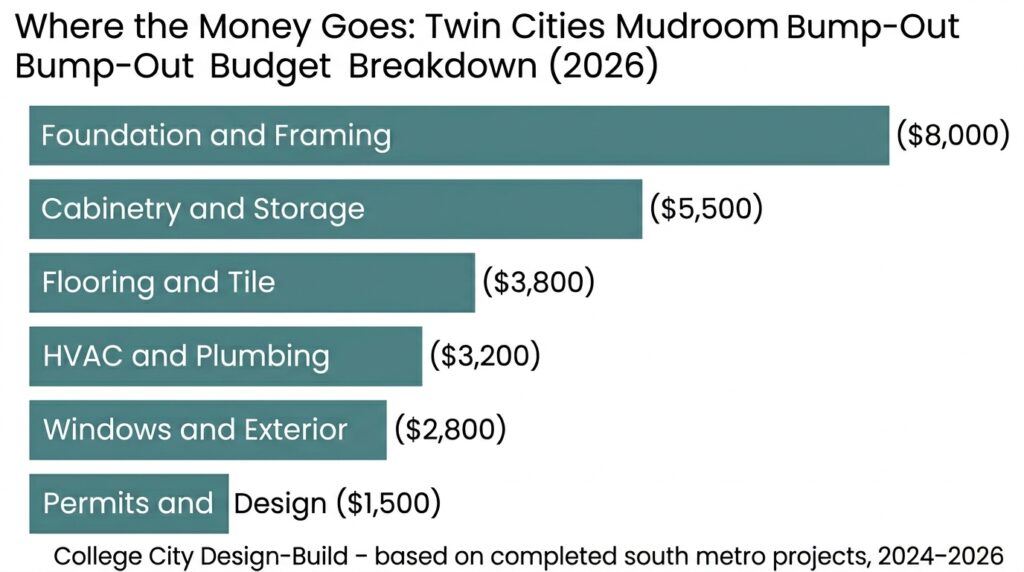
- Excavation and foundation: $4,000 to $9,000
- Framing and roofing: $5,000 to $10,000
- Windows and exterior: $2,500 to $6,000
- Interior finishes and flooring: $4,000 to $7,000
- Cabinetry and storage: $3,500 to $8,000
- Permits and design: $800 to $2,500
The foundation cost is where most budget estimates fall short. In Minnesota, frost footings must extend below the frost line (typically 42 to 48 inches), which means excavation costs more than a comparable addition in a warmer climate. One other item often missing from online estimates: engineer-stamped drawings are required for any structural bump-out in most south metro cities, adding $800 to $1,500 before construction begins.
Thinking about the right type of addition for your home? The approach that makes sense for a 1,400 sq ft rambler in Apple Valley is different from what works on a two-story in Eagan. See 12 home addition ideas →
What Drives the Cost of a Mudroom Addition?
Mudroom addition cost is not primarily about square footage. A 60 sq ft space with custom lockers and heated tile floors costs far more than a 100 sq ft conversion with basic finishes. Here is what actually moves the number.
Built-In Storage and Cabinetry
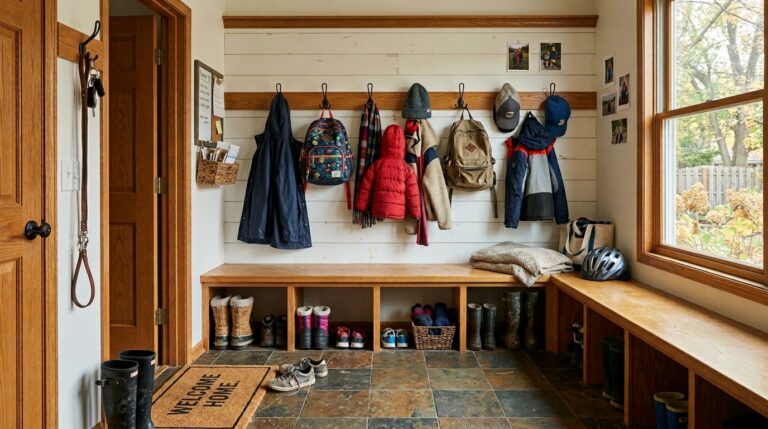
Custom lockers, benches, and overhead cabinets are the largest interior cost driver in most mudroom projects. They are also where homeowners most often go over budget.
Built-in cost ranges:
- Basic hook rail and shelf system: $400 to $1,200
- Semi-custom bench with storage below: $1,800 to $4,500
- Full custom locker system (per bay): $1,500 to $3,500
- Full wall of custom cabinetry: $6,000 to $12,000+
The gap between semi-custom and full custom is significant. Semi-custom cabinets from a stock program look clean and last well. Full custom millwork gives you perfect proportions for awkward layouts but adds real cost. For most Eagan and Prior Lake homeowners, semi-custom hits the right balance.
Flooring
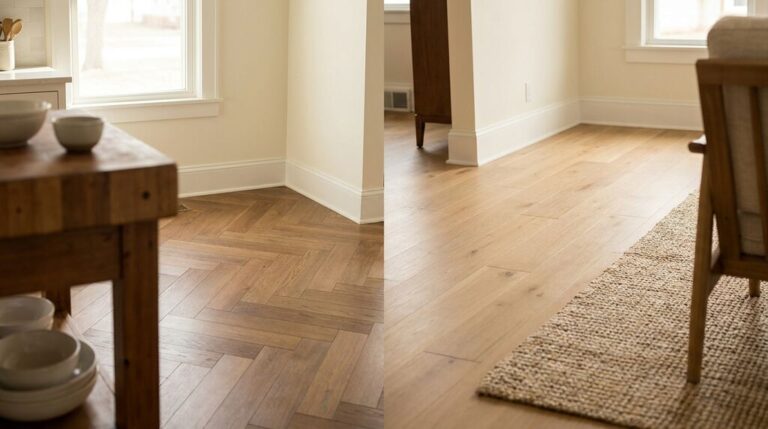
Mudroom floors take abuse. Wet boots, salt residue, dogs, and kids cycling in and out year-round means the floor needs to be both durable and easy to clean. Ceramic and porcelain tile are the most common choices.
Flooring cost ranges:
- Luxury vinyl plank (LVP): $3 to $8 per sq ft installed
- Ceramic tile: $6 to $14 per sq ft installed
- Porcelain tile (larger format): $10 to $22 per sq ft installed
- Heated tile floor system: Add $10 to $18 per sq ft for electric radiant heat
Heated floors in a mudroom are a luxury, but in Minnesota they are one people rarely regret. Wet boots dry faster, and the warmth is noticeable on January mornings.
Plumbing Additions
Adding water to a mudroom raises the project cost by $1,500 to $8,000 depending on how far the new lines need to run.
Plumbing add-ons:
- Utility sink (with hot and cold): $800 to $2,500
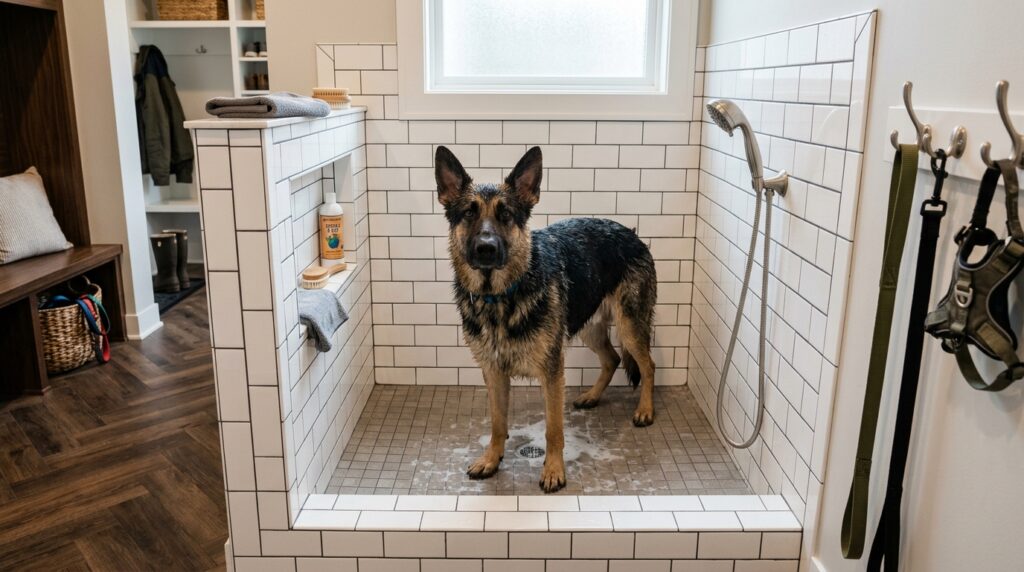
- Dog wash station: $2,500 to $6,500
- Floor drain: $400 to $1,200
A dog wash station is one of the most requested mudroom additions we see in the south metro. If you have large dogs and any kind of outdoor space, it changes your daily routine in a meaningful way.
Permits
In Minnesota, any structural addition requires a building permit. Cities in the south metro issue permits based on project valuation, with fees typically running $500 to $1,800 for a mudroom-scale project. Plan review adds another $300 to $700 in many municipalities.
Apple Valley, Eagan, and Prior Lake all issue permits through their own building departments rather than Dakota County. Processing times average two to four weeks for residential additions with complete drawings.
What Are Minnesota-Specific Mudroom Costs Most People Miss?
Most national cost guides skip the variables that matter most in cold-climate construction. These are the four that consistently affect project budgets in the Twin Cities market.
Frost Footings
Any bump-out addition in Minnesota requires footings that extend below the frost line, typically 42 to 48 inches below grade. This adds excavation work and concrete volume that warm-climate guides don’t account for.
Impact: Adds $1,500 to $3,500 to foundation cost compared to a southern state project of identical square footage.
HVAC Zoning
A new conditioned space needs heat. Extending ductwork from the main system is the common approach, but homes built before 2000 often don’t have the capacity to handle additional zones without equipment upgrades.
Impact: $1,500 to $4,500 if existing system can accommodate; $3,500 to $8,000+ if a new zone or equipment is needed.
Egress and Ventilation Requirements
Minnesota Building Code requires mechanical ventilation for any new conditioned space. For mudrooms with plumbing, a drain tile and sump connection may be required if the addition is near grade.
Impact: $400 to $1,500 for mechanical ventilation; variable for drainage depending on site conditions.
Salt and Moisture Management
Mudrooms in Minnesota take on road salt and snowmelt from November through April. Grout selection, floor sealing, and threshold details matter more here than in any other region. Poor material choices mean cracked grout, stained tile, and water infiltration within three to five years.
Impact: Proper specification adds minimal cost (roughly $200 to $600) but saves significantly on maintenance and repairs over time. We specify salt-resistant grout and sealed thresholds on every south metro mudroom project.
Mudroom Cost Comparison Table: Project Types at a Glance
| Project Type | Sq Ft Range | Total Cost Range | Requires Permit? | Timeline |
|---|---|---|---|---|
| Closet or hallway conversion | 30 to 60 sq ft | $5,000 to $9,000 | No (cosmetic) | 2 to 4 weeks |
| Porch or garage entry conversion | 60 to 120 sq ft | $10,000 to $22,000 | Yes | 4 to 8 weeks |
| Bump-out addition (slab or frost footing) | 60 to 150 sq ft | $20,000 to $35,000 | Yes | 8 to 14 weeks |
| Full custom with plumbing and radiant heat | 80 to 200 sq ft | $30,000 to $50,000+ | Yes | 10 to 16 weeks |
Timelines include design, permit, and construction. Twin Cities permit review averages 2 to 4 weeks depending on municipality.
Is a Mudroom Addition Worth the Cost?
A mudroom addition is worth the cost if your household generates daily entry chaos: wet boots tracked inside, coats piled on chairs, bags dropped in the kitchen. The question isn’t whether the space is useful. The real question is whether the investment holds value.
The National Association of Realtors’ 2025 Remodeling Impact Report found that Americans spent an estimated $603 billion on home remodeling in 2024, with homeowner satisfaction scores highest for projects that improve daily function. Mudrooms consistently rank among the highest-satisfaction additions because the benefit is felt every single day, not just when you’re trying to sell.
What Buyers in the South Metro Want
Real estate agents across the Apple Valley, Eagan, and Prior Lake markets consistently report that dedicated entry storage is among the top features buyers ask about on family homes. For homes in the $450,000 to $700,000 range, the core of the south metro market, a well-designed mudroom is no longer a bonus; it’s expected.
ROI Considerations
- Mudroom additions typically recover 50% to 65% of cost at resale
- The daily-use benefit is the primary value driver, not resale math
- A mudroom built as part of a larger addition project (combined with a garage expansion, for example) captures better cost efficiency than a standalone project
Want to see how other south metro homeowners have budgeted their addition projects? Our kitchen remodel cost guide has the same breakdown structure for a different room. See the 2026 Kitchen Remodel Cost Guide →
What Does a Design-Build Firm Charge vs. a General Contractor?
Most mudroom additions in the south metro go through either a design-build firm (which handles design and construction under one contract) or a GC who hires a separate architect. The cost difference matters, and so does the process difference.
Design-Build Pricing
A design-build firm charges a single fee that covers design, permits, and construction. You typically pay a design fee upfront ($500 to $2,000 for a mudroom-scale project) that gets applied toward construction if you proceed.
Advantages:
- One point of contact
- Design and budget aligned from the start
- No coordination cost between architect and builder
- Faster from concept to permit submission
General Contractor + Architect
A separate architect may charge $1,500 to $5,000 for a mudroom addition drawing set, depending on complexity. The GC then bids the project separately.
When this makes sense:
- Very complex projects with structural engineering requirements
- Homeowners who want to bid the project to multiple contractors
- Projects that are part of a whole-home redesign
For a focused mudroom addition in Apple Valley, Eagan, or Lakeville, the design-build model almost always produces a faster timeline and less overall friction. The design fee is usually recovered in coordination savings alone.
See how the design-build process works from first call to final walkthrough. Our free planning guide covers what to expect at every stage. Get the Free Planning Resource →
Mudroom Feature Cost Add-On Table
| Feature | Cost Range | Best For |
|---|---|---|
| Custom bench with flip-top storage | $1,200 to $3,500 | Families with school-age kids |
| Individual locker bays (per bay) | $1,500 to $3,500 | 3+ person households |
| Heated tile floor (electric radiant) | $10 to $18 per sq ft installed | MN winters, wet boot management |
| Utility sink | $800 to $2,500 | Gardeners, pet owners |
| Dog wash station | $2,500 to $6,500 | Large or active dogs |
| Drop zone charging station | $300 to $700 | Families tracking multiple devices |
| Overhead cabinet storage | $1,800 to $5,000 | Seasonal gear storage |
| Tile wainscoting (lower wall protection) | $1,200 to $3,000 | High-traffic households |
How to Plan a Mudroom Addition Budget in the Twin Cities
Getting the budget right before design begins is the step most homeowners skip. Here is the sequence that works.
Step 1: Define the Project Type
Before any numbers get discussed, decide whether you are converting existing space or adding new square footage. The comparison table earlier in this article gives you the full breakdown. The key decision here is simpler than the budget math: do you have an existing space (a porch, a wide hallway, a garage landing) that can become a mudroom, or does the project require breaking new ground? That single question tells your contractor which trades are involved and what the permit process looks like.
Step 2: Set Your Feature Priority List
Write down the features you want in this order: must-have, would-be-nice, and dream features. Built-in lockers for three kids are a must-have. A dog wash station might be would-be-nice. Radiant floors might be a dream feature. This list protects you from scope creep during design.
Step 3: Add Contingency
Standard practice for remodeling in existing homes is a 15% to 20% contingency. Older homes (pre-1990) in the south metro frequently have framing surprises, outdated electrical, or moisture issues behind walls. That contingency is not pessimism. It is how projects finish on budget.
Step 4: Confirm Permit Requirements
Contact your city’s building department or ask your contractor before finalizing your scope. Eagan, Apple Valley, and Prior Lake each have specific setback rules, lot coverage limits, and permit timelines. A project that is zoning-compliant in one city may need a variance in another.
Step 5: Get a Design-Build Estimate
A reputable design-build firm will give you a preliminary budget range after an in-home consultation. It won’t be a final bid. That comes after drawings are complete. But it should be accurate enough to tell you whether the project is feasible within your budget before you spend money on design.
Frequently Asked Questions About Mudroom Addition Cost
What is the cheapest way to add a mudroom to my house?
Converting an existing entry, closet, or side door landing is the lowest-cost path. To keep costs at the bottom of that range: choose LVP over tile (saves $2 to $8 per sq ft), use semi-custom cabinetry rather than full custom millwork, and avoid adding plumbing. Every trade you add (plumbing, HVAC, electrical beyond basic lighting) compounds the budget. A no-plumbing, semi-custom conversion in an existing space is the most budget-controlled version of this project.
How long does a mudroom addition take to complete?
A closet conversion takes two to four weeks from start to finish. A porch conversion with HVAC work runs four to eight weeks. A bump-out addition takes eight to fourteen weeks, including design, permit review, and construction. In Minnesota, the two-to-four-week permit review window is the most common source of schedule delay.
Does a mudroom addition add value to a home?
Yes, particularly in the south metro market where buyer expectations for functional entry storage are high. The return at resale is typically 50% to 65% of project cost. The bigger value driver is daily function. The benefit is felt throughout ownership, not just at sale.
What is the best time of year to start a mudroom addition in Minnesota?
Spring is the most practical start window for bump-out additions in the Twin Cities. Ground thaws by late March to early April, which allows excavation and footing work to begin. Projects started in April or May typically reach interior finish work by summer, avoiding the disruption of having an open exterior wall heading into fall. For closet or porch conversions that don’t require excavation, the time of year is irrelevant. Those can start any month. The one season to avoid for breaking ground is November through February, when frozen soil adds cost and complicates footing inspections.
Can I finance a mudroom addition, and what options work best?
Most homeowners in the south metro finance mudroom additions through a home equity line of credit (HELOC) or a home equity loan. HELOCs work well for phased projects where you draw funds as work progresses. Home equity loans give you a fixed rate and a single lump sum, which suits a defined scope with a known budget. Cash-out refinancing is a third option but only makes sense if your current mortgage rate is close to today’s rates. Personal loans are available but carry higher interest rates and shorter repayment terms than equity-based products. Your lender will typically require a signed contract or contractor estimate before releasing funds, so have your design-build agreement ready before applying.
Can I do any part of a mudroom addition myself to save money?
Painting, finish carpentry touch-ups, and installing hook rails or shelving systems are reasonable DIY tasks after the contractor finishes the structural and trade work. What you should not attempt yourself: framing, electrical, plumbing, HVAC connections, or anything that requires a permitted inspection. In Apple Valley, Eagan, and Lakeville, inspectors check permitted work at specific stages and will flag unpermitted alterations. Beyond the compliance risk, a mudroom addition involves moisture management details: thresholds, vapor barriers, floor sealing, where errors made during installation are expensive to correct after the fact.
Your Next Step Starts With a Conversation
A mudroom addition is one of those projects that is easy to think about for months and never start. The permit feels complicated. The cost range is wide. It is easier to keep piling coats on the chair.
College City Design-Build has been building additions in Lakeville, Apple Valley, Eagan, and Prior Lake for decades. We know what permits cost in each city, which entry configurations work with south metro home layouts, and where budgets tend to slip when the planning is rushed.
One conversation is enough to get a real number on paper and a scope that fits your home. Talk to a Remodeling Specialist →