What you need to know now about engineered hardwood vs. solid hardwood:
- Solid hardwood is milled from one piece of wood top to bottom. Engineered hardwood is a real wood veneer bonded over cross-layered plywood, which resists Minnesota’s humidity swings far better.
- Solid hardwood typically costs $6 to $25 per square foot for materials and can be refinished many times over a 50 to 100 year lifespan.
- Engineered hardwood runs $4.50 to $16 per square foot, installs over concrete and basement slabs, and works with radiant floor heat, which solid wood cannot do.
- Your subfloor and the room’s humidity swings matter more than which one looks nicer in a showroom.
Keep reading and you’ll know exactly which one fits your specific rooms before you talk to a single flooring dealer.
What Is the Difference Between Engineered Hardwood and Solid Hardwood?
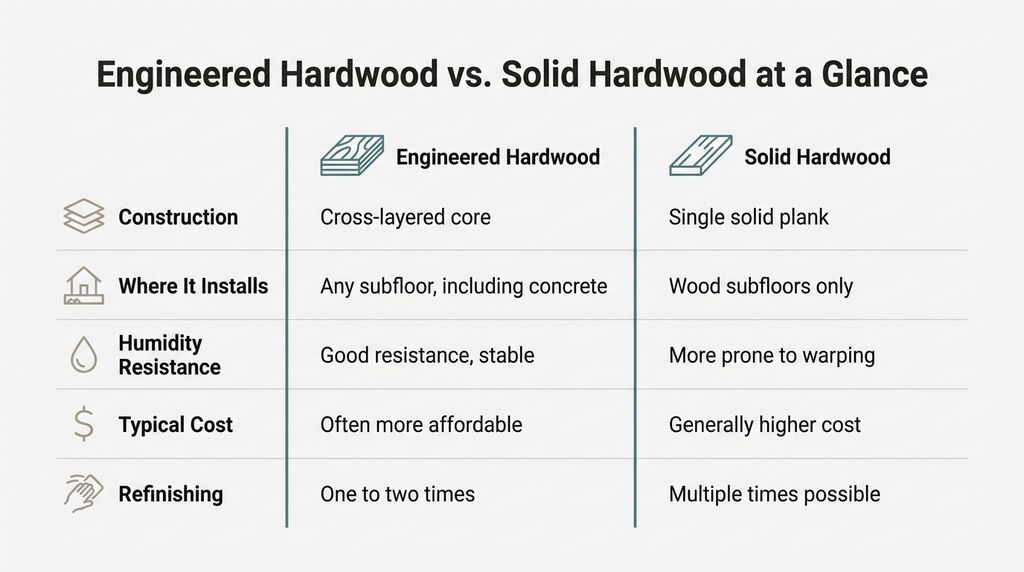
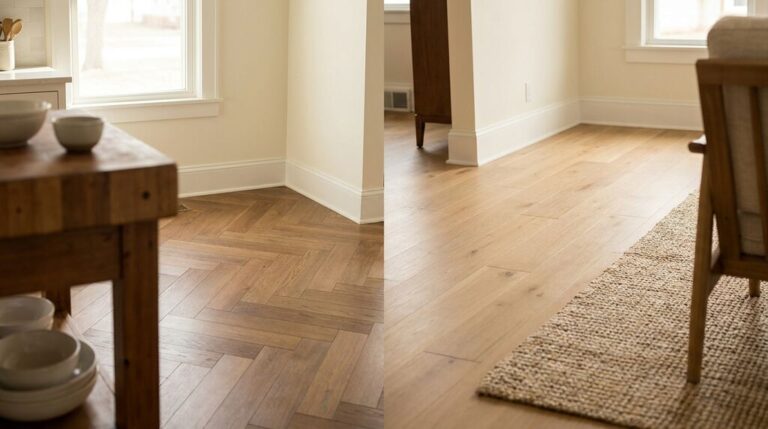
Solid hardwood is a single piece of wood milled to a uniform thickness, while engineered hardwood has a real hardwood veneer bonded over several cross-layered plies of plywood or high-density fiberboard. Both show genuine wood grain on the surface. The construction underneath is what changes everything else about how each one performs.
How the Construction Actually Changes Performance
- Solid hardwood moves as a single unit with temperature and humidity, which is why it needs a stable, climate-controlled environment.
- Engineered hardwood’s cross-grain core works like plywood in a boat hull. Each layer runs a different direction, which cancels out most of the expansion and contraction that plagues solid wood.
- Both use the same species options on the surface. A engineered oak floor and a solid oak floor can look identical once installed.
- The difference shows up years later, not on install day.
Re-flooring more than one room as part of a bigger project? This same construction decision comes up in nearly every full-home renovation we plan. See Our Whole House Remodeling Services →
Which One Handles Minnesota’s Humidity Better?
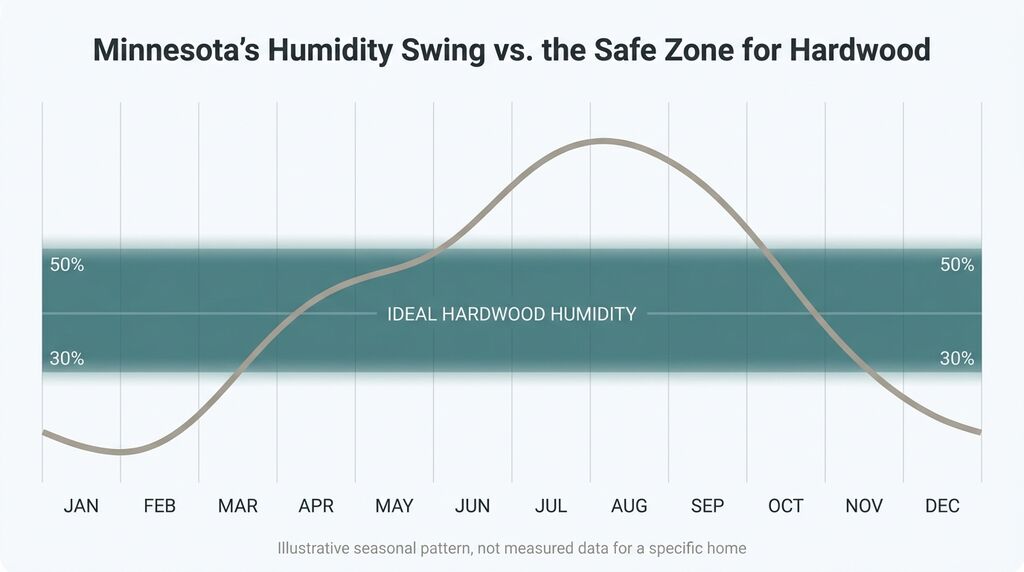
Engineered hardwood handles Minnesota’s dry winters and humid summers better than solid hardwood because its layered core resists the swelling and shrinking that causes gaps and cupping. The NWFA recommends keeping wood flooring environments between 60 and 80 degrees Fahrenheit and 30 to 50 percent relative humidity year-round.
Why This Matters More Here Than in Most States
- Twin Cities homes swing from single-digit humidity in January to 70 percent-plus humidity in July, a wider range than most of the country sees.
- Solid hardwood installed without a whole-house humidifier often develops visible gaps by its first winter, then cups slightly the following summer.
- Engineered hardwood’s plywood core resists this cycle, though it isn’t immune. Extreme, sustained moisture will still damage either type.
- A humidifier on your furnace is one of the least expensive ways to protect a solid hardwood investment through a Minnesota winter.
I’ve walked into more than a few Twin Cities homes where beautiful solid oak floors developed quarter-inch gaps their first winter, simply because nobody ran a humidifier through the coldest months. It’s a fixable problem, but it’s one solid hardwood owners here need to plan for from day one.
Where Can You Install Each Type?
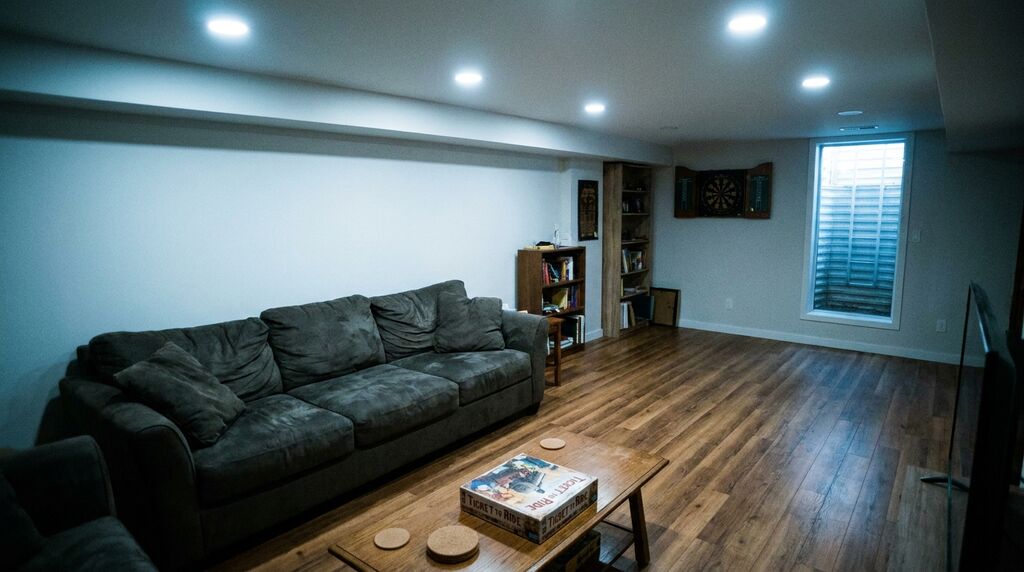
Solid hardwood is limited to wood subfloors above grade and cannot go over concrete. Engineered hardwood can be glued, nailed, or floated over almost any subfloor, including concrete slabs, basements, and radiant heating systems.
Subfloor and Location Rules That Actually Matter
- Wood subfloor, main or upper level: Both types work here without restriction.
- Concrete slab, on-grade: Engineered only. Solid hardwood will absorb ground moisture and fail.
- Basement, below grade: Engineered only, and even then, a proper vapor barrier matters.
- Over radiant floor heat: Engineered handles the constant, moderate heat cycling far better than solid wood, which can dry out and crack.
If you’re planning a below-grade project, this is the one decision where there’s no real debate. Solid hardwood in a basement is a callback waiting to happen, usually within the first year.
Planning a basement remodel and wondering what floor actually holds up down there? We handle this decision on every lower-level project we take on. Explore Our Lower Level Remodeling Services →
How Much Does Each Type Cost in the Twin Cities?
Solid hardwood costs $6 to $25 per square foot for materials, while engineered hardwood runs $4.50 to $16 per square foot, according to Angi’s 2026 cost data. Installed totals typically add another $3 to $10 per square foot for labor, with Twin Cities rates landing near the higher end of that range.
What Actually Moves the Price
| Room or Subfloor Type | Recommended Type | Typical Installed Cost (Twin Cities, 2026) |
|---|---|---|
| Kitchen, main level | Either, engineered preferred near sinks | $9 to $22 per square foot |
| Basement or lower level | Engineered only | $8 to $18 per square foot |
| Living and dining rooms | Either | $10 to $28 per square foot |
| Bedrooms | Either, solid common for resale appeal | $9 to $24 per square foot |
| Over radiant heat | Engineered only | $10 to $20 per square foot |
Species selection swings these numbers as much as the construction type does. Red oak and hickory sit at the lower end of either range. Walnut and exotic species push toward the top.
Curious how flooring fits into a full kitchen remodel budget? See what other Twin Cities homeowners are actually spending in 2026. Read: Kitchen Remodel Cost in Minnesota →
How Long Does Refinishing Actually Extend the Life of Each Type?
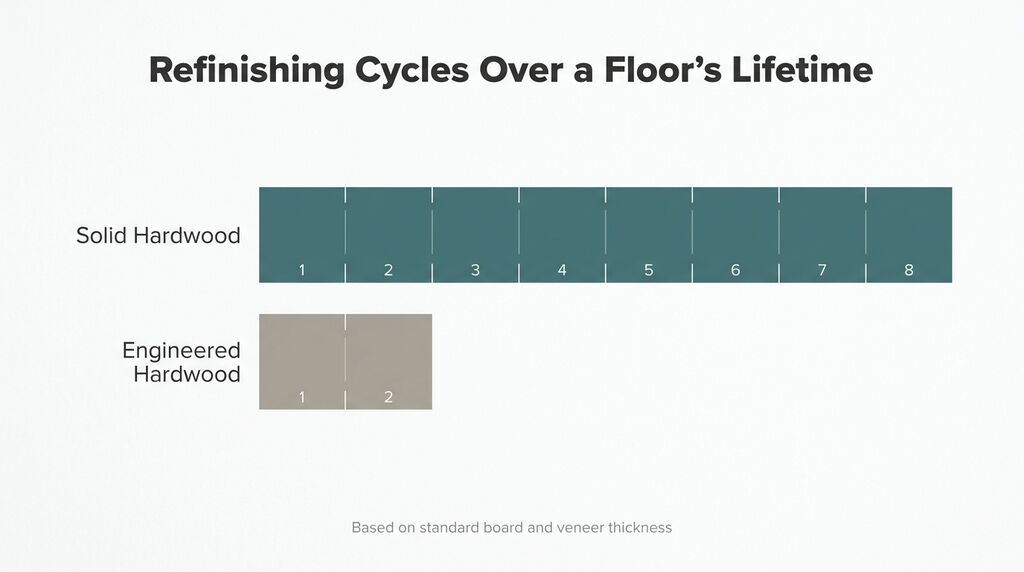
Solid hardwood can be sanded and refinished many times over its lifespan because the entire board is the same wood all the way through. Engineered hardwood can only be refinished as many times as its top veneer allows, typically once or twice, depending on thickness.
What Refinishing Really Looks Like Over Time
- A standard solid hardwood board runs 3/4 inch thick, giving it enough material for 6 to 10 sandings over its life.
- Engineered veneers range from 1/16 inch on lower-end products to 6 millimeters on premium lines, which is the difference between zero refinishes and two or three.
- Most homeowners never actually refinish their floors even once, regardless of type, because a full renovation usually replaces the flooring before it wears out.
- If long-term refinishing flexibility matters to you specifically, that’s a real point in solid hardwood’s favor, not a marketing myth.
Which Wood Species Holds Up Best in Each Format?
| Wood Species | Janka Hardness Rating | Best Suited For |
|---|---|---|
| Red Oak | 1,290 lbf | Traditional Twin Cities homes, easy refinishing |
| White Oak | 1,360 lbf | High-traffic living areas, resists moisture slightly better than red oak |
| Hard Maple | 1,450 lbf | Kitchens and busy family rooms |
| Hickory | 1,820 lbf | Homes with large dogs or heavy foot traffic |
| Black Walnut | 1,010 lbf | Formal rooms where softer, richer color matters more than hardness |
Hardness matters most in kitchens, mudrooms, and homes with big dogs. It matters far less in a formal dining room nobody actually walks through barefoot.
Which Rooms Make Sense for Engineered vs. Solid?
Match the flooring type to the room’s moisture exposure and subfloor, not to which one looks more impressive in photos. A kitchen near a dishwasher and sink is a different bet than a quiet upstairs bedroom.
A Room-by-Room Decision Guide
- Kitchens: Engineered handles the occasional water splash and dishwasher leak better, though a well-sealed solid floor still works if you’re diligent about spills.
- Basements and lower levels: Engineered, full stop. This isn’t a style preference, it’s a moisture-physics reality.
- Main-level living spaces: Either works well. This is where personal preference and refinishing plans should drive the decision.
- Upstairs bedrooms: Either works, and this is often where homeowners choose solid hardwood purely for the classic feel underfoot.
- Mudrooms and entryways: Engineered, since these rooms see the most moisture and grit tracked in from outside.
Want to see how flooring choices play out in a full kitchen remodel? Our kitchen team walks through exactly this decision with clients every week. See Our Kitchen Remodeling Services →
What Should You Look For When Choosing a Species or Finish?
Look past the surface finish and ask two questions: how was the tree grown, and what was used to bond the layers together if you’re considering engineered. Both questions matter more than most flooring showrooms will tell you upfront.
The Sustainability Question Nobody Asks Loud Enough
- Old-growth hardwood forests are largely gone, so most solid hardwood sold today grows faster and slightly softer than the century-old boards in historic homes.
- Engineered hardwood uses less raw timber per square foot of finished floor, which reduces pressure on hardwood forests overall.
- The tradeoff is the adhesive. Look for engineered products that specify low-VOC or no-added-formaldehyde cores, since off-gassing from cheaper adhesives can affect indoor air quality for months after installation.
- A reputable flooring dealer should be able to show you the core material’s emissions rating without hesitation. If they can’t, that’s worth noting.
Finish Choices That Affect Long-Term Maintenance
- Matte and satin finishes hide scratches and dust better than high-gloss finishes, which show every footprint.
- Wire-brushed or hand-scraped textures disguise minor wear between refinishes, which matters more with engineered floors that have fewer refinishing cycles available.
- Site-finished floors let you match stain color precisely but add several days to your timeline for curing.
- Prefinished floors install faster and the factory finish typically outlasts a site-applied one.
Want to see these species and finishes in real Twin Cities homes before you decide? Browse completed flooring projects across our full portfolio. Browse Our Project Gallery →
What Should You Do Next Before Choosing Your Flooring?
Start by mapping out every room getting new floors and noting the subfloor type and moisture exposure for each one. That single exercise eliminates most of the guesswork before you ever compare wood samples.
Three Steps Before You Order Any Material
- Confirm your subfloor type room by room. Concrete and below-grade spaces narrow your options immediately.
- Decide how long you plan to stay in the home. Longer timelines favor solid hardwood’s refinishing flexibility.
- Check your HVAC system’s humidity control. If you don’t have a whole-house humidifier and you’re set on solid hardwood, budget for one.
That’s genuinely most of the decision. The wood species and finish are the fun part that comes after these three questions are settled.
Frequently Asked Questions About Engineered Hardwood vs. Solid Hardwood
What Is the Disadvantage of Engineered Hardwood?
Engineered hardwood’s biggest drawback is its limited refinishing life. Once its thin top veneer wears through, sanding again exposes the plywood core underneath, and there’s no fixing that short of replacement. It also generally commands a slightly lower resale premium than solid hardwood in markets where buyers specifically ask about it, though this varies significantly by region and price point.
What Is the Healthiest Flooring for a Home?
The healthiest flooring options are solid hardwood with a low-VOC finish or engineered hardwood built with a no-added-formaldehyde core, since both minimize off-gassing compared to cheaper composite products. Look for third-party certifications on the product packaging or ask your flooring dealer for the manufacturer’s emissions documentation before installation. Proper ventilation during the first week after installation also helps any remaining finish odors clear faster.
How Long Does Engineered Hardwood Last?
A quality engineered hardwood floor typically lasts 20 to 40 years with normal use and occasional refinishing, depending on the thickness of its top veneer and how well the core was manufactured. Thinner, entry-level products sit at the lower end of that range, while premium engineered lines with thicker veneers can approach the lifespan of solid hardwood in lower-traffic rooms.
Will Termites Eat Engineered Wood?
Yes, termites can damage engineered hardwood just as they can solid wood, since both contain cellulose that termites feed on. The plywood core in engineered flooring doesn’t repel termites, and in some cases the adhesive layers can actually make early damage harder to spot from the surface. Regular pest inspections matter regardless of which flooring type you choose, especially in basements and ground-floor rooms.
How Often Should I Clean Engineered Hardwood Floors?
Sweep or vacuum engineered hardwood floors two to three times per week in normal-traffic homes, and damp-mop with a wood-safe cleaner every one to two weeks. Avoid steam mops and excess water entirely, since standing moisture can seep between planks and damage the core even though the surface resists everyday humidity swings. Wipe up spills immediately rather than letting them sit, particularly near kitchen sinks and entryways.
Your Floors, Your Home
There’s no version of this decision that’s universally right, no matter how confidently a showroom salesperson tells you otherwise. The right floor is the one that matches your subfloor, your climate control, and how long you’re planning to stay.
What I’ve seen after years of Twin Cities flooring projects is that the homeowners who regret their choice almost always skipped the subfloor and humidity questions entirely, chasing a look instead of a fit. Get those two things right first, and either type will serve you well for decades.
Ready to talk through what’s right for your specific rooms and subfloors? Let’s walk through your home and build a real plan before you commit to any material. Start a Conversation With Our Team →