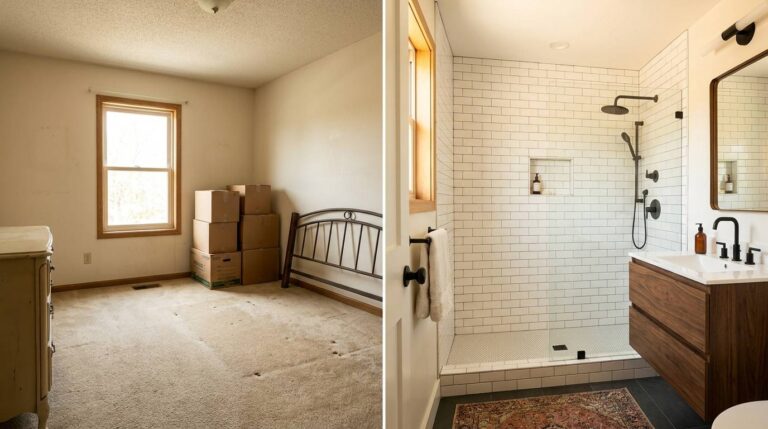
What you need to know now about converting a bedroom into a bathroom:
- A bedroom-to-bathroom conversion costs $12,000 to $35,000+ in the Twin Cities in 2026, and it usually raises your home’s value more than the lost bedroom takes away.
- NAHB research puts an added full bathroom at roughly 32% of home value, compared with about 5% for an extra bedroom, so the trade works in your favor more often than not.
- Minnesota requires a full building, plumbing, and electrical permit for this project, no matter how small the bathroom or how far it sits from your main line.
- Your bedroom’s distance from the existing plumbing stack decides the cost more than square footage, finishes, or fixtures ever will.
Keep reading and you’ll know exactly which bedroom in your house is worth converting, and which one you should leave alone.
Does Converting a Bedroom Into a Bathroom Actually Make Sense?
Converting a bedroom into a bathroom makes sense when your home has more bedrooms than your household uses and not enough bathrooms for how many people actually live there. It works against you when the bedroom is your home’s only remaining fourth bedroom in a family-heavy suburb, or when you’re selling within a year or two.
I’ve sat through this exact conversation more times than I can count.
Someone’s got a five-bedroom house and three kids. Two of those bedrooms sit empty most of the year.
Meanwhile, everyone’s lined up outside one bathroom every weekday morning at 7 a.m.
The spreadsheet says don’t touch the bedroom count. Real life, lived every single morning, says something else entirely.
Wondering how this compares to adding a bathroom in your basement instead of giving up a bedroom? Both routes solve the same shortage, just by using different unused space in your house. Read: Basement Bathroom Addition Cost Guide →
A spare bedroom nobody sleeps in isn’t earning its square footage. But a true fourth bedroom, the one keeping your listing competitive against every other house in Eagan or Apple Valley, is worth protecting.
Signs a Bedroom Is a Good Candidate
- It’s the smallest bedroom or has the worst layout in the house.
- Nobody has used it as an actual bedroom in over a year.
- Your home still has three or more bedrooms after the conversion.
- It sits near existing plumbing: a bathroom, kitchen, or laundry room.
Signs You Should Leave It Alone
- It’s your only remaining fourth (or third) bedroom in a family-focused suburb.
- You’re planning to sell within two to three years.
- It sits far from any plumbing stack or vent line.
What Does It Cost to Convert a Bedroom Into a Bathroom in the Twin Cities?
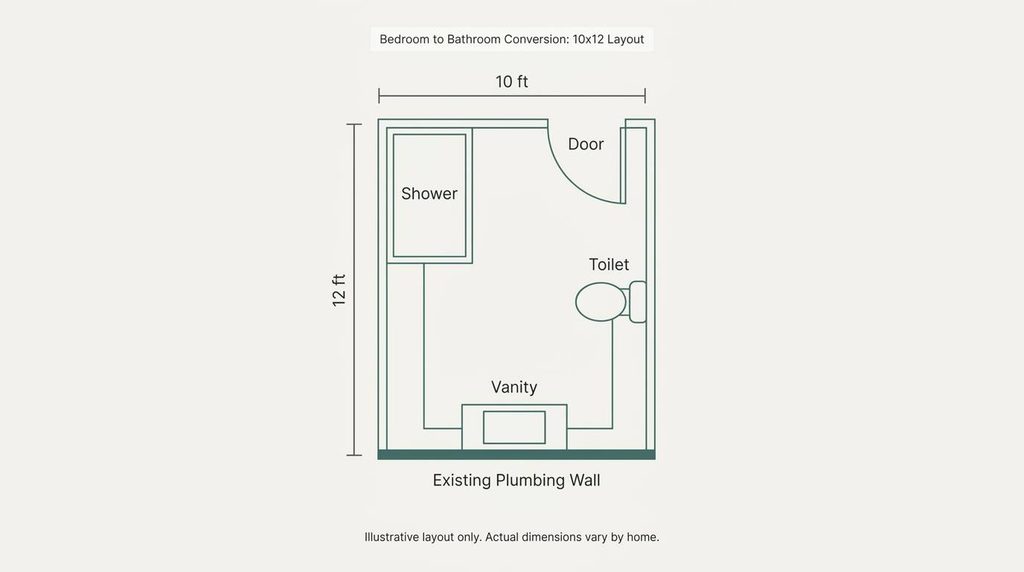
A bedroom-to-bathroom conversion costs $12,000 to $35,000 or more in the Twin Cities in 2026, depending on bathroom size, distance from your plumbing stack, and finish level. A simple powder room lands near the low end. A full bath with a tub and custom tile lands near the high end.
Contractors get this question first, every time. Fair enough. Here’s the honest range.
| Conversion Scope | What’s Included | Typical Twin Cities Cost | Typical Timeline |
|---|---|---|---|
| Powder Room | Toilet and sink only | $12,000 – $18,000 | 3–4 weeks |
| Three-Quarter Bath | Toilet, sink, shower | $20,000 – $28,000 | 4–6 weeks |
| Full Bath | Toilet, sink, tub or tub-shower combo | $26,000 – $35,000+ | 5–7 weeks |
| Full Bath, Primary-Level | Full bath, double vanity, custom tile, heated floor | $38,000 – $55,000+ | 6–9 weeks |
Costs shown are general estimates based on national averages and current Twin Cities project data, not a quote. Pricing varies by scope, materials, labor rates, and what a contractor finds once the walls are open.
Whether you keep a tub or go shower-only changes that number more than almost any other single decision.
Not sure whether your new bathroom needs a tub? We broke down the cost, resale, and accessibility trade-offs in detail. Read: Walk-In Shower vs. Tub →
Those figures assume the room already has electrical service nearby. Every foot of distance from your main plumbing stack adds to the total, which is worth understanding before you fall in love with a specific layout.
Want a number specific to your bedroom’s size and location? Our pricing tool factors in bathroom type and finish level in about two minutes. Price Your Conversion →
Will Losing a Bedroom Hurt Your Home’s Resale Value?
Losing a bedroom to gain a bathroom usually helps resale value more than it hurts it, as long as your home keeps at least three bedrooms. NAHB research puts an additional full bathroom at roughly 32% of home value, compared with about 5% for an extra bedroom, making the swap a net gain in most Twin Cities markets.
According to NAHB analysis of national housing survey data, each additional full bathroom adds about 32% to a home’s value, while an extra bedroom adds closer to 5%. A half bath still adds roughly 15%.
That gap is bigger than most homeowners expect.
It’s also exactly why bathroom count, not bedroom count, tends to decide how fast a house moves once it hits the market.
None of that means bedroom count is irrelevant. Drop from four bedrooms to three in a starter-home neighborhood packed with young families, and you’ll narrow your buyer pool. Drop from five to four, or four to three where your remaining square footage still competes well, and most buyers won’t blink.
The Cost vs. Value Report puts a midrange bathroom addition’s resale recoup at about 53% nationally, while a bathroom remodel recoups closer to 80%. A bedroom conversion usually lands between those two, since you’re not adding square footage, but you are building a bathroom from nothing.
A Detail Sellers Miss
Here’s what a lot of homeowners get backward about this decision.
They treat it as reversible on paper and irreversible in practice.
It’s actually the opposite. Converting the room back to a bedroom later, if you ever need the count again, typically costs less than the original conversion, since the plumbing and electrical are already roughed in.
What Do Minnesota Building Codes Require for This Conversion?
Minnesota requires a building permit for any bedroom-to-bathroom conversion, along with plumbing and electrical permits and inspections at the rough-in and final stages. Skipping permits voids insurance coverage for related water damage and creates a disclosure problem when you sell.
Per the Minnesota Department of Labor and Industry residential code, a converted bathroom needs either a window with at least 3 square feet of glazing, half of it operable, or a mechanical exhaust fan rated at 50 CFM minimum, vented directly outdoors. GFCI-protected outlets are required within 6 feet of any water source, on a dedicated circuit.
There’s also a structural detail almost nobody thinks about until it’s a problem.
A tub full of water weighs several hundred pounds more than a bed and dresser ever did.
If your floor joists weren’t sized for that load, your contractor adds blocking or sistered joists before anything else happens. It’s a cheap fix before the tile goes down. It’s an expensive one after.
Cities across the South Metro process these permits on similar timelines. Most Eagan, Apple Valley, Burnsville, and Prior Lake building departments turn around a straightforward residential application in three to seven business days once your contractor submits complete plans.
How Does the Plumbing Actually Work When There’s No Bathroom Nearby?
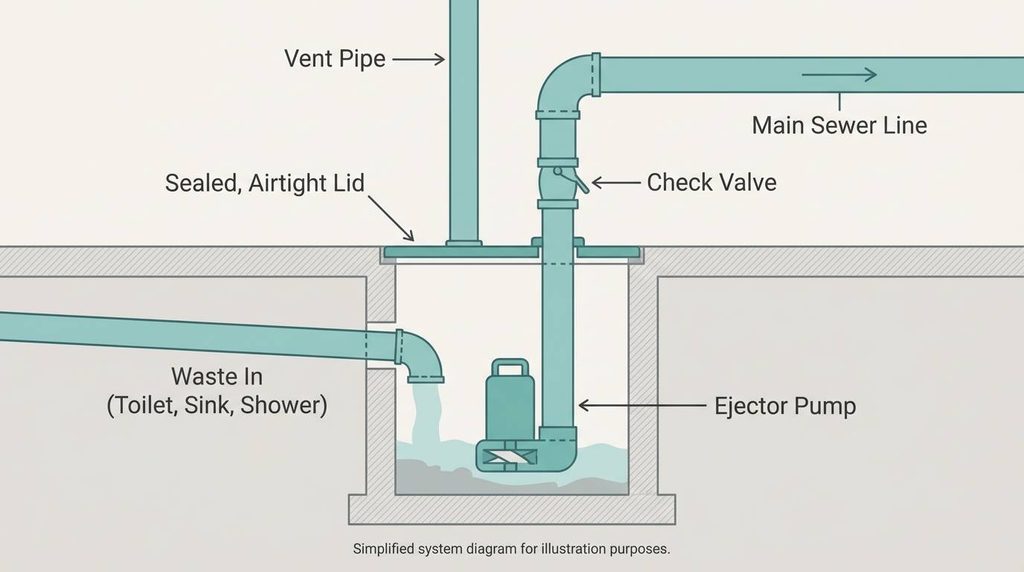
Plumbing decides almost everything about this project’s cost and difficulty. A bedroom near an existing bathroom, kitchen, or laundry room shares a wall cavity you can tap into directly. A bedroom on the far side of the house needs a longer drain run, a bigger trench, or a pump system to get waste to your main line.
Three ways to handle it, in the order we actually use them:
- Gravity drainage. Works if your new bathroom sits above or beside your main sewer line’s path. Waste flows downhill. No pump needed.
- Sewage ejector pump. The default for basement-level conversions, or bedrooms below the sewer line’s exit point. A sealed basin and pump lift waste up to the main line.
- Upflush macerating system. Grinds waste and pushes it through a narrow pipe, often through the ceiling below. No trenching required. Runs louder than a standard toilet.
| Distance From Main Stack or Wet Wall | Typical Added Plumbing Cost | Method Usually Needed |
|---|---|---|
| 0–5 feet (shares a wall with existing plumbing) | $0 – $1,500 | Gravity, direct tie-in |
| 5–15 feet | $1,500 – $4,000 | Gravity or ejector pump |
| 15–30 feet | $4,000 – $7,500 | Ejector pump, longer trench |
| 30+ feet, or across the house | $7,500 – $12,000+ | Ejector pump or upflush system |
That table is why two homeowners with the same size bedroom can get quotes $8,000 apart. It’s almost never about the bathroom itself. It’s about the trip the waste has to make to get out of the house.
Which Bedroom in Your House Makes the Best Candidate?
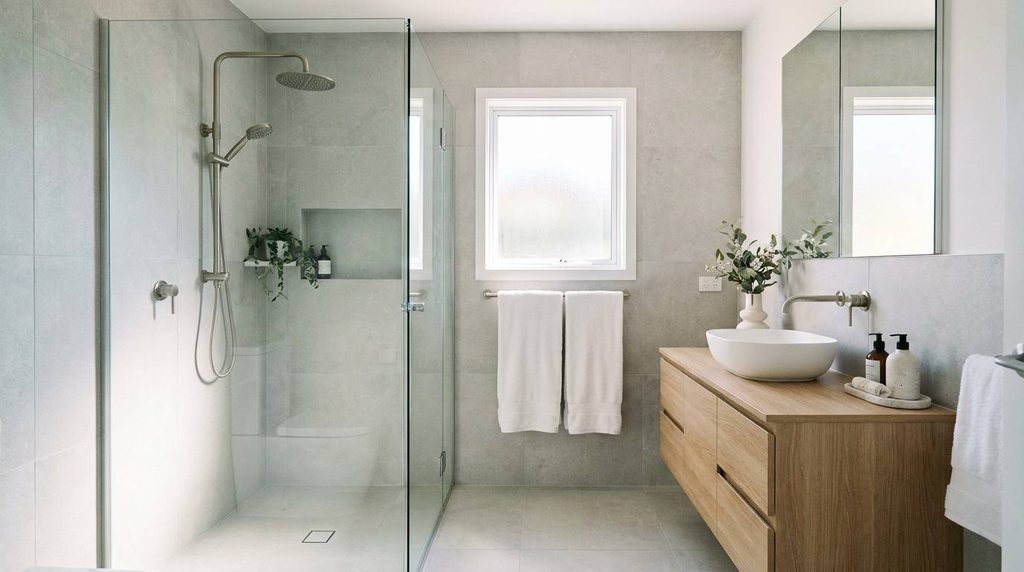
The best candidate bedroom sits close to existing plumbing, isn’t your home’s only remaining fourth bedroom, and gets little regular use. In older Eagan, Apple Valley, Burnsville, and Prior Lake homes, that’s often a small bedroom over the kitchen or stacked above a lower-level bathroom.
Homes across Eagan, Apple Valley, Burnsville, and Prior Lake mostly went up between the 1970s and the 1990s.
That generation of house usually clusters three or four bedrooms on one side, stacked over a kitchen or a lower-level bathroom.
That layout happens to work well for this project, since the plumbing you need is already running through that part of the house.
Newer construction in Prior Lake tends to be laid out differently, with primary suites already built as full suites and secondary bedrooms sitting further from any plumbing chase. In those homes, this conversion usually costs more, simply because of distance.
Curious what this looks like in an actual home nearby? See real bathroom transformations from homes with a similar era and layout. Browse Bathroom Remodeling in Eagan →
What Should You Look for in a Contractor for This Kind of Project?
Look for a contractor who handles design, plumbing, electrical, and permitting under one contract, and who can show you completed bedroom-to-bathroom conversions in homes similar to yours. This project touches more trades than a typical bathroom refresh, so coordination matters more than usual.
This isn’t a project to split across three separate contractors and a permit runner.
Structural, plumbing, electrical, and finish decisions all get made in the first week. A design-build team makes those calls once, with everyone at the same table, instead of finding a conflict after the drywall’s already up.
Ready to see what a bedroom-to-bathroom conversion could look like in your home? Our design-build team handles the layout, the permits, and the build under one roof. Explore Our Bathroom Remodeling Services →
Your Next Steps
Before you call anyone, do three things:
- Find your main plumbing stack. Look in your basement for the largest vertical pipe, usually 3 or 4 inches, near your water heater or furnace.
- Count your current bedrooms and bathrooms. If you’re already at three bedrooms or fewer, think hard before losing another one.
- Walk your household through an actual week. Note who’s waiting on the bathroom, and when.
Once you have those three answers, a contractor can tell you in one visit whether this project makes sense for your specific house.
Frequently Asked Questions about Converting a Bedroom into a Bathroom
Do I need an architect to convert a bedroom into a bathroom?
Most bedroom-to-bathroom conversions don’t require a licensed architect in Minnesota, since they typically don’t touch exterior walls or the roofline. A design-build contractor with in-house designers can usually produce the drawings your city requires for permitting. An architect becomes worthwhile if you’re also removing a load-bearing wall or reshaping the room’s footprint significantly.
Can I convert a bedroom into a bathroom myself to save money?
Minnesota code requires licensed plumbers and electricians for rough-in work, so a full DIY conversion isn’t realistic for the plumbing, electrical, or waterproofing. Homeowners with genuine construction experience sometimes handle demolition, framing, or painting themselves and hire licensed trades for everything else, which can trim the budget without risking a failed inspection.
What happens to the closet when a bedroom becomes a bathroom?
Most conversions absorb the closet into the new bathroom’s footprint, adding usable square footage without extending any walls. Some homeowners instead reshape the closet into a small linen or storage nook within the new layout. Either approach avoids the cost of new framing.
Does converting a bedroom into a bathroom affect my homeowner’s insurance?
Unpermitted bathroom conversions can void insurance coverage for related water damage, since insurers require documented, code-compliant plumbing and electrical work. A permitted conversion, inspected and closed out with your city, carries the same insurance treatment as any other bathroom in your home.
How long does a bedroom-to-bathroom conversion take from start to finish?
A straightforward conversion with nearby plumbing access typically runs 4 to 6 weeks from permit approval to final inspection. Projects needing an ejector pump, a longer drain run, or custom tile often extend to 7 to 9 weeks, and winter installations in Minnesota can add another 1 to 2 weeks for concrete curing and material delivery.
The Bathroom Your Household Needs Might Already Be Sitting Empty
Every homeowner who has brought us this project starts the same way: worried they’re making a mistake by giving up a bedroom.
Almost none of them regret it once the bathroom’s finished and the morning lineup outside one door finally ends. We’ve walked Twin Cities homeowners through this exact decision for years, from checking the plumbing stack to pulling the permit to the final inspection.
If a spare bedroom in your Eagan, Apple Valley, Burnsville, or Prior Lake home isn’t earning its square footage, let’s find out what it could become instead.
Ready to find out if your spare bedroom should become a bathroom? Bring us your floor plan and we’ll walk the space with you, no pressure. Talk to Our Team →